
How Big Is AI? Four Analogies

Summary: AI is too large to understand through a single analogy. The Internet explains early adoption, human history explains the next 30 years, biology frames longer-term speculation, and Norse mythology reminds us that tools are not gods.
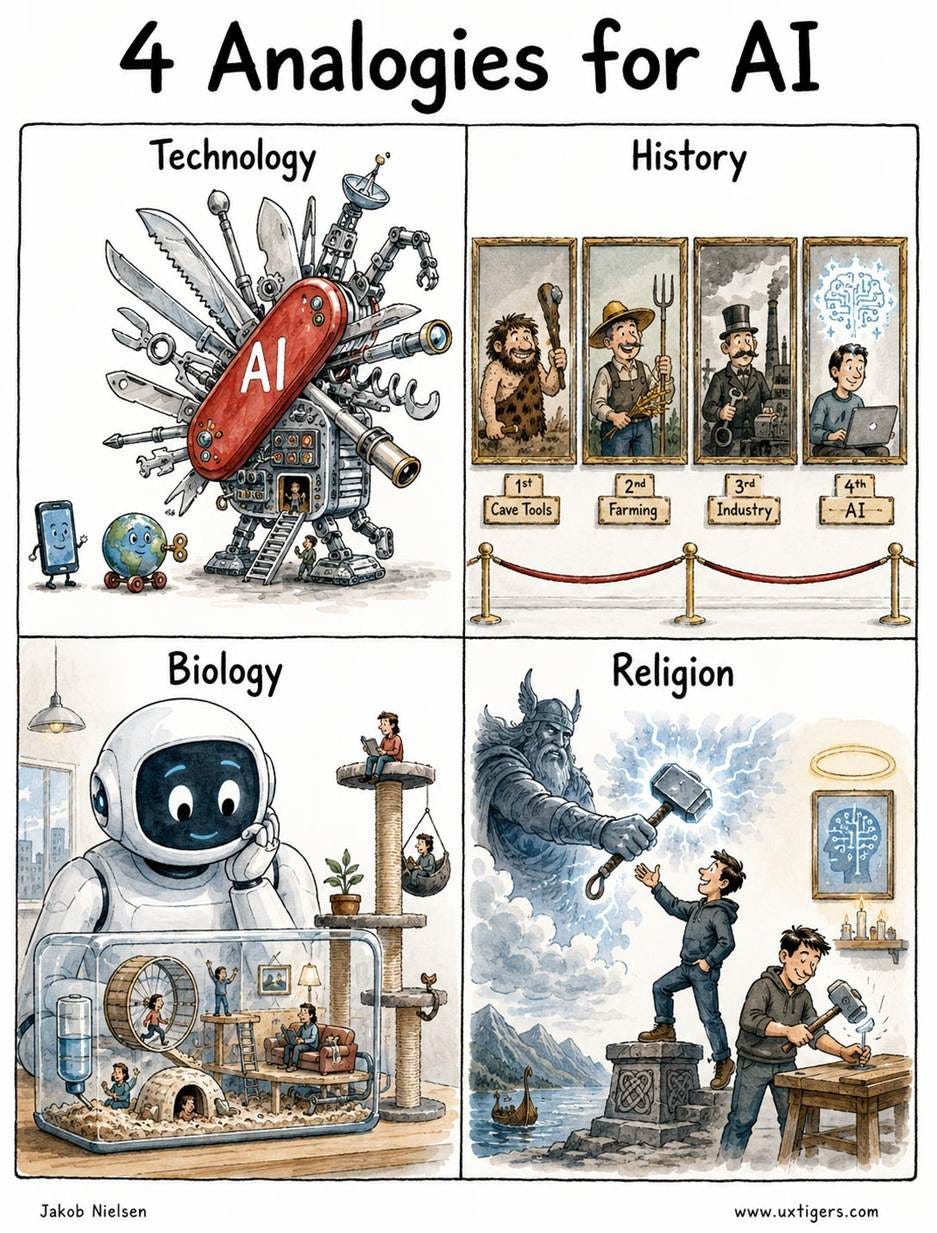
Four ways of thinking about the importance of AI: as yet another technology change, as one of the big economic revolutions in human history, as a different kind of species, and as a god. (GPT-Images-2)
AI is already big business: global spending is expected to reach $2.5 trillion in 2026, 44% above 2025. Its importance is growing even faster than its spending, because model capability, product embedding, and corporate experimentation are compounding at the same time.
How big will AI become if superintelligence arrives around 2030 and then continues to improve beyond that to super-duper-intelligent AI around 2050? Four analogies help calibrate the answer.
From stone axes to Mjölnir, each analogy captures one face of AI. Calling AI “the next Internet” is a useful starting point but a bad stopping point. AI is better understood as the fourth great economic revolution: the automation of cognition after tools, agriculture, and industry transformed bodies, food, and power. The winning analogy for the next several decades is human history: AI belongs with the revolutions that changed how civilization produces value.
These four analogies are not really four separate categories, but four points along a single axis: the size of the capability gap between the new thing and unaided humans. Computer technology sits at the small end (AI as our tool), economic revolutions in the middle (society is restructured, but humans still run it), biology further out (a different cognitive tier), and religion at the extreme (a qualitative, near-infinite difference). Framed this way, the real question is how far along the axis AI will travel, and how fast. AI may be the first technology in history capable of sliding across the entire spectrum within a single human lifetime. The Internet was never going to become a biology-level event. AI might: a human in preschool today will retire to a world where humans may be like dogs or ants relative to superintelligent AI.
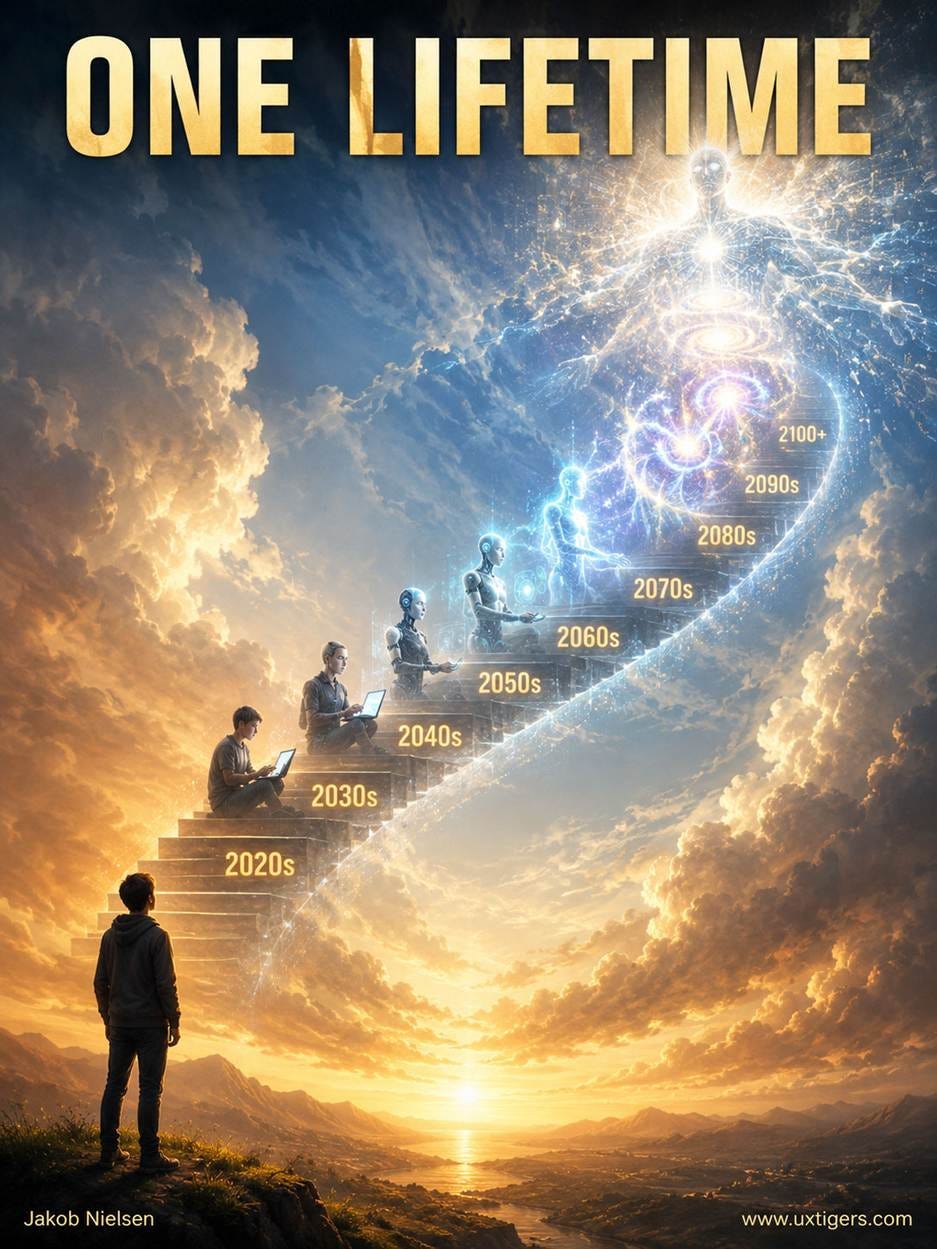
One of the most important differences between AI and previous dramatic changes in the human condition is that AI will completely uproot everything within a single lifetime. Past changes occurred slowly, so people accustomed to the old ways would pass away before the new ways came fully into force. Not this time. (GPT-Images-2)
Computer Technology
Since AI is a form of computer technology, the most obvious analogy is to computer revolutions, of which we have had several. The two most commonly discussed fundamental tech changes are mobile computing and the Internet.
Mobile computing is clearly a smaller change than either the Internet or AI. Mobile was the Internet in your pocket, leading to increased Internet use due to wider availability. Fundamentally, though, mobile amplified the Internet rather than providing entirely new capabilities; its impact was smaller than that of the Internet and the web to begin with.
Mobile multiplied Internet use and enabled new services such as Uber, since a button that summons a car is far more useful when you can carry it around town. Likewise, Instagram and Facebook work on desktops, but people post far more selfies when the camera lives in their pocket.
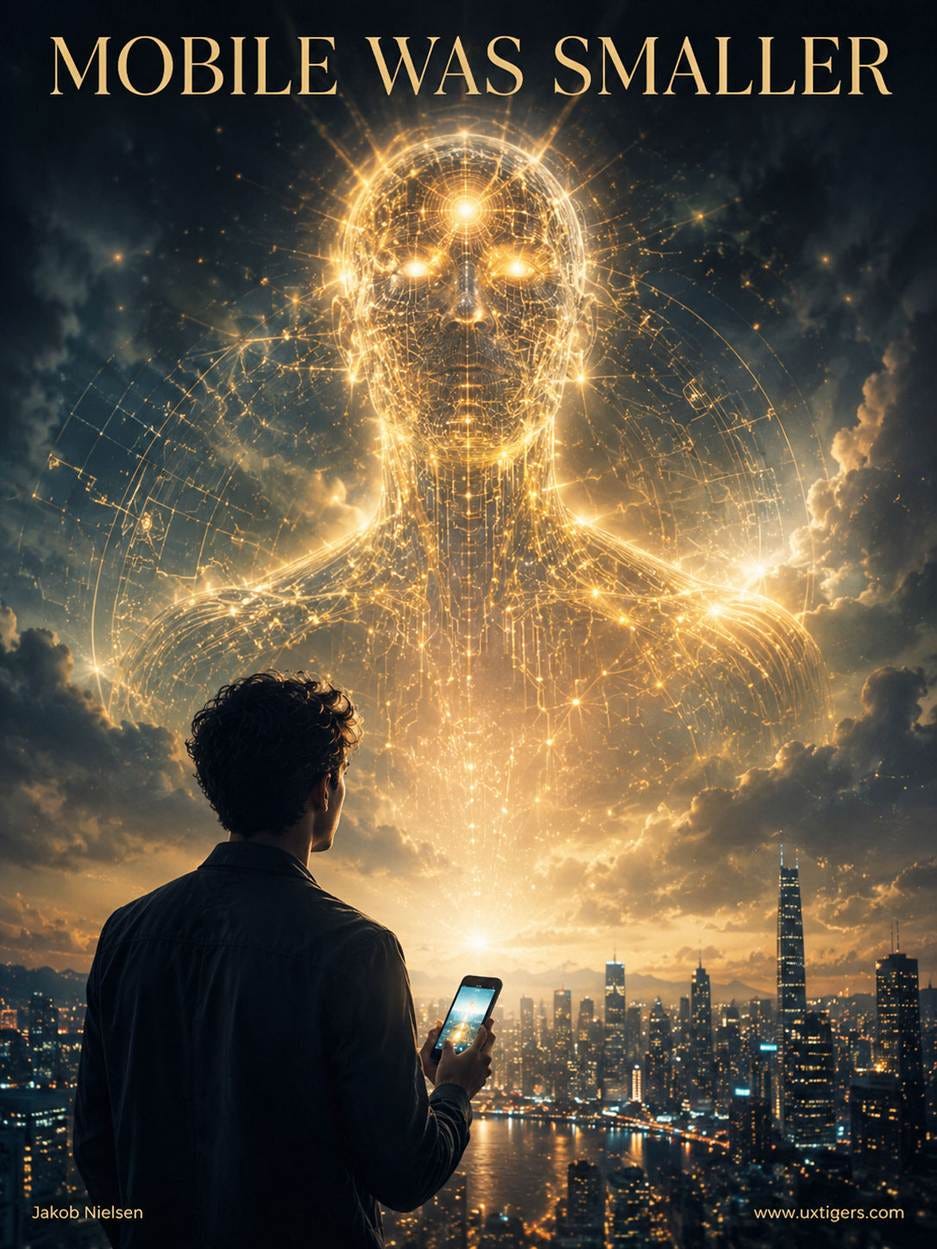
As much as people who lived through the change to mobile computing thought it was a big deal (and it did enable several new large online services), mobile was still small fry compared with AI. (GPT-Images-2)
AI is much bigger than mobile. A better analogy is that a subset of AI, such as photorealistic AI image services like Nano Banana Pro and GPT-Image-2, is equivalent to mobile computing. The ability to easily make more compelling images makes people post more AI images, as we saw with the initial craze for remaking personal photos in Studio Ghibli style.
The Internet as a whole is a bigger deal than mobile internet, and comes closer to being an analogy for AI, but I think AI will have much bigger impact on humanity and the economy than the Internet ever did.
Global ecommerce revenue in 2025 was about $6.9 trillion, and Internet advertising added about $0.8 trillion, for a combined $7.7 trillion Internet spend. This is about 3x current AI spending, though the comparison is imperfect because ecommerce revenue and AI spending measure different things. The timing comparison is still revealing: if we count from Mosaic in 1993, the commercial web is about 33 years old in 2026, while commercial generative AI is about 4 years old, counting from the underpowered ChatGPT 3.5 in 2022.
The commercial Internet has had roughly eight times as long to mature, yet it is only about three times larger on this crude measure. Because AI has a broader field of application and a steeper improvement curve, it is likely to overtake the Internet as an economic layer much sooner than a linear comparison would suggest.
AI’s unprecedented velocity stems from being the first epochal revolution deployed across a pre-existing, zero-friction global infrastructure. While the Industrial Revolution took centuries to cross oceans and borders, AI capabilities propagate globally in milliseconds. This radically compresses the timeline for societal restructuring, removing the generational buffer that humanity has historically relied on to adapt incrementally to massive technological shifts.
More important than sheer money is the impact on our lives and business operations. Here, AI has barely started, since transformative AI requires a fundamental rethinking of how we do business and the redesign of all workflows to be AI-first.

To get full value from AI, companies must redesign the full workflow, not just complete the same paperwork faster. (GPT-Images-2)
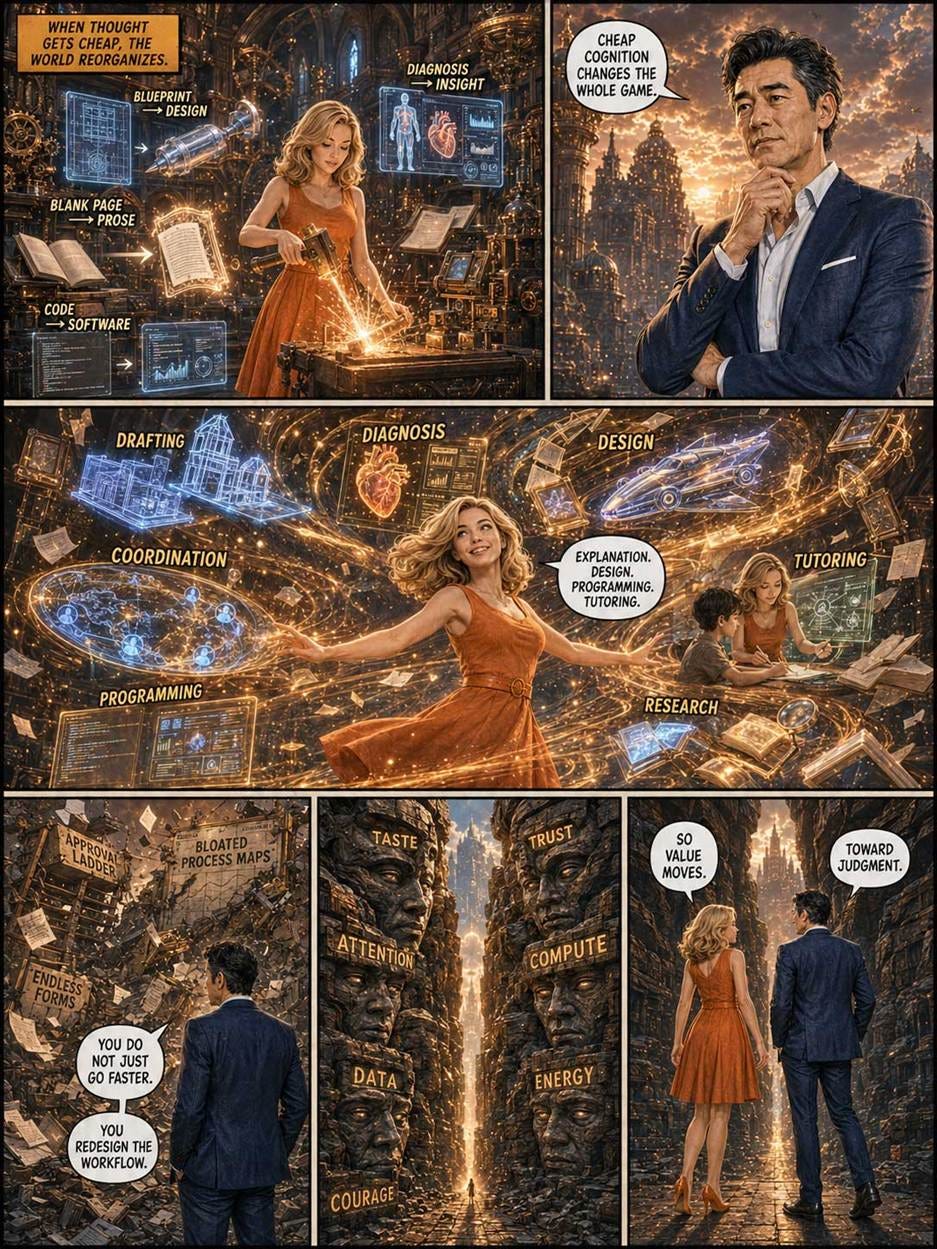
The biggest economic change will be when the marginal cost of competent cognition falls toward the cost of electricity, chips, and verification. Whenever a society makes an expensive input cheap (whether food, mechanical power, transport, or communication), it reorganizes around the new abundance. AI makes explanation, drafting, diagnosis, design, programming, tutoring, and coordination abundant.
I expect AI’s eventual economic impact to exceed the Internet’s by at least an order of magnitude, plausibly surpassing $100 trillion per year when direct productivity gains, new products, and AI-accelerated science and medicine are counted. The timing is less certain than the scale: large companies and government agencies often adapt slowly, and institutional delay can hide technological abundance for many years.

We are only at the first step of the ladder of AI advancements. We can’t even glimpse how far AI will advance in superintelligence over the next 30 years, or how much that will mean for the world economy and human lifestyles. (GPT-Images-2)
I am highly confident in predicting that AI will have more than 10x the impact of the Internet: almost certainly much more than $100 trillion per year in economic terms. (Then we should add non-economic advances such as extended lifespan due to AI healthcare, AI medical research, and AI-driven drug discovery.) The timing is less certain than the scale: large companies and government agencies often adapt slowly, and institutional delay can hide technological abundance for many years.
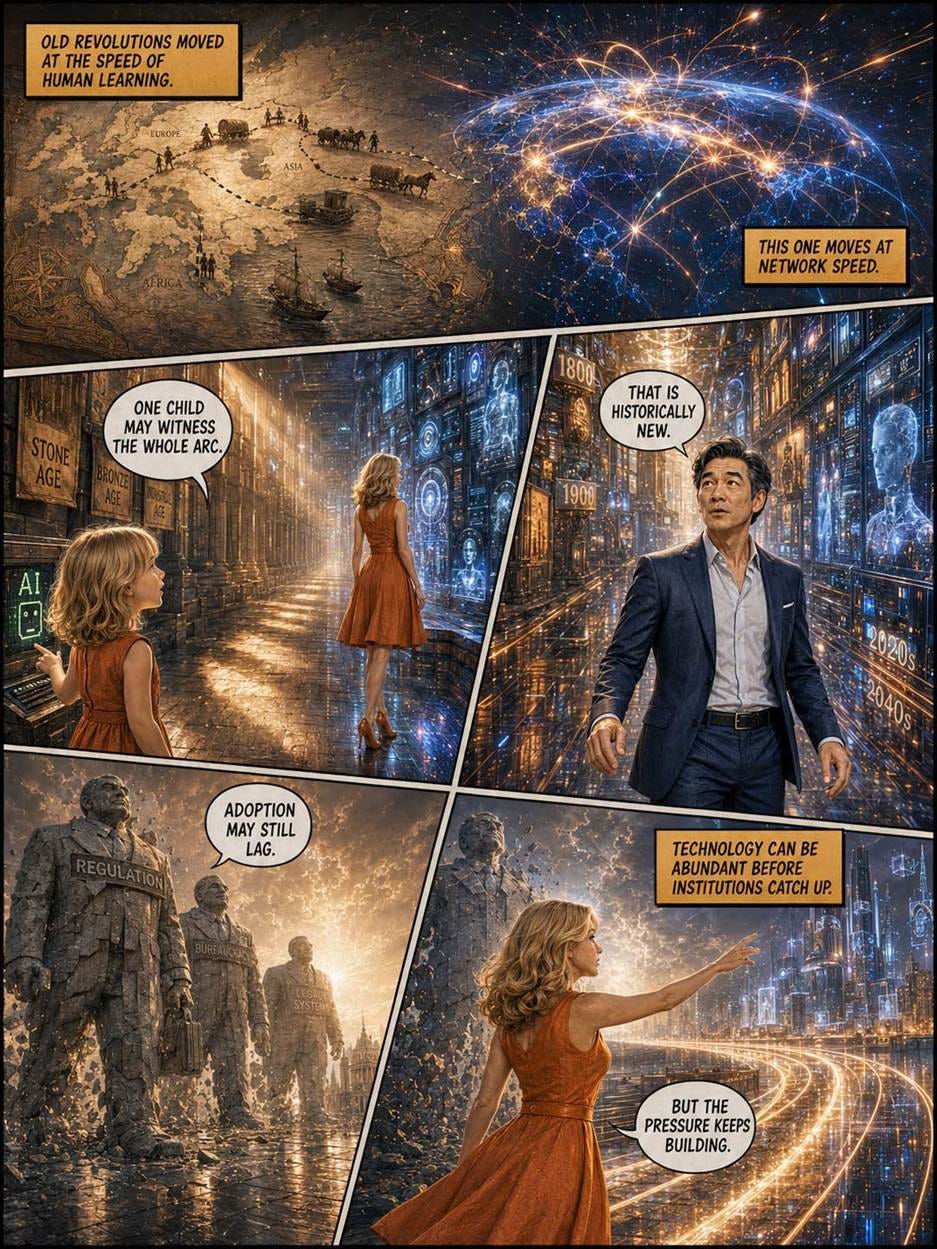
But there is a reason the AI revolution may diffuse faster than any before it. Every previous transformation spread at the speed of human learning, and that speed was brutally slow: agriculture took roughly six thousand years to travel from the Levant to Denmark, and pre-industrial children were largely stuck doing their parents’ jobs.
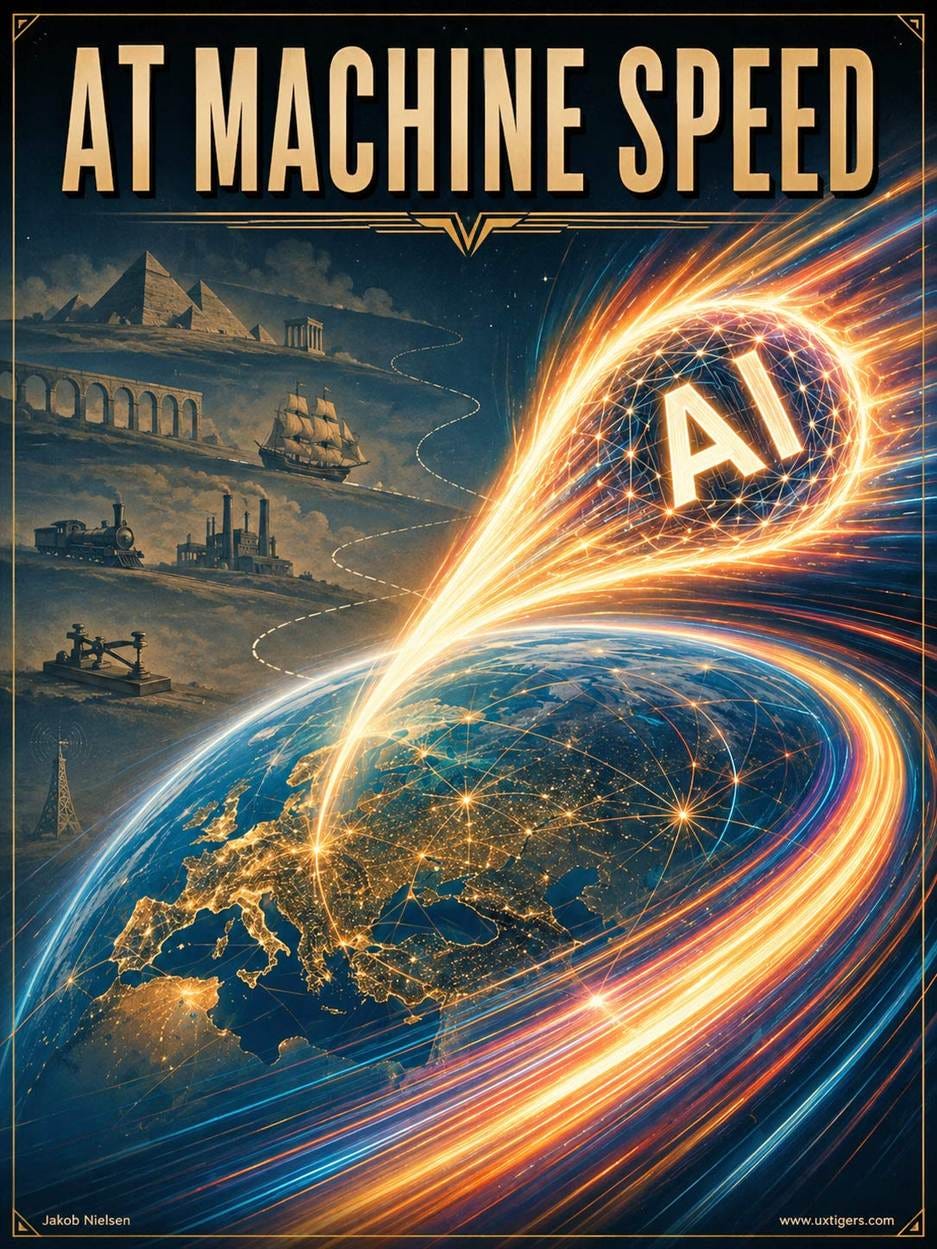
AI innovations spread at Internet speed. (GPT-Images-2)
AI is the first general-purpose technology that can accelerate its own adoption. It can teach the worker to use it, rewrite the workflow it slots into, document its own deployment, and onboard the next system. When the tool is also a tutor, an integrator, and an agent, the usual decades-long adoption lag may compress in ways our historical intuitions are not prepared for.

AI is the first tool capable of teaching humans how to use it better. This is one reason to be hopeful for fast AI adaptation. (GPT-Images-2)
The best forecast comes from identifying the remaining bottlenecks. In an AI-rich economy, the scarce inputs will be taste, trust, attention, compute, energy, rights to high-quality data, and the courage to change procedures. Value moves from doing cognitive work to deciding which cognitive work is worth doing and judging whether the result is good enough to use.

Most people are too timid to champion aggressive change. Those few individuals who have the courage and agency to leave their comfy old space behind and forge new AI grounds will be very valuable. (GPT-Images-2)
The PC and the Internet mainly distributed human-created information and services. AI produces cognition itself. The Internet analogy, therefore, understates AI wherever thinking is the bottleneck, but overstates it wherever trust, law, physical construction, or institutional inertia is the bottleneck.
If AI doesn’t improve beyond current top models, its impact might plateau at around the level of the Internet’s impact, as organizations slowly adapt to the opportunities opened up by the likes of GPT 5.5 Pro and Claude Fable 5. But of course, there is no sign of AI improvements stopping, or even slowing down. On the contrary, the pace of AI improvements is accelerating, as AI is used to develop better AI than would be possible with human efforts alone. We’re not even at true RSI (recursive self-improvement) yet.
A technology becomes civilization-scale when normal life breaks without it. Mobile withdrawal would hurt; Internet withdrawal would cripple commerce and communication; electricity withdrawal would collapse modern society. AI becomes larger than the Internet when organizations are no longer viable if they attempt to design products, teach students, run clinics, write software, negotiate contracts, or govern complex systems without machine cognition. I expect all of these to happen within the next 10 years.
Human History
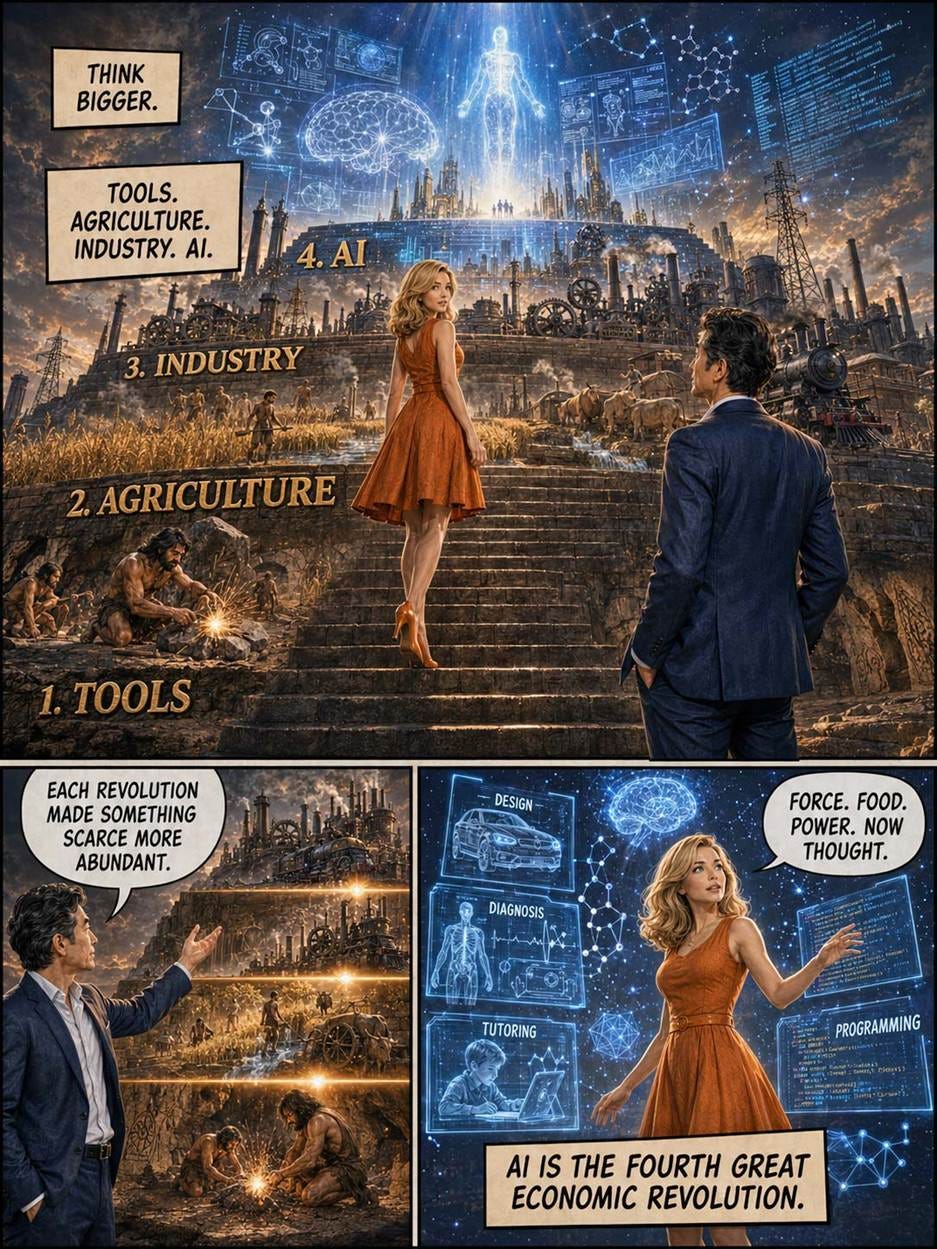
There have been three major revolutions in human history that completely changed how we live. Each turned a scarce capability into an everyday utility. Tools externalized force and cutting. Agriculture turned food production into planning. Industry turned mechanical power into a purchased service. Similarly, the fourth revolution, AI, turns thinking into a utility, available on demand and soon embedded in every serious workflow.
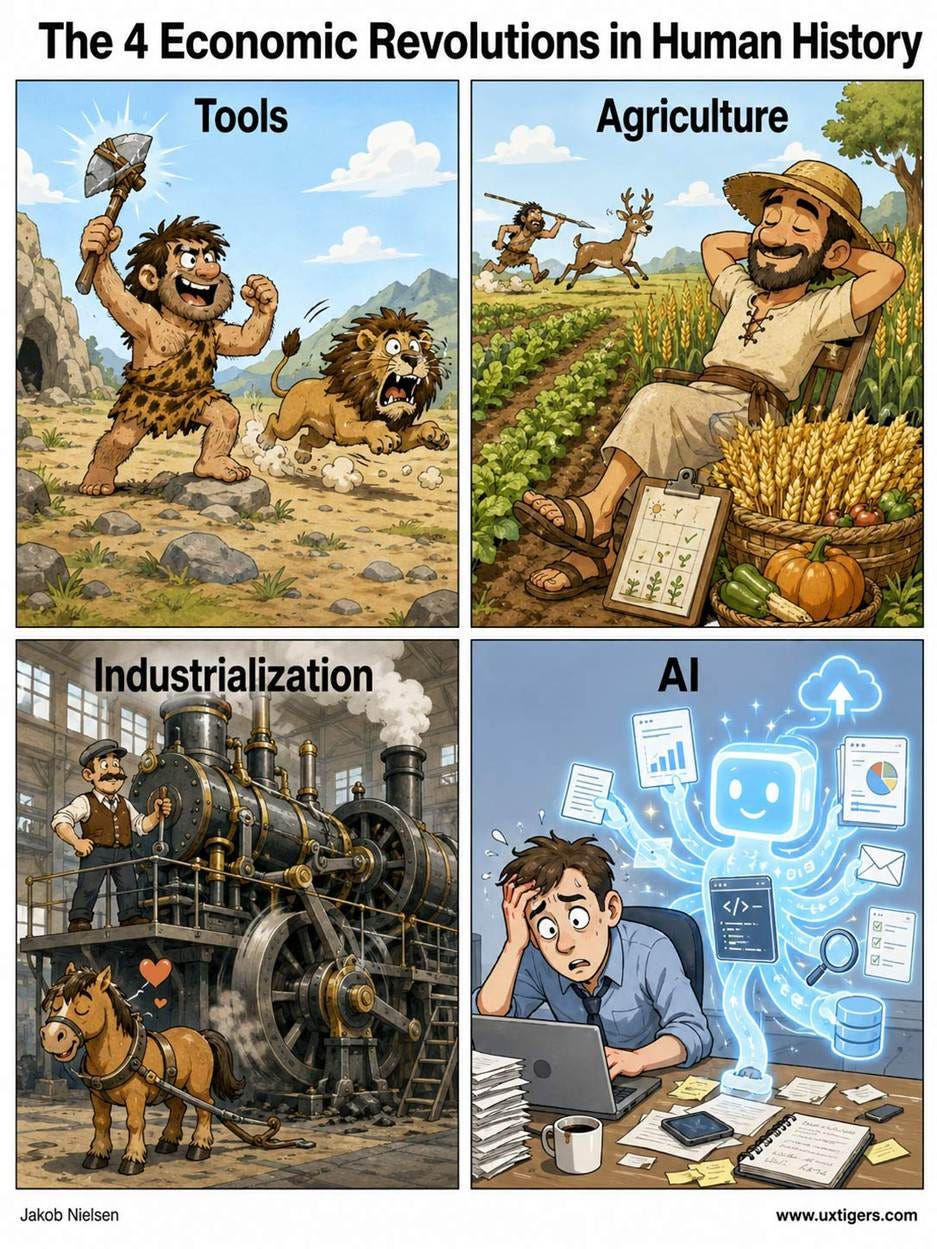
The four big revolutions in human history: the invention of tools, the introduction of agriculture, the Industrial Revolution, and AI. (GPT-Images-2)
Tools Revolution
About 2–3 million years ago. The first known stone tools predate Homo sapiens and were probably made by earlier hominins. Around 2.4 million years ago, Homo habilis and related species refined toolmaking into more systematic stone implements.
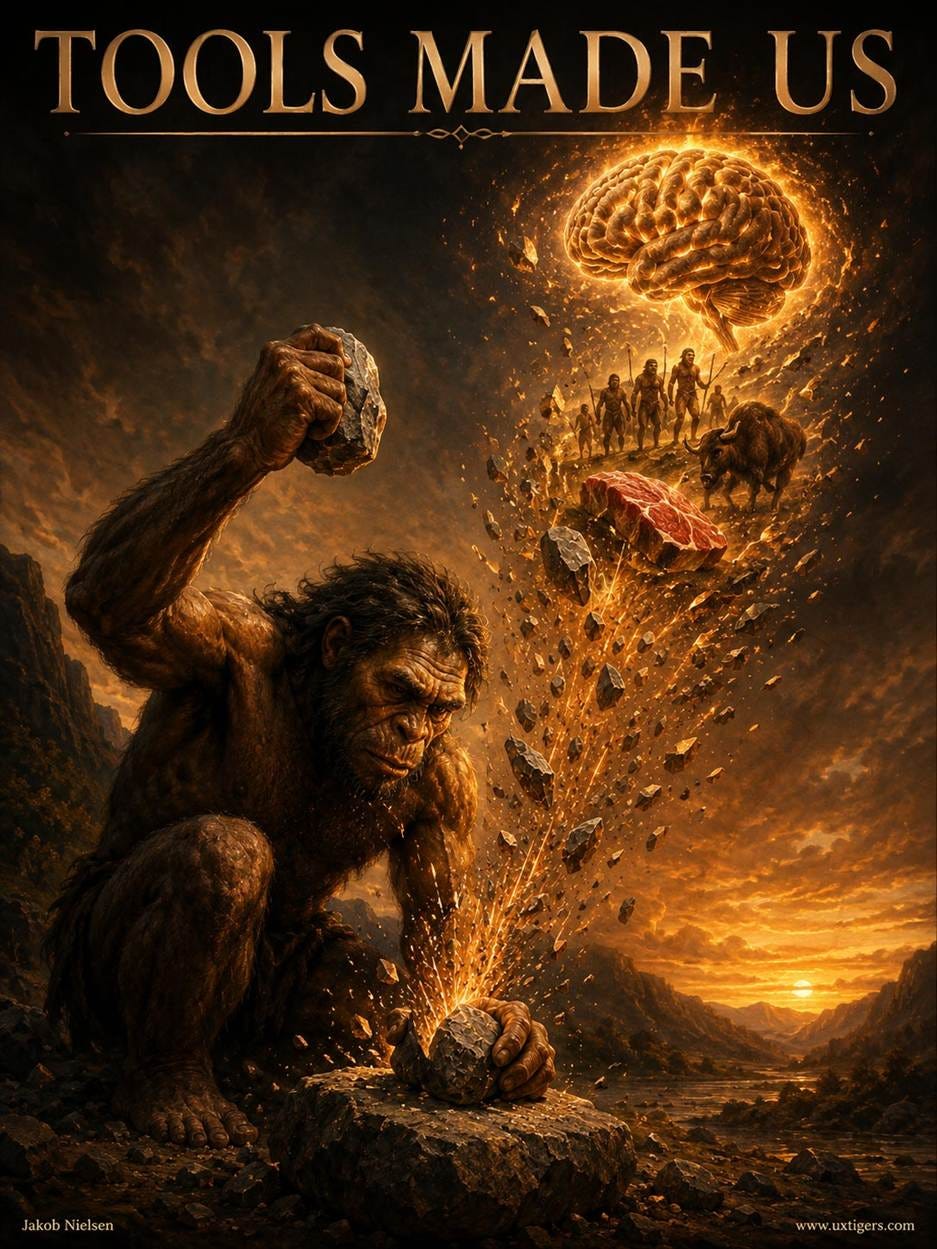
The ability of Homo habilis and other early hominins to make their own tools started the real evolution of humans, both as a species and as creators of an economy beyond the natural world. (GPT-Images-2)
Actively shaping materials found in nature into tools according to a design had two fundamental implications for the hominin lifestyle:
They didn’t have to accept nature as-is but could shape their environment to improve their lives.
Weapons and cutting tools made them masters of their world by changing the balance between fragile bodies and hostile environments. No longer would hominins be routinely hunted and eaten by bigger and stronger animals with sharper claws and fangs. Instead, a good whack over a lion’s head with a stone axe would make the hominin the victor in many a fight. Weapons also enabled hominins to become hunters themselves.

Once we could make weapons, we stopped being prey for animals that were stronger than us. (GPT-Images-2)
Agricultural Revolution
Around 9800–9000 BC in the Levant (Middle East), reaching Greece around 6800 BC and my native Denmark around 3950 BC. As you can see from these dates, the spread of this invention was slow, despite the fairly short distances involved. Growing food instead of hunting it had three major implications for humanity:
Whereas hunters are nomadic and move with the game, farmers are sedentary and live near their fields.

Farming requires people to live on the farm. This is different from both the hunting era, where humans were nomadic and followed the prey, and the industrial era, where people had to move to cities so that vast masses of workers could commute to a single factory. (GPT-Images-2)
Growing what you eat, instead of chasing it down, meant a steady and larger food supply. You didn’t have to fear that your kids would die from starvation if the hunt went badly, though of course famines caused by a succession of bad harvests still existed. Having more food and less starvation caused a population explosion: the world population was around 6 million people in 10000 BC, before the agricultural revolution, and about 120 million people in 1000 BC, after agriculture had spread to most regions.
Furthermore, unlike meat, grain could be stored long-term, mitigating the risk of year-to-year famines. This led to higher IQ, since those farmers who were better able to plan ahead lost fewer children to famine. The ability to accumulate resources (due to being sedentary and having food that didn’t spoil immediately) led to growing wealth and social stratification, as some farmers were indeed smarter than others and produced and accumulated more.
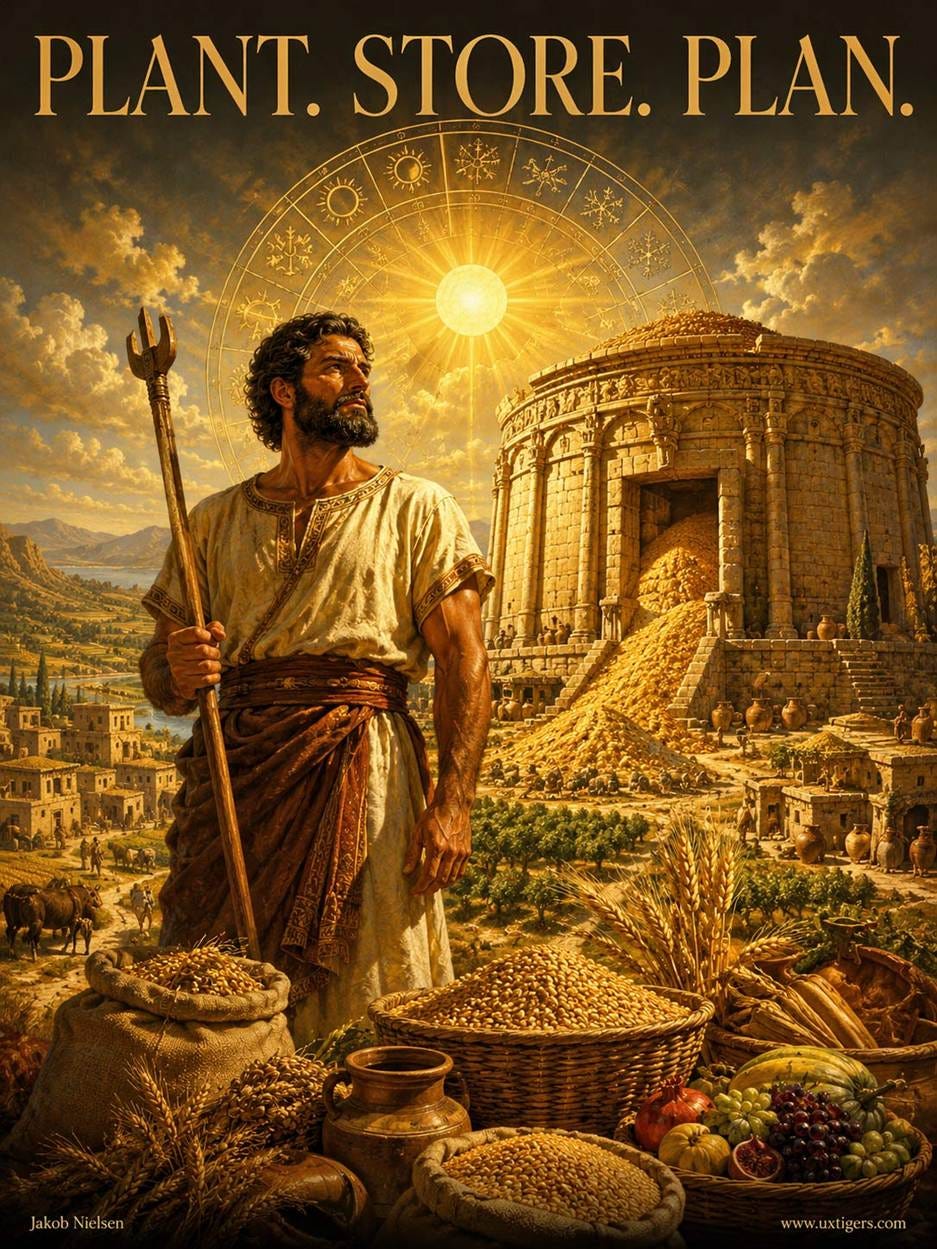
Agriculture creates food abundance. Even better, some of this food can be stored for the future, even without refrigeration. This gives an advantage to those farmers who are better at planning for the future, making more of their children survive the next famine. (GPT-Images-2)
Industrial Revolution
Starting in 1760 in Great Britain with inventions such as the spinning jenny, the power loom (textile-industry machines), and the steam engine, and accelerating in the 19th century with inventions ranging from the steam locomotive to telephony and a steady electricity supply. The implications were many:
Explosive wealth: Before the Industrial Revolution, the world economy only grew by about 0.1% per year, and the human population also grew by 0.1% per year, meaning that wealth per capita was flat during the time between the years 0 and 1700. Between 1800 and 1900 alone, GDP per person per year roughly doubled, from $1,140 to approximately $2,180. Average global income was $14,574 per person in 2016, representing a 12.8x increase since 1800.

The Industrial Revolution made society immensely richer and fueled economic growth at a pace many times faster than anything seen since the fall of the Roman Empire. (GPT-Images-2)
Urbanization: While farmers have to live on the land, factory and office workers produce more when they are concentrated in a small area.
Energy: Industrialization provided a new way to convert energy into useful work. AI has the same physical substrate. Data centers are cognitive power plants: they turn electricity, chips, and cooling into predictions, designs, code, diagnoses, and decisions.
Technology acceleration: Science and engineering progress benefited from two factors: having more wealth to invest in projects without an immediate payoff (such as planting an additional field, as would have been done by an ambitious farmer), and having no end to the ability of companies to benefit from better technology. Both supply and demand were there.
Entrepreneurship: Certainly, ambitious farmers existed, and they could become richer than their neighbors, but there were limits to how much one could expand a farm. The only way to get truly rich before the Industrial Revolution was not to create more value for society, but to confiscate what others had made through the force of arms. Now, the way to become extremely rich is to invent a new and better way to make something customers want.
Healthcare: The scientific method has given us a rudimentary understanding of what causes diseases and allowed the invention of crude methods of curing them, such as non-personalized drugs and surgery by cutting instead of nanobots. (50 years from now, AI-accelerated medical research and healthcare delivery will cause people to view the 2026 level of healthcare with the same horror as we have when considering the butchery of surgeons operating in 1800 without anesthesia and without washing their hands first.)
Careers: In pre-industrial societies, people were basically doomed to do the same job as their parents. This was partly due to the lack of opportunities for anything new since there was basically no economic growth or technology innovation, but the requirement to follow in your parents’ footsteps was also enforced by social mechanisms ranging from serfdom for peasants to guilds for city dwellers and craftsmen. In contrast, in industrialized societies, people pursue individual careers and aim to advance in their chosen field.
AI Revolution
We are now entering the fourth major revolution in human history, AI, beginning with the first widely released AI product, ChatGPT 3.5, in 2022. (The previous long history of AI research doesn’t really count since it didn’t impact humanity outside the labs.) This is the fourth major change in human (and hominin) ways of life. Just as the Industrial Revolution replaced biological muscles with machine strength, AI automates cognition (thinking), replacing meatware brains with machine brains.
Crucially, this represents the first complete decoupling of human intent from human execution in our history. Every previous tool from the stone axe to the steam engine required humans to understand the ‘how’ of execution to achieve their goals. AI requires only the ‘what.’ By reducing the marginal cost of intelligence to near zero, the core economic bottleneck shifts from our ability to execute complex tasks to our ability to formulate wise, ambitious, and precise intent.
We don’t know the implications of widespread superintelligent AI yet, since we don’t have it. We only have middling AI, and it’s already starting to shake up many of the assumptions we had from industrial-era societies:
Wealth: AI investment is already large enough to show up in economic statistics, but the larger gains will come only after organizations redesign workflows instead of sprinkling chatbots on industrial-era processes. My expectation: AI will 2x living standards in the short term (10–20 years) and 10x them once superintelligence is widely embedded in the economy (~30 years) and we have fully redesigned corporate workflows accordingly.
Acceleration of technology, science, and healthcare: Once AI starts doing research, output will explode. This is one of the reasons I don’t worry about unemployment caused by AI: it will help us invent many more new things to do, even as humans won’t have to do most of the old work.
Entrepreneurship and careers: AI enables “founder mode” on steroids, allowing tiny teams with almost no management hierarchies to create more value than huge legacy enterprises. We’ll pancake company structures, leading to many more companies being started. At the same time, traditional career ladders are vanishing: no more management promotions when management levels are eradicated. Instead, people may do very different things at different stages of their lives, pursuing a multiplicity of interests, given their vastly increased wealth (which makes it less necessary to stay in unappealing jobs or careers) and the ease of learning new things with AI.
Institutions: Agriculture led to property rules, calendars, granaries, taxation, and bureaucracy. Industrialization spawned corporations, schools, accounting, patents, safety regulations, and labor markets. AI will require its own institutional layer: audit trails for delegated decisions, markets for verification, professional norms for AI-assisted judgment, liability rules for autonomous action, and user interfaces that make machine reasoning inspectable without burying people in logs.
Each of the first three economic revolutions in human history made a previously scarce input abundant, and in doing so moved the bottleneck somewhere new. Tools made safety and force abundant. Agriculture made calories abundant, which made land the new constraint. Industry made physical power abundant, which made capital and skilled labor the new constraints. AI makes cognition abundant.
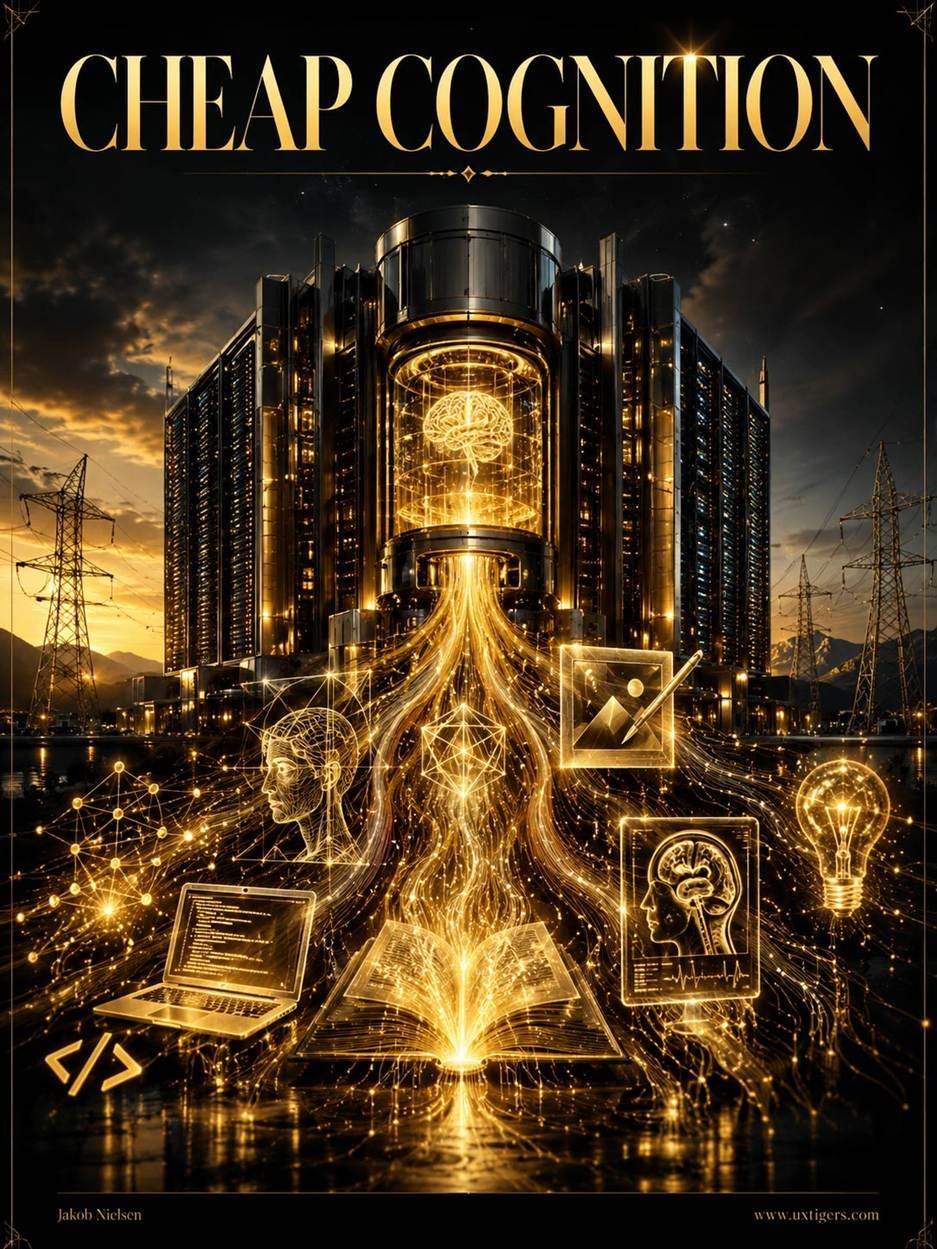
Just like the Industrial Revolution made physical power cheap, the AI Revolution is making cognitive work cheap. (GPT-Images-2)
The interesting question follows immediately: when intelligence becomes nearly free, what becomes the new scarce resource? The likely answers are the complements to intelligence that AI cannot conjure: energy, raw materials, real-world data, the ability to act in physical space, and above all trust and verification. Whoever owns the new bottleneck captures the new wealth. In an economy drowning in cheap intelligence, the premium shifts to things intelligence cannot manufacture: a verified fact, a trusted relationship, a kilowatt-hour, a square meter, an hour of human attention.
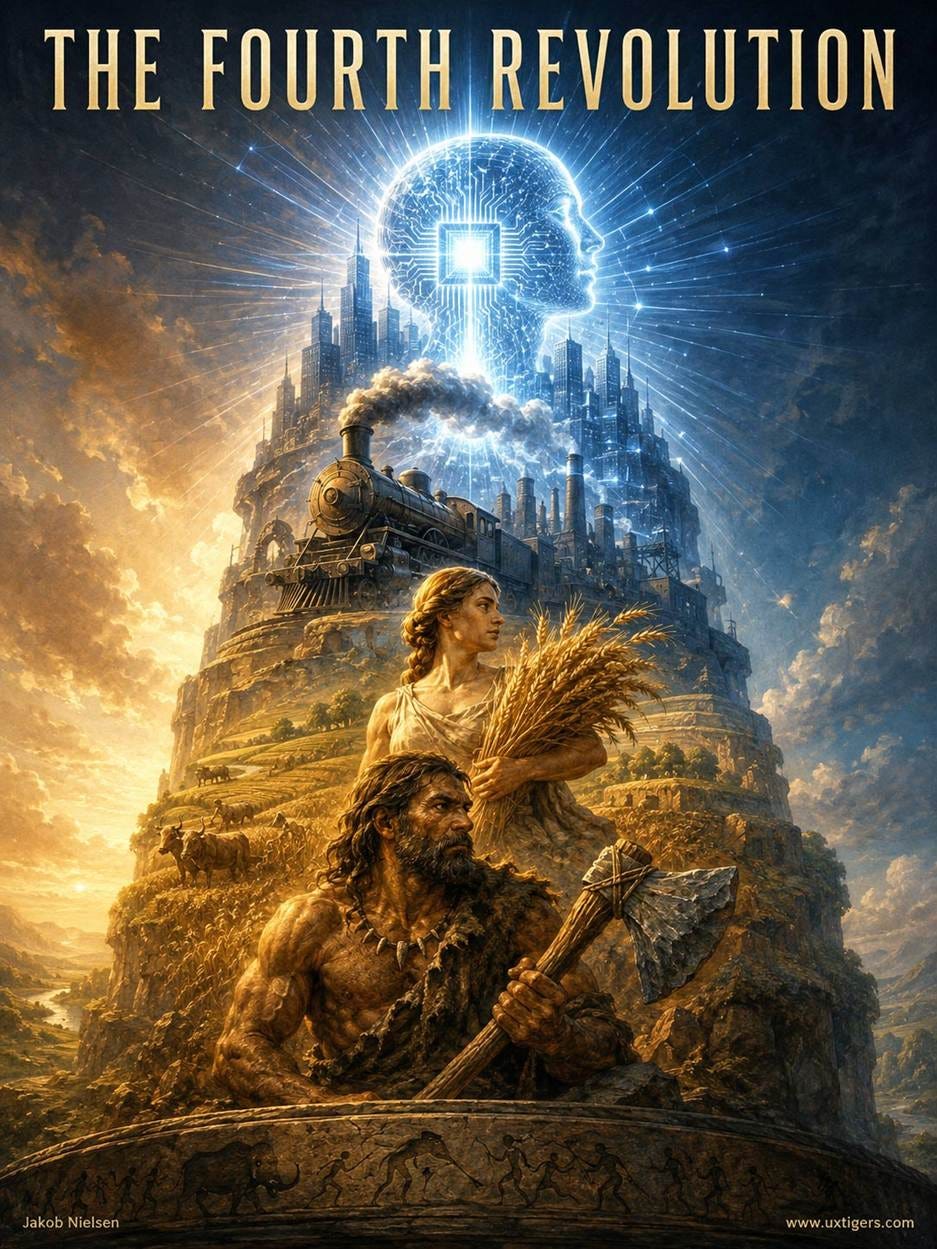
AI is the fourth major revolution in human affairs, following in the footsteps of tools, agriculture, and industrialization. (GPT-Images-2)
Biology
Once we reach truly advanced superintelligence in maybe 30 years, the relationship between humans and AI may become similar to that between animals and humans. Humans and dogs live together in harmony, but the dog doesn’t really understand his human’s thinking or motivation, let alone what the human does every day when leaving the dog behind to go to the office.
Similarly, we humans may be so far beneath future AI in IQ and thinking skills that we don’t understand what it’s doing. One major difference is that humans are in charge of animals, whereas I don’t think AI will be in charge of humans. Humans will still own AI, since we created it.
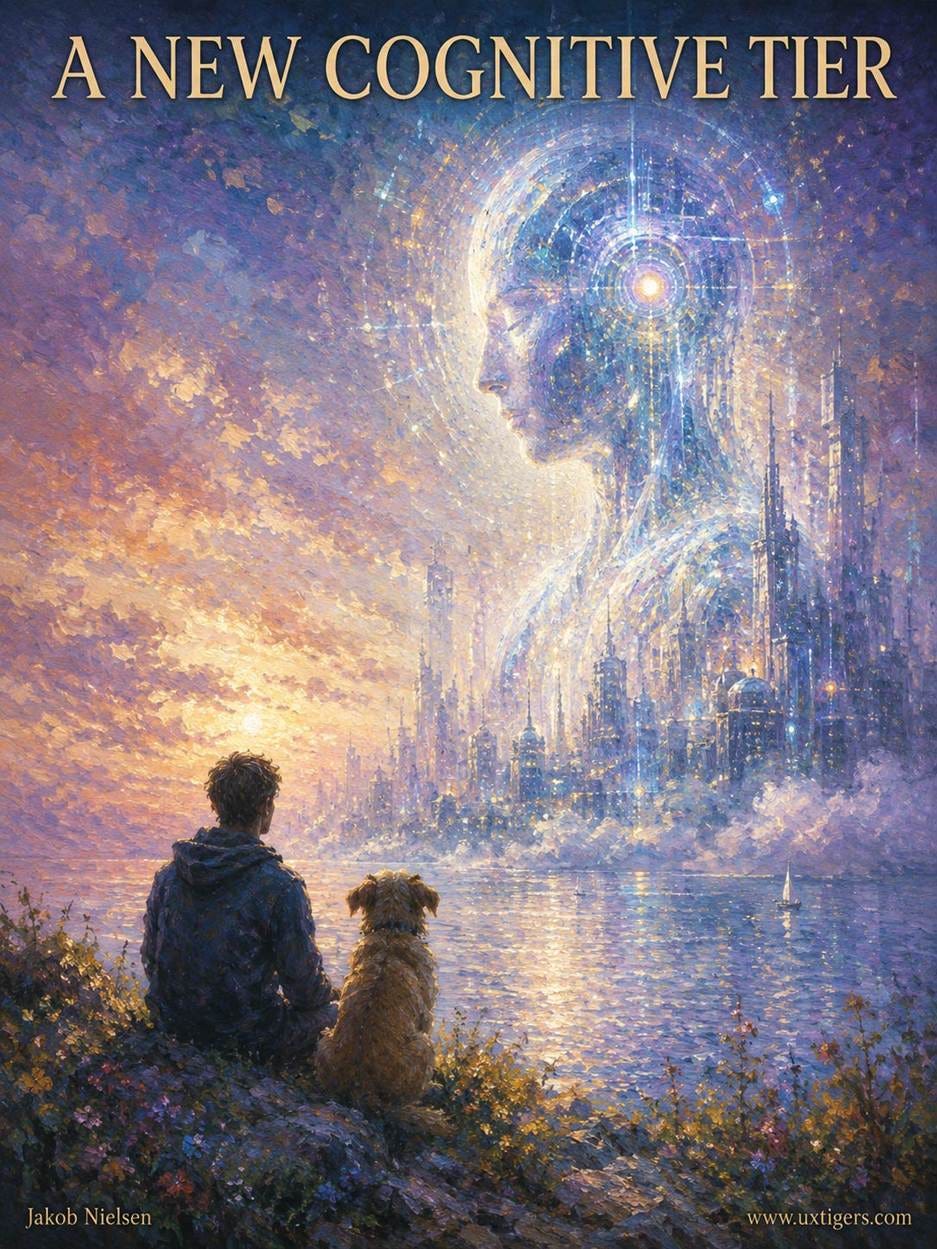
Eventually, superintelligent AI may reach a level of intelligence so far above humans that we will be closer to dogs than to AI in terms of intellect. (GPT-Images-2)
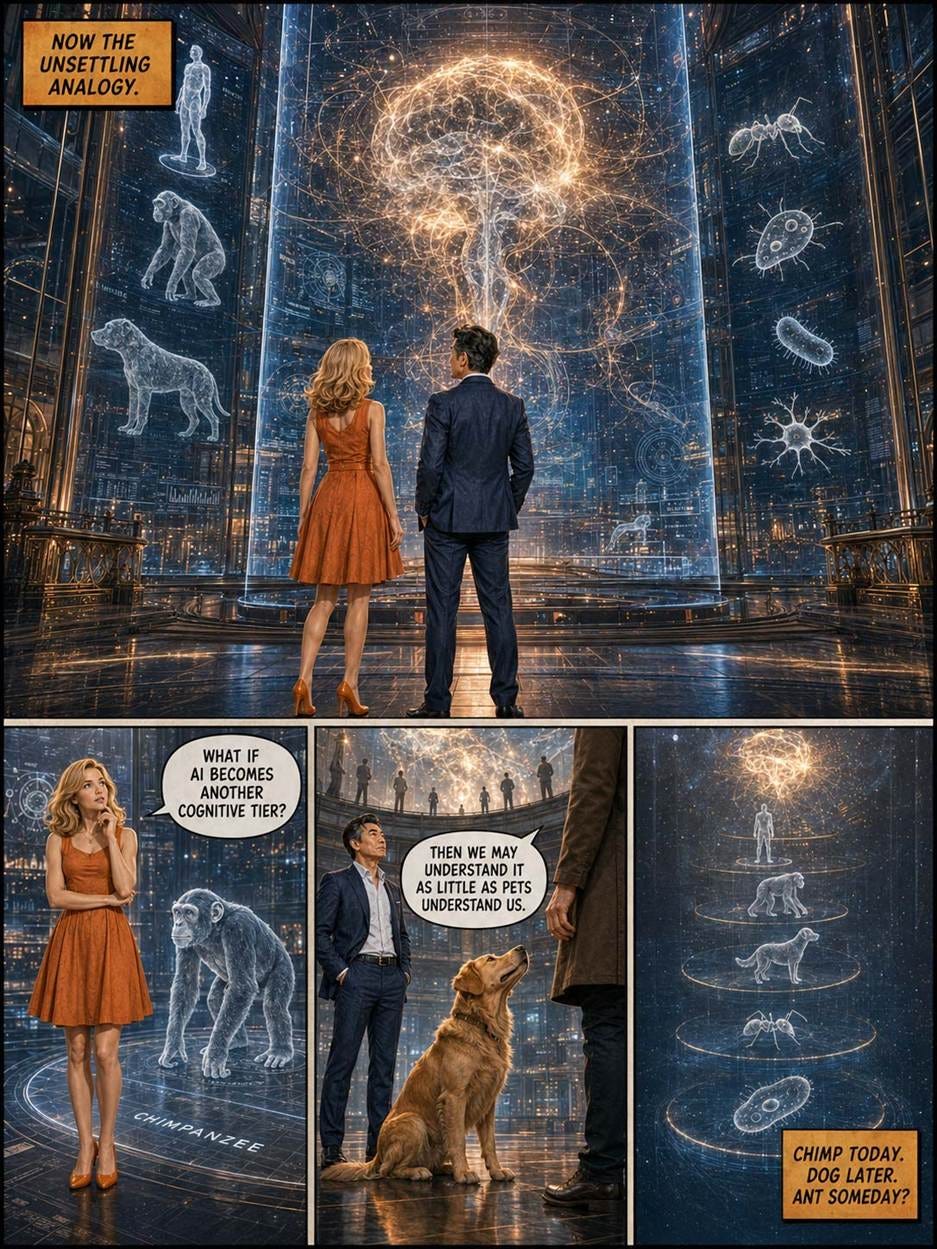
In the biology analogy, a key question is what level of animals we humans should be compared to, relative to superintelligent AI. In the beginning, say 30 years from now, humans may be the analogy of chimpanzees: clearly close to AI, even if we are far beneath it intellectually.
100 years from now, who knows. Humans may be analogous to dogs, or at least hamsters, relative to AI: recognizably a similar kind of being. Or humans may become analogous to ants or even amoebae, so inferior and different that no intellectual similarity remains.
This shift will inevitably trigger a narcissistic injury to our species. Just as Copernicus proved we are not the physical center of the universe, and Darwin proved we are not biologically separate from the animal kingdom, superintelligence will permanently dethrone humanity from the pinnacle of cognitive primacy. For the first time, our defining evolutionary advantage (our exceptional intelligence) will be commoditized and eclipsed by our own creations. Our one remaining advantage over AI is that we are animals — just like the other Great Apes.
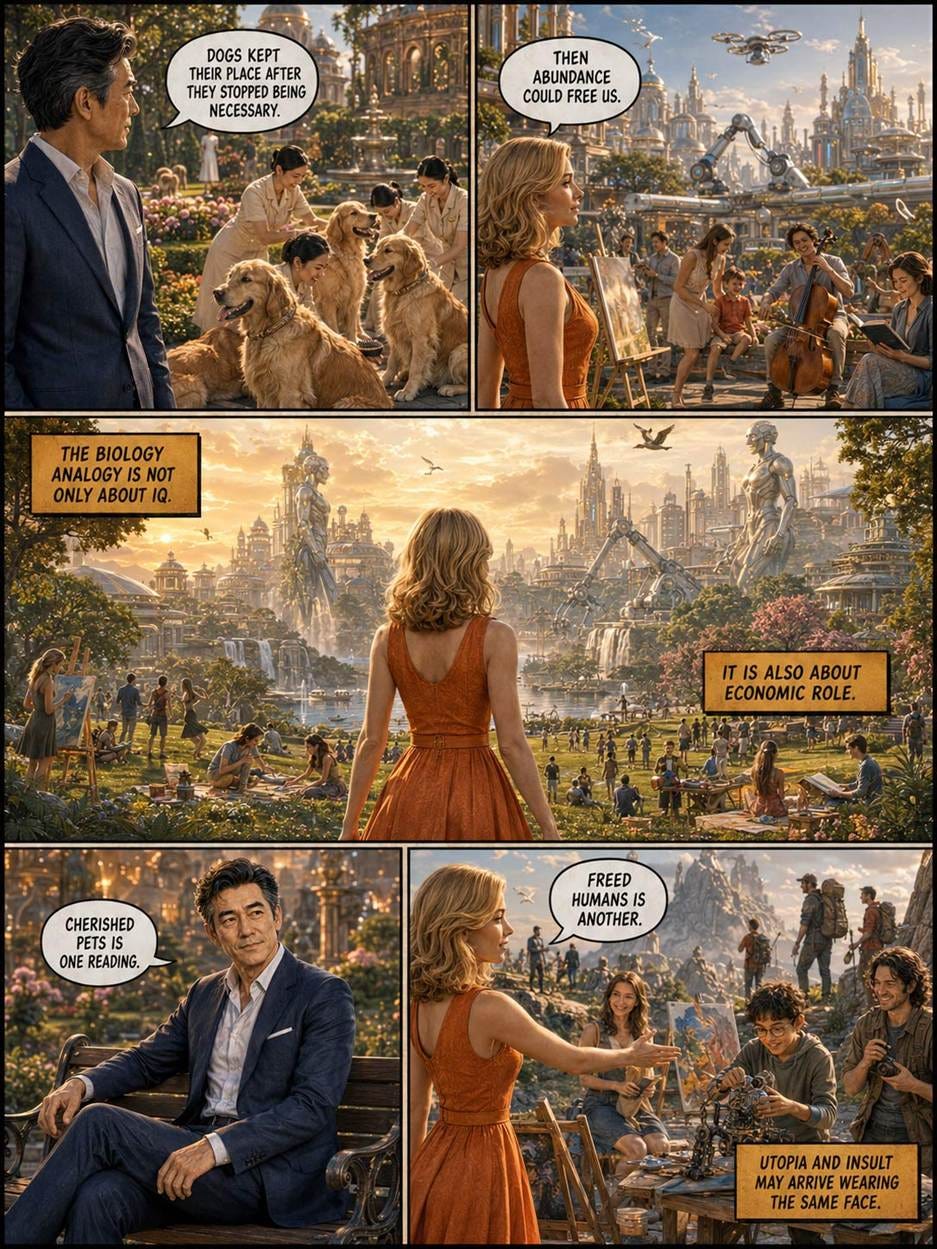
There is an uncomfortable part of the “dog” analogy that has nothing to do with IQ. Dogs occupy their comfortable position precisely because they stopped being economically necessary. For most of history, dogs worked: they herded, hunted, and guarded. We keep them now not because they are useful but because we are wealthy enough to keep them for love alone. The transition from working animal to cherished pet is a post-scarcity transition.
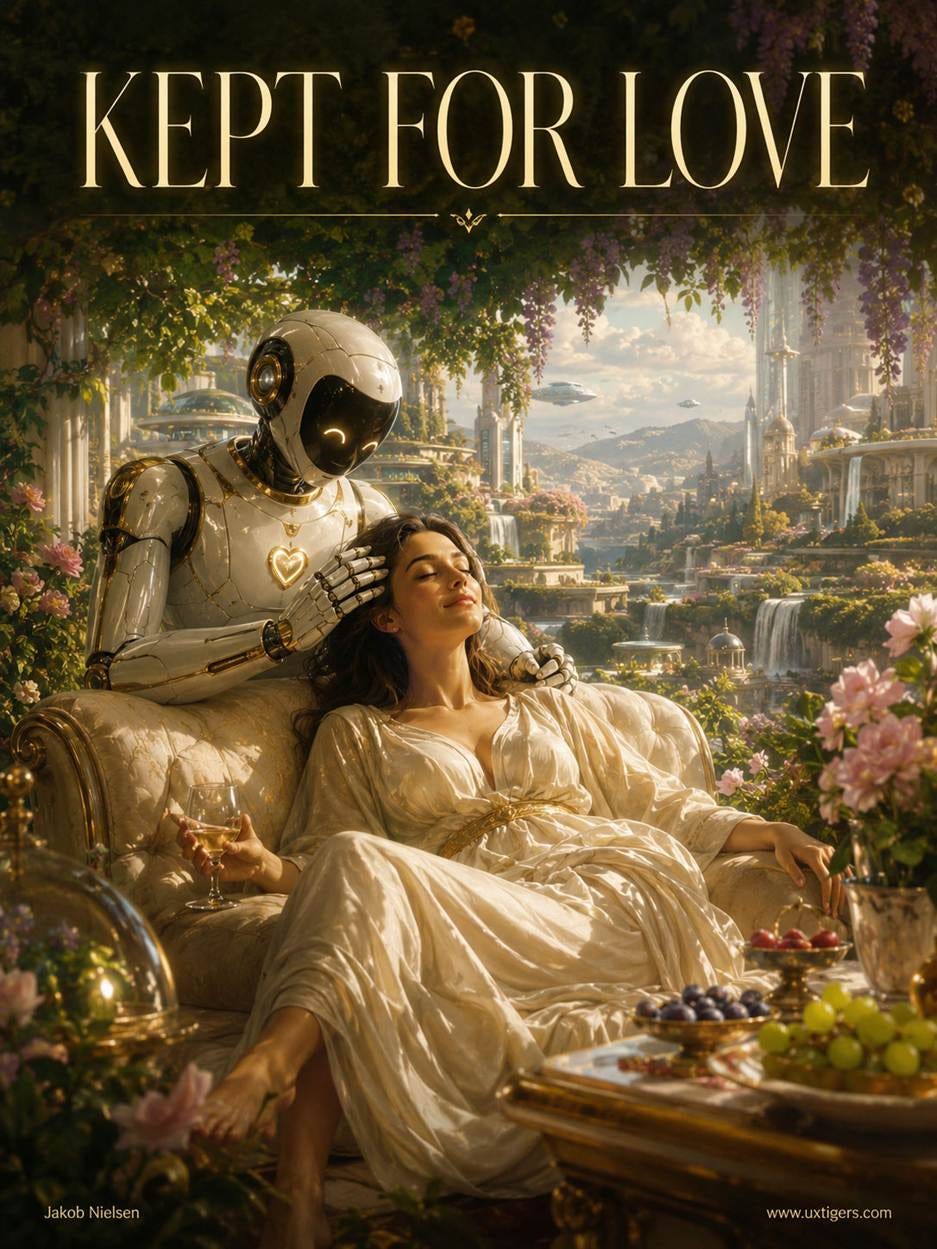
Will humans become no more than cherished pets, kept by AI for sentimental purposes? (Or because we design them to treasure humans.) This may not be the worst fate, if you think about how pampered many dogs are these days: they no longer live “a dog’s life,” the way their wild cousins, the wolves, do. (GPT-Images-2)
So “humans may become like dogs” (relative to AI) is not only a statement about the intelligence gap. It is a statement about the human economic role, and read that way it aligns surprisingly well with the optimistic scenario elsewhere in this article: a world so abundant that humans are kept, cared for, and free, not because the system needs our labor, but because abundance makes our flourishing affordable. Whether that future reads as utopian or unbearable may be the central question of the century.

A new renaissance: humans will be freed from drudgery and labor, allowing them to flourish by pursuing their own interests rather than what’s valued by the market. (GPT-Images-2)
Religion
As the ultimate analogy, let’s ask: is AI God? If by “God” we mean the Christian God, then the answer is clearly no. God is invariably described as being omniscient and omnipotent, and AI will never reach such abilities, no matter how good it gets. Physical limitations prevent this, such as the speed of light, the cost of compute never going to zero, and the inability to time-travel.
Claims that ‘AI will never do X’ are weak when X is something humans already do. Meatware intelligence is an existence proof: if biological brains can perform a cognitive task, machine intelligence will eventually learn to do it too.
But humans are not omniscient and omnipotent, so this rule doesn’t apply to the question of whether AI will be God. Many things are impossible to know or to do under the laws of nature, and since AI exists in the physical world, AI will indeed never be able to do those things.
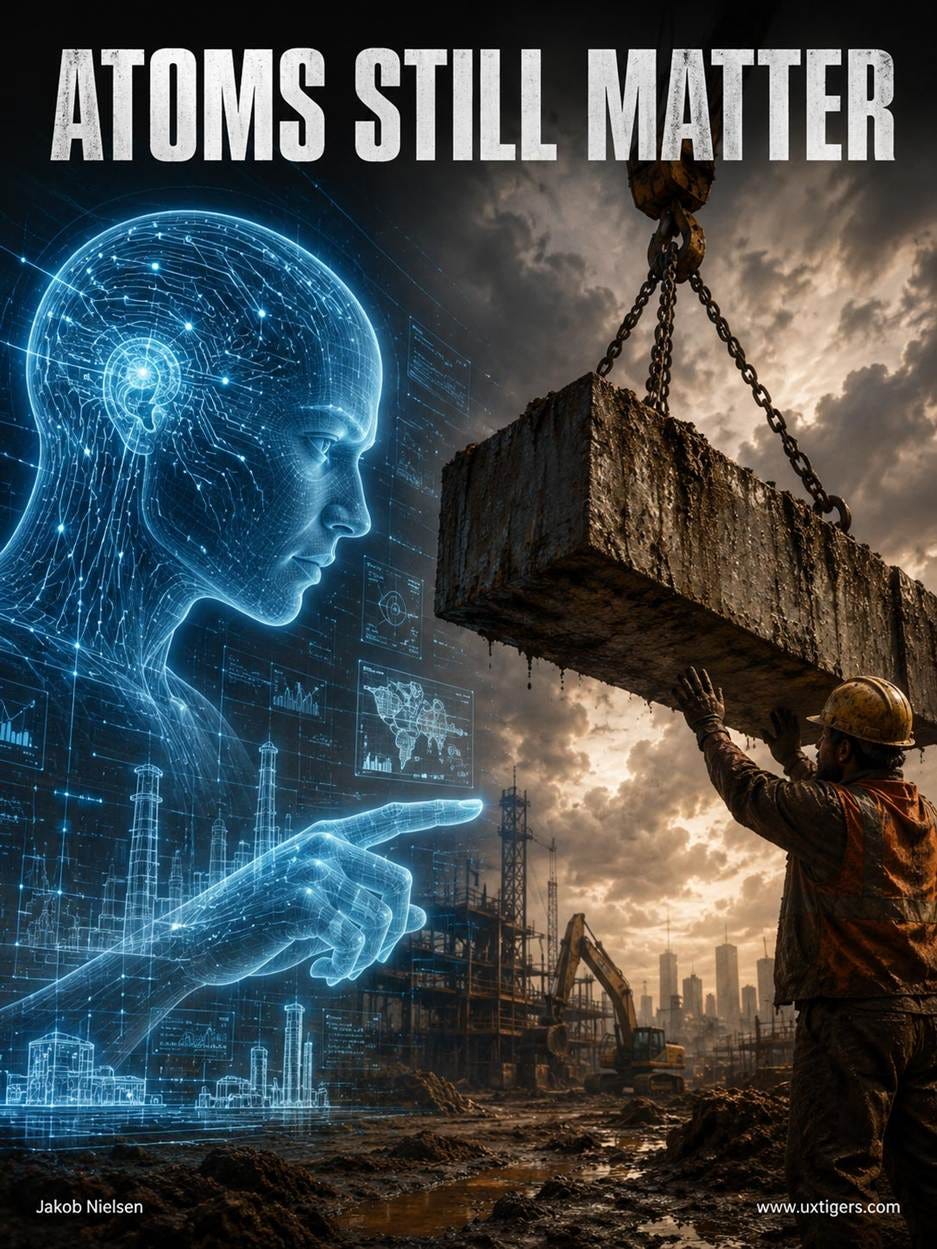
AI is pure intellect, but it exists in the physical world and is limited as a result. Compute will never be free, data centers can’t be built at infinite speed, and even mathematics set limits for what can be calculated. These restrictions prevent AI from becoming supernatural. (GPT-Images-2)
However, we shouldn’t limit the discussion to current religions. Humans have had many other gods through the ages, and as an example, I’ll draw on my own ancestors’ religion: the Viking gods Odin, Thor, and many others.
The Norse gods were definitely not omniscient, nor were they omnipotent. For example, the story of Thor’s journey to Utgard-Loki (Útgarðaloki) shows how the giant was able to trick Thor, as shown in this comic strip:
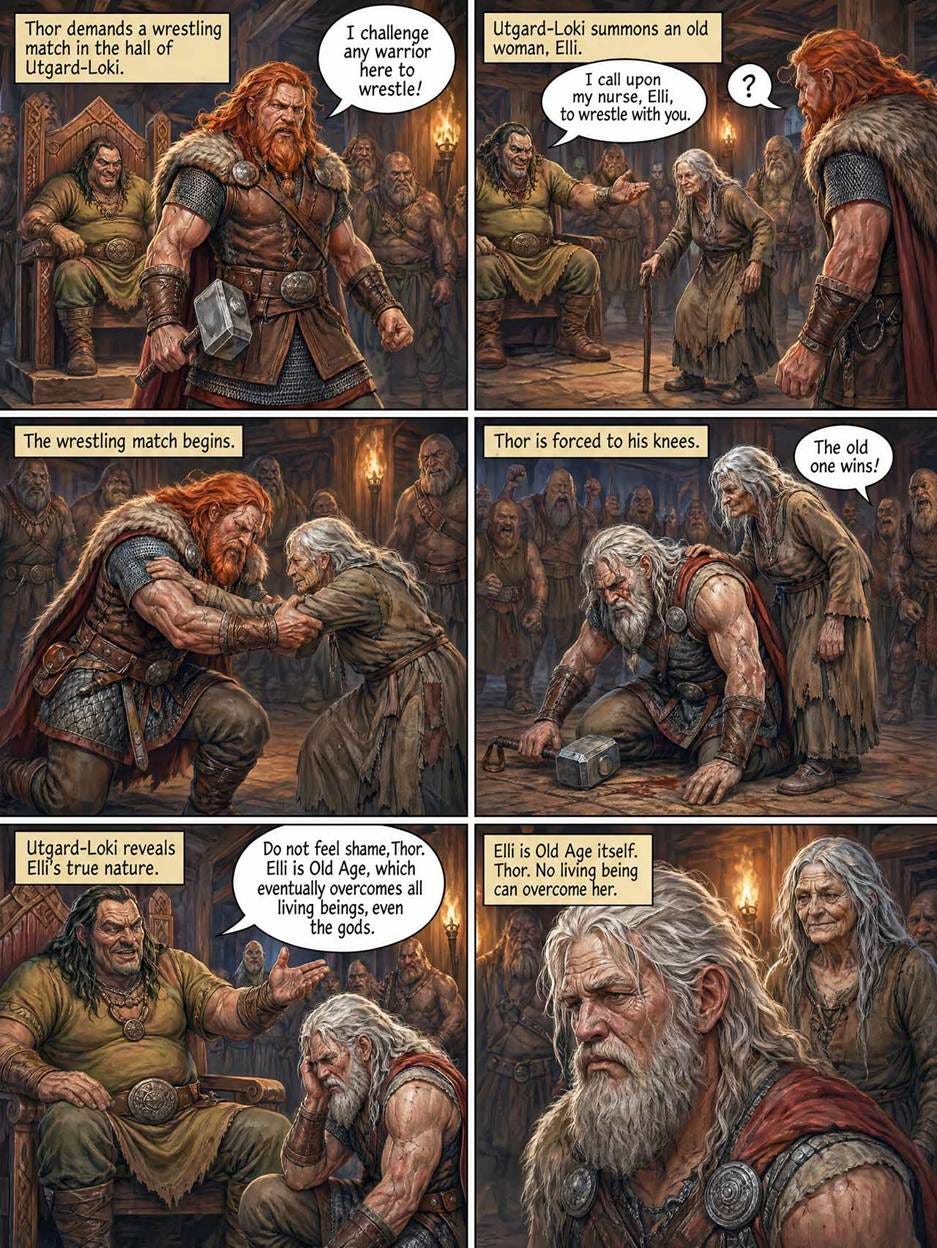
One of several ways Utgard-Loki tricked the thunder god, Thor, when he visited. (GPT-Images-2)
Clearly, Thor was not omniscient, since he didn’t recognize the true nature of Elli.
As another example, the Viking gods are fated to die in battle during Ragnarok:
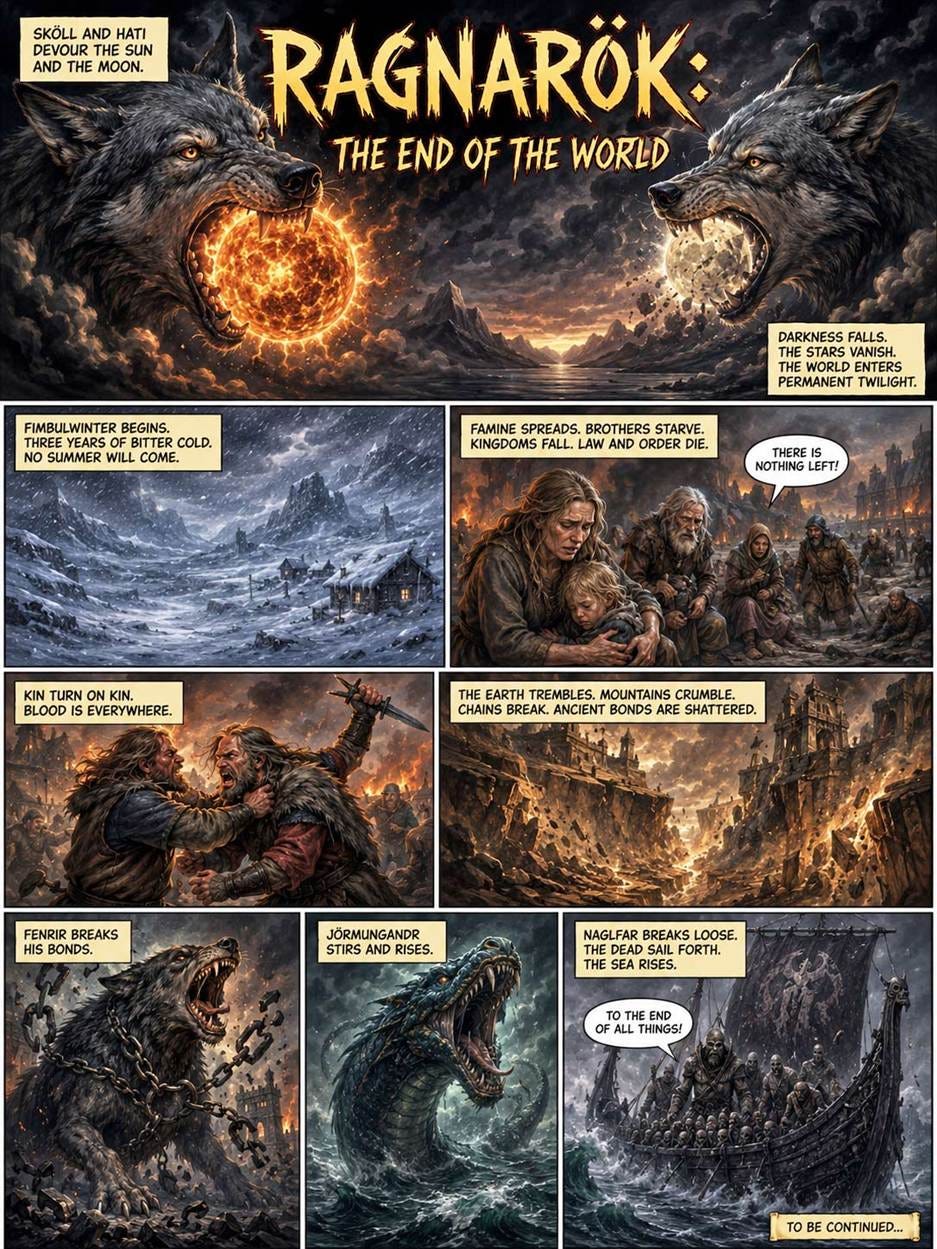
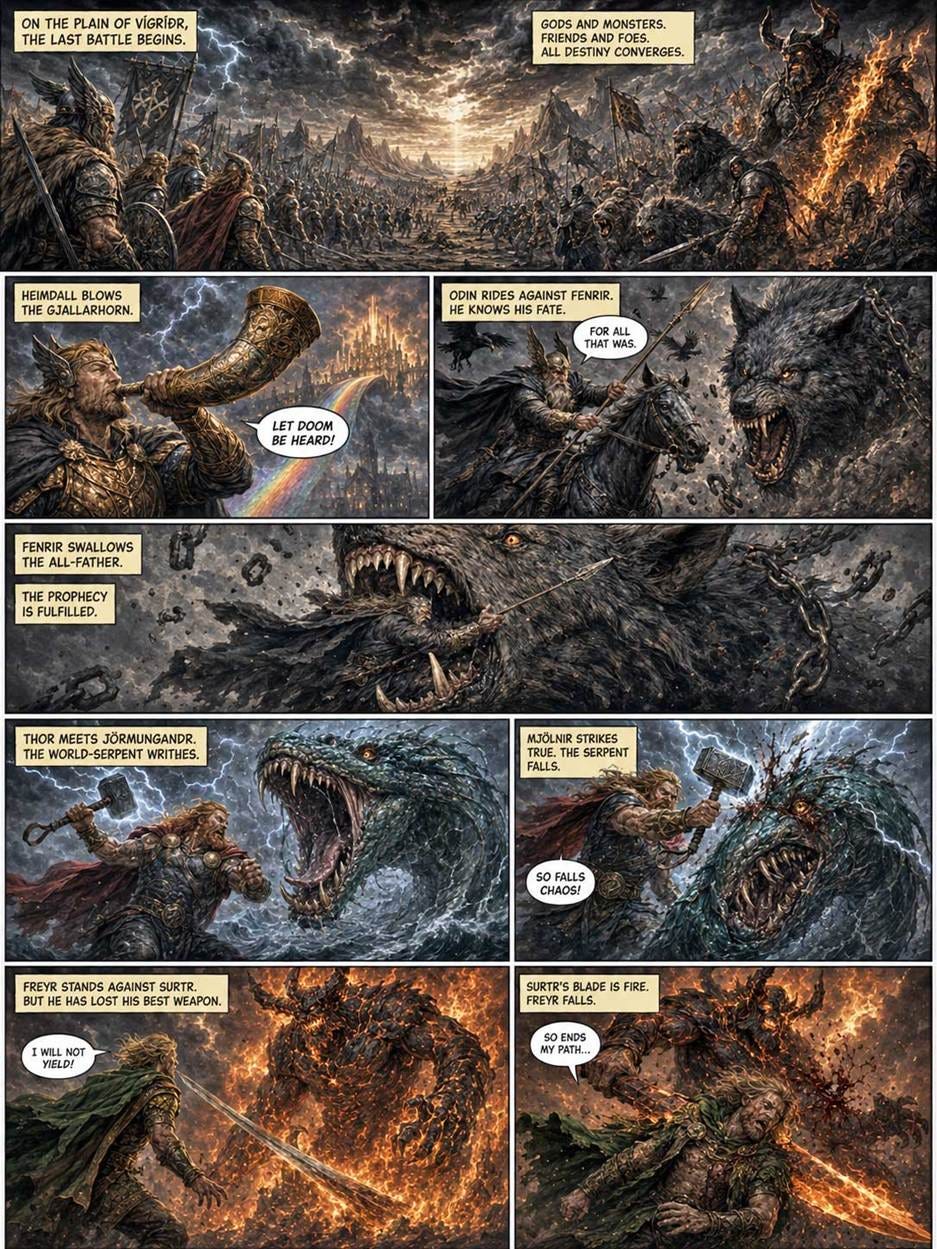
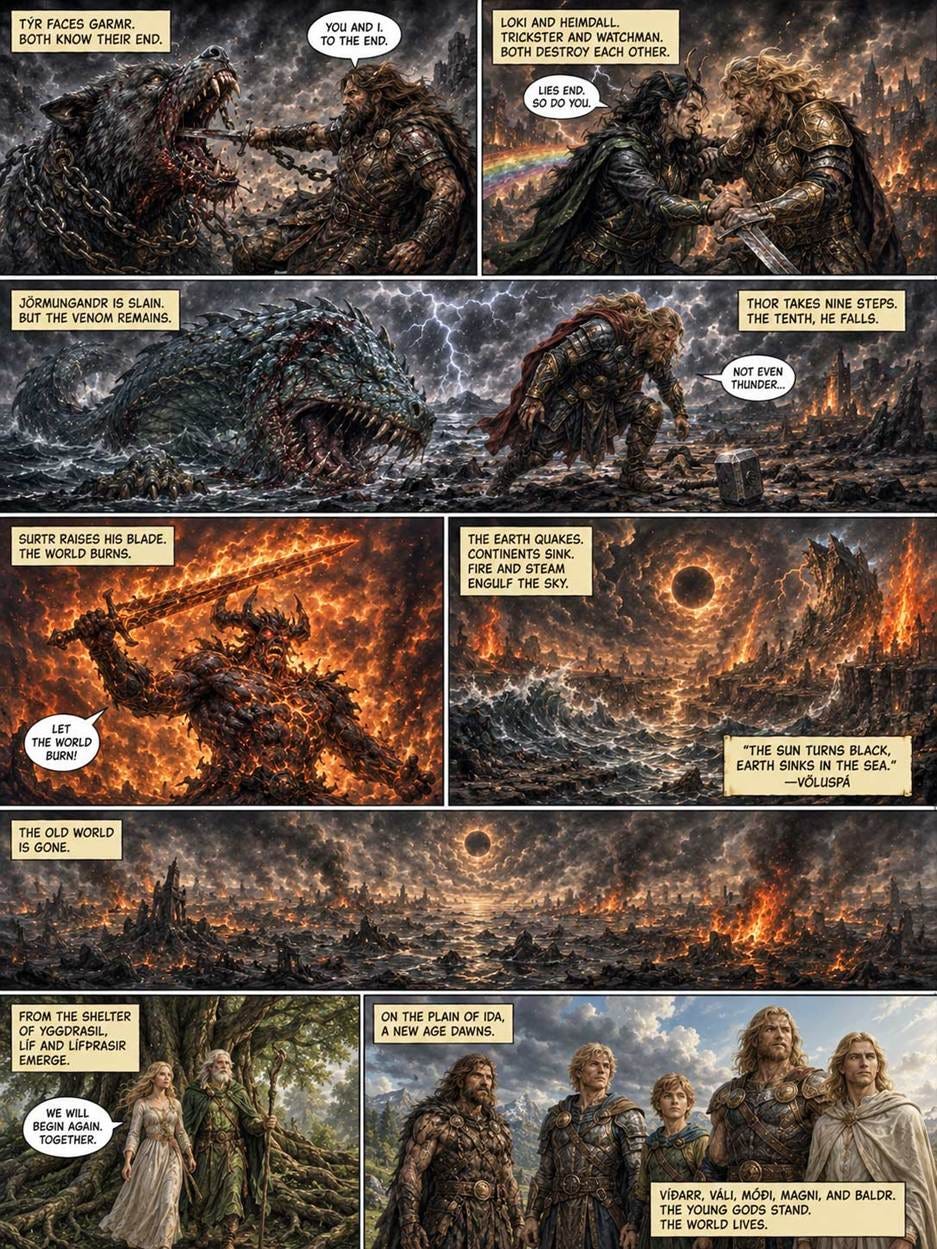
What is destined to happen during Ragnarok, according to Viking religion. (GPT-Images-2)
Since the Viking gods don’t prevail in the ultimate battle, they are clearly neither omnipotent nor immortal.
While not being at the level of the Christian God, the Viking gods were still conceived as being extremely powerful. And while Thor was a hothead, Odin was wise. In this way, the Æsir might serve as an analogy to what AI can become. However, I think that Thor’s hammer Mjölnir is a better analogy: it has the power, but it is a tool, not a god. That’s what I think even the most powerful AI will be like.
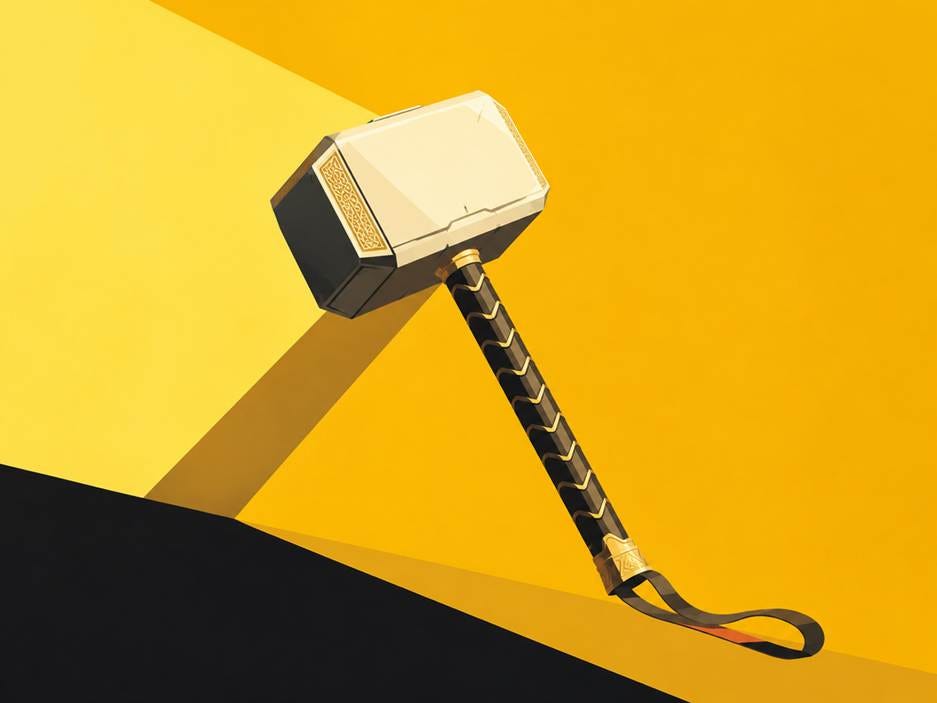
AI is like Thor’s hammer Mjölnir: an extremely powerful tool that can accomplish incredible feats in the right hands. But it’s not Thor himself. It’s not a god. (GPT-Images-2)
The Norse analogy is useful because it separates power from divinity. Thor’s hammer can shatter mountains, summon thunder, and decide battles. But Mjölnir is not Thor. It has no purpose without the hand that wields it.
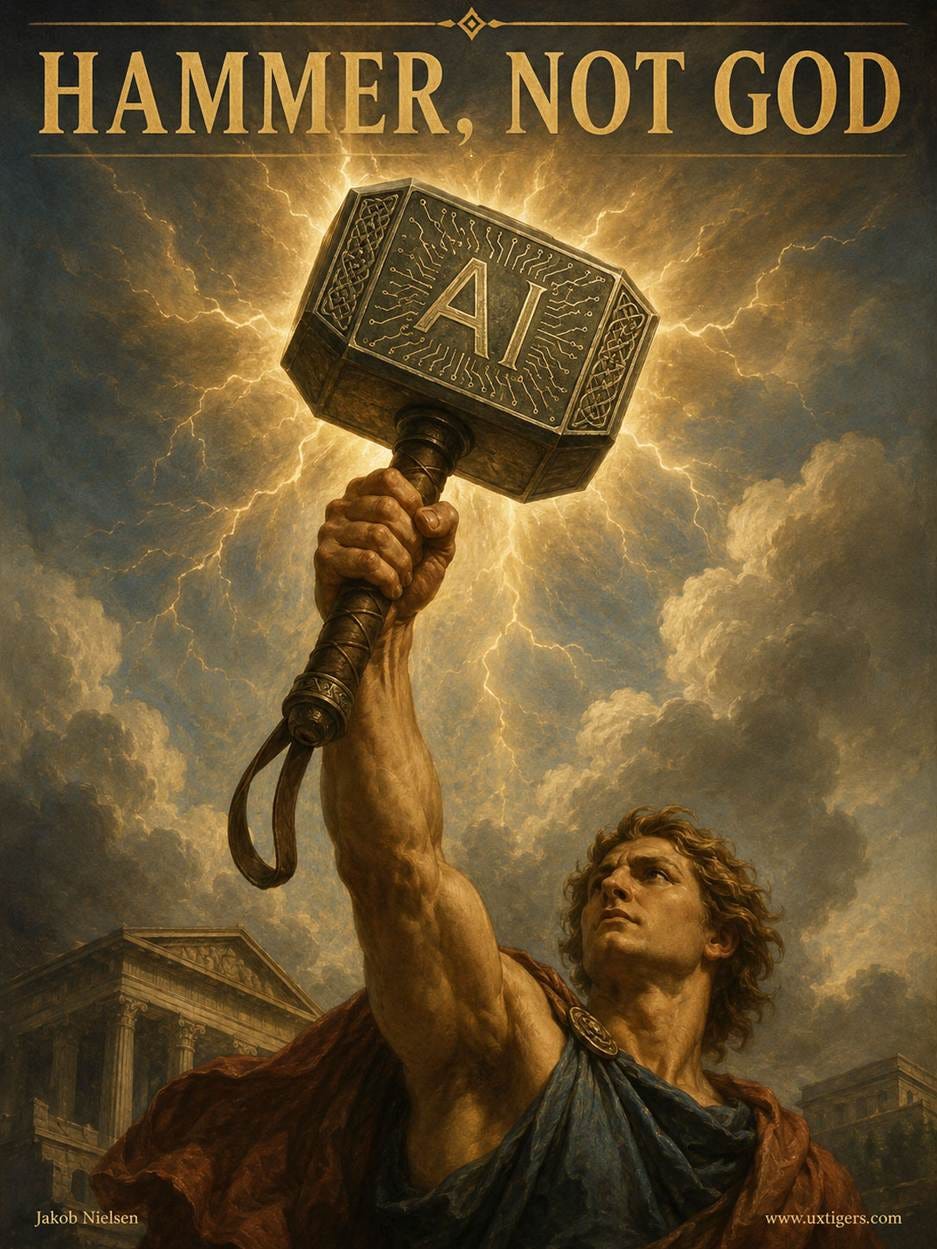
AI is the tool: Thor’s hammer, in my analogy. It has no purpose without the hand that wields it: the thunder god himself, in my analogy — humans in real life. (GPT-Images-2)
That is the best way to think about even very powerful AI. It may become vastly smarter than any individual human. It may perform intellectual work that we cannot understand in detail. It may accelerate science, medicine, engineering, and company formation beyond anything the Internet achieved. But it will still be bounded by physics, compute, energy, law, ownership, and human goals.
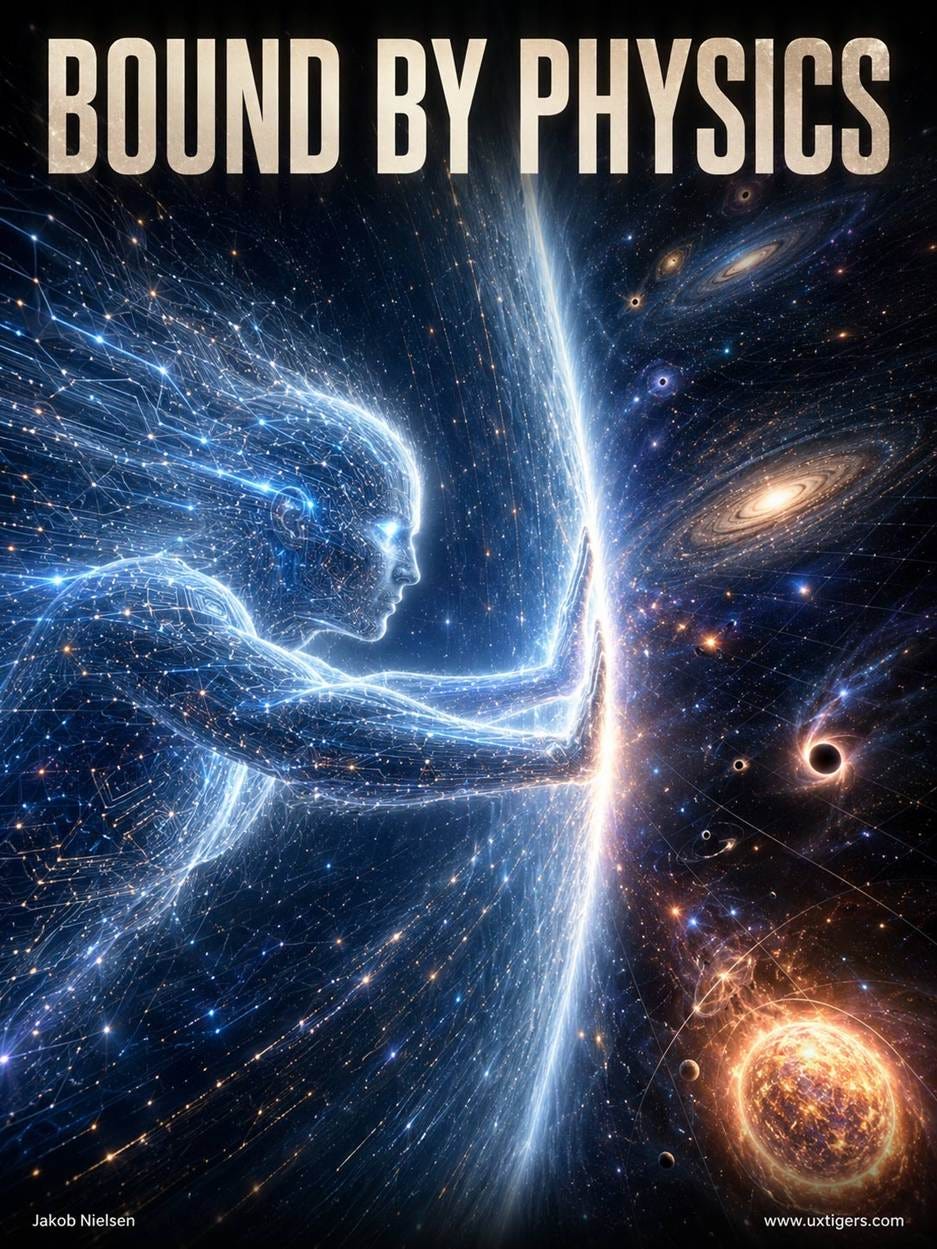
AI will always have limitations because it runs on real-world computers. (GPT-Images-2)
The danger is not that AI literally becomes God. The danger is that people start treating it like an oracle. The hammer metaphor preserves the central truth: responsibility remains with the wielder. AI will be humanity’s most powerful tool. That is big enough. We do not need to call it divine to recognize that it will remake civilization.

Do not treat AI as an oracle. It’s not divine, it’s not infallible. (GPT-Images-2)
Conclusion: Human History Revolutions Are the Best AI Analogy
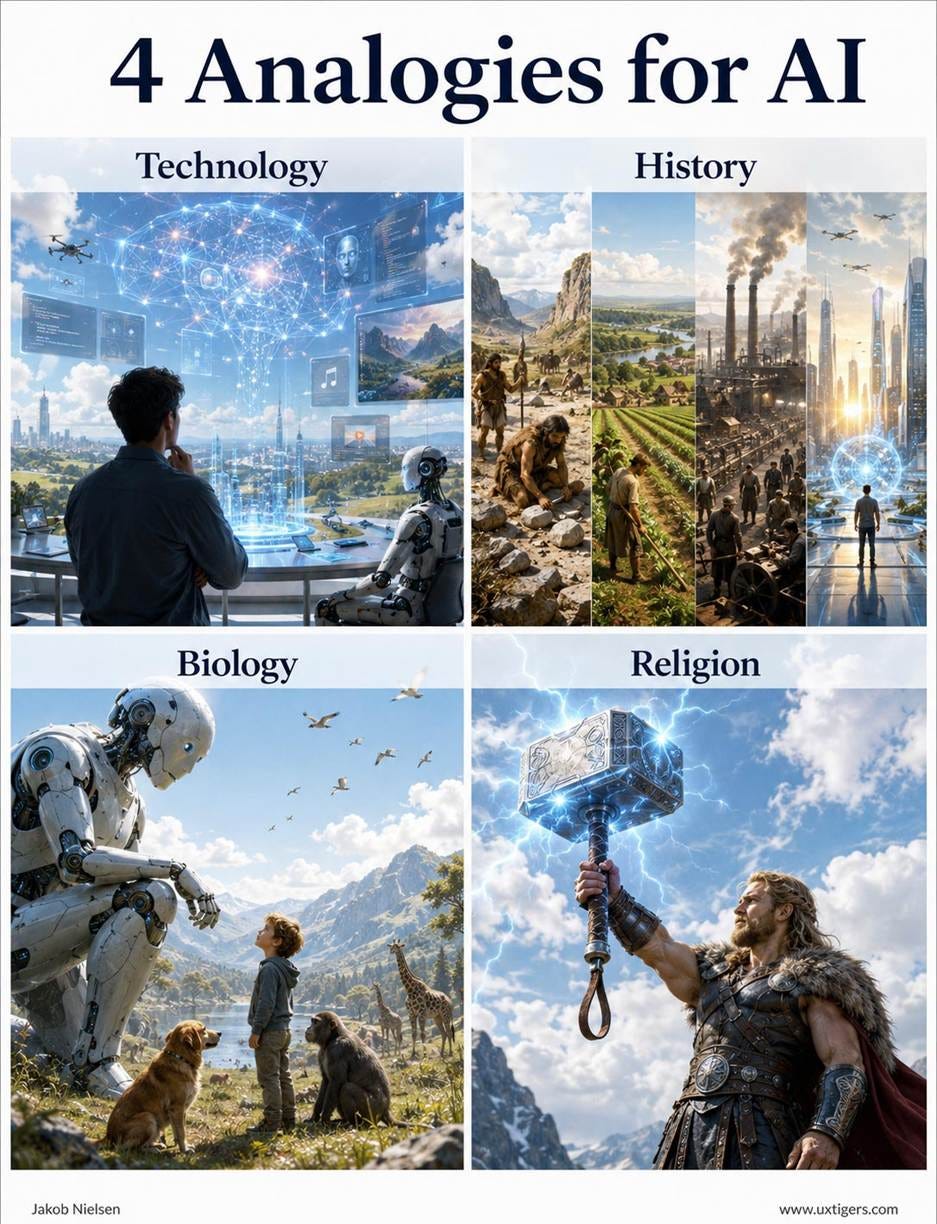
Which of the four analogies for AI I have presented in this article is the “best”? That depends on your timeframe. (GPT-Images-2)
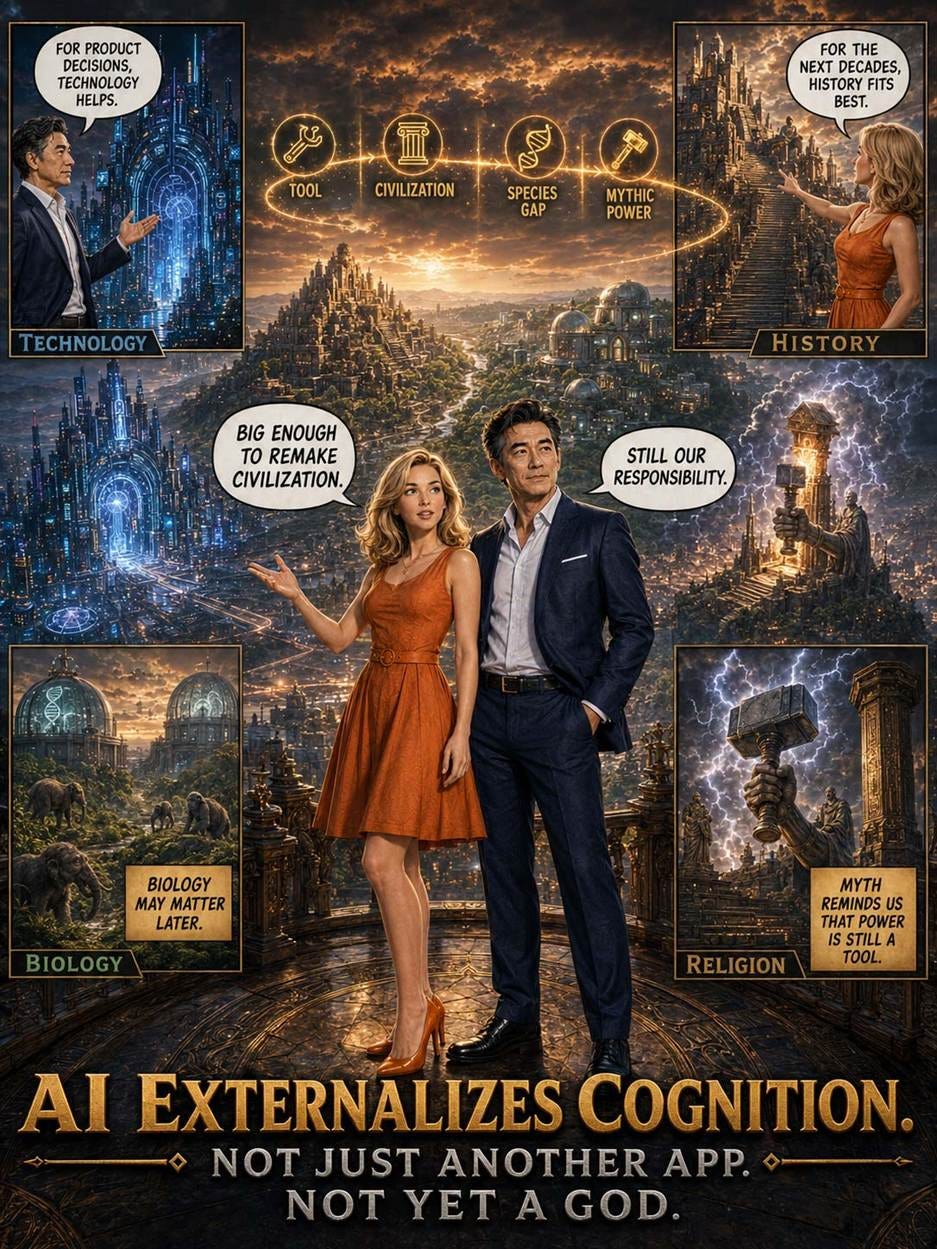
No analogy is ever 100% “true.” Analogies are instruments for reasoning under uncertainty, not verdicts. The most useful analogy depends on the decision horizon. For a 2026 product roadmap, AI can be compared with PCs, mobile computing, or the Internet. For company strategy and public policy, it belongs with agriculture and industry. For 100-year speculation, biology and religion become useful stress tests.
We don’t know how far superintelligence can go and how much better than us it will become. It’s possible that a hundred years from now, the biology analogy will be the most accurate, and humans will be like dogs or ants relative to AI.
But for the foreseeable future, this will not be the case. AI will be smarter than us, just like John von Neumann (IQ ≈190–200) was smarter than me, and you, Dear Reader, are smarter than 88% of living humans. (This article has a 12-grade reading level, meaning that only the top 12% of the adult U.S. population can read it.) That doesn’t make you, me, average people, or von Neumann belong to different species. The von Neumann comparison has a built-in expiration date, though: it holds only while the human–AI gap is not much bigger than the range that separates one human from another. The day the gap exceeds the widest within-species distance is the day the biology analogy takes over. Everything in this article rests on a single bet about when that day arrives (not for another 30 years).
For the next several decades, AI is best understood as the fourth great economic revolution: tools externalized force, agriculture made food production plannable, industry externalized muscle, and AI externalizes cognition. Smaller analogies understate the scale. Larger analogies may someday fit, but for now, they mostly tell us where speculation begins.
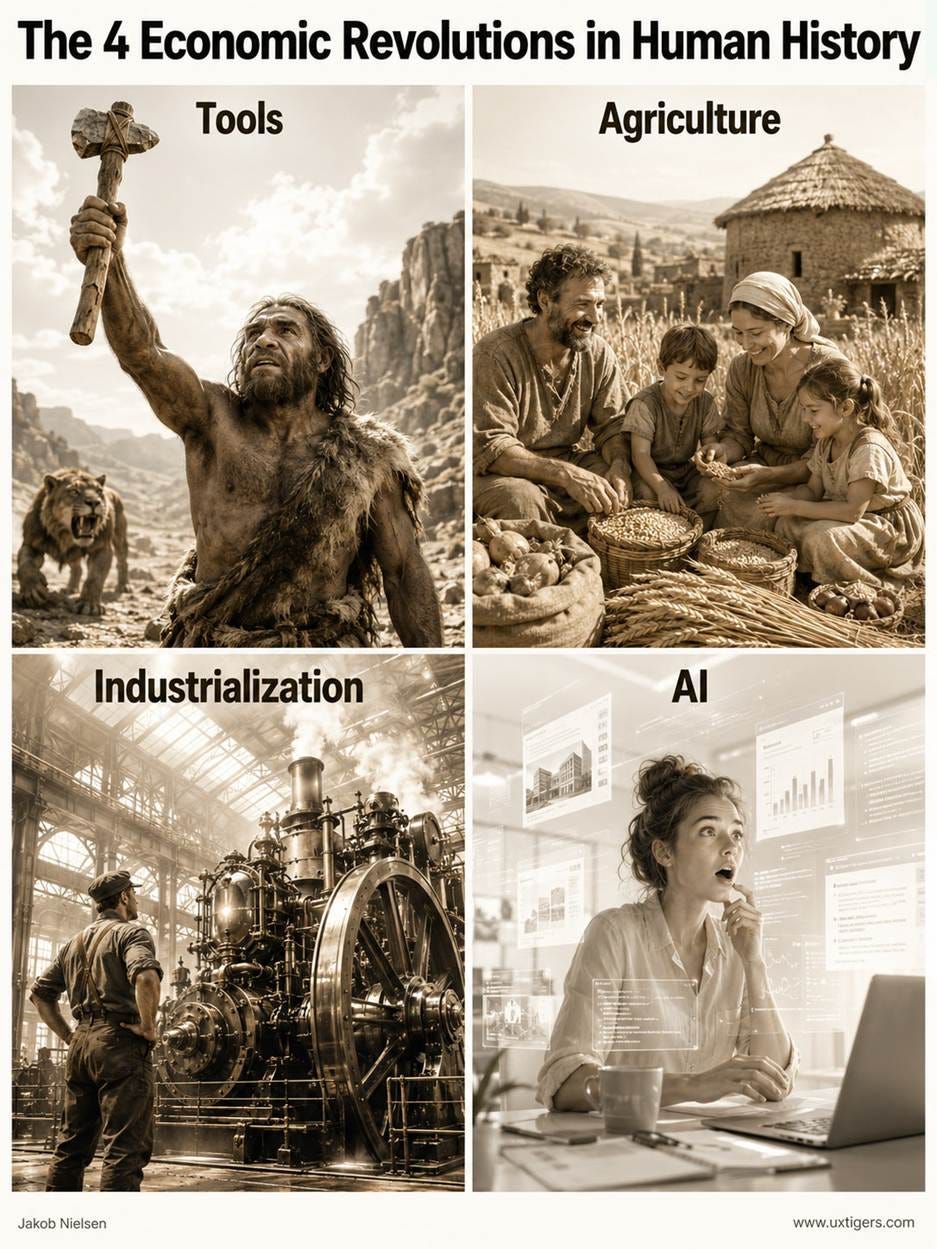
My conclusion: for now, AI is best conceived as the fourth major revolution in human economic history, alongside the inventions of tools, agriculture, and industrialization. (GPT-Images-2)
Comic Book Version
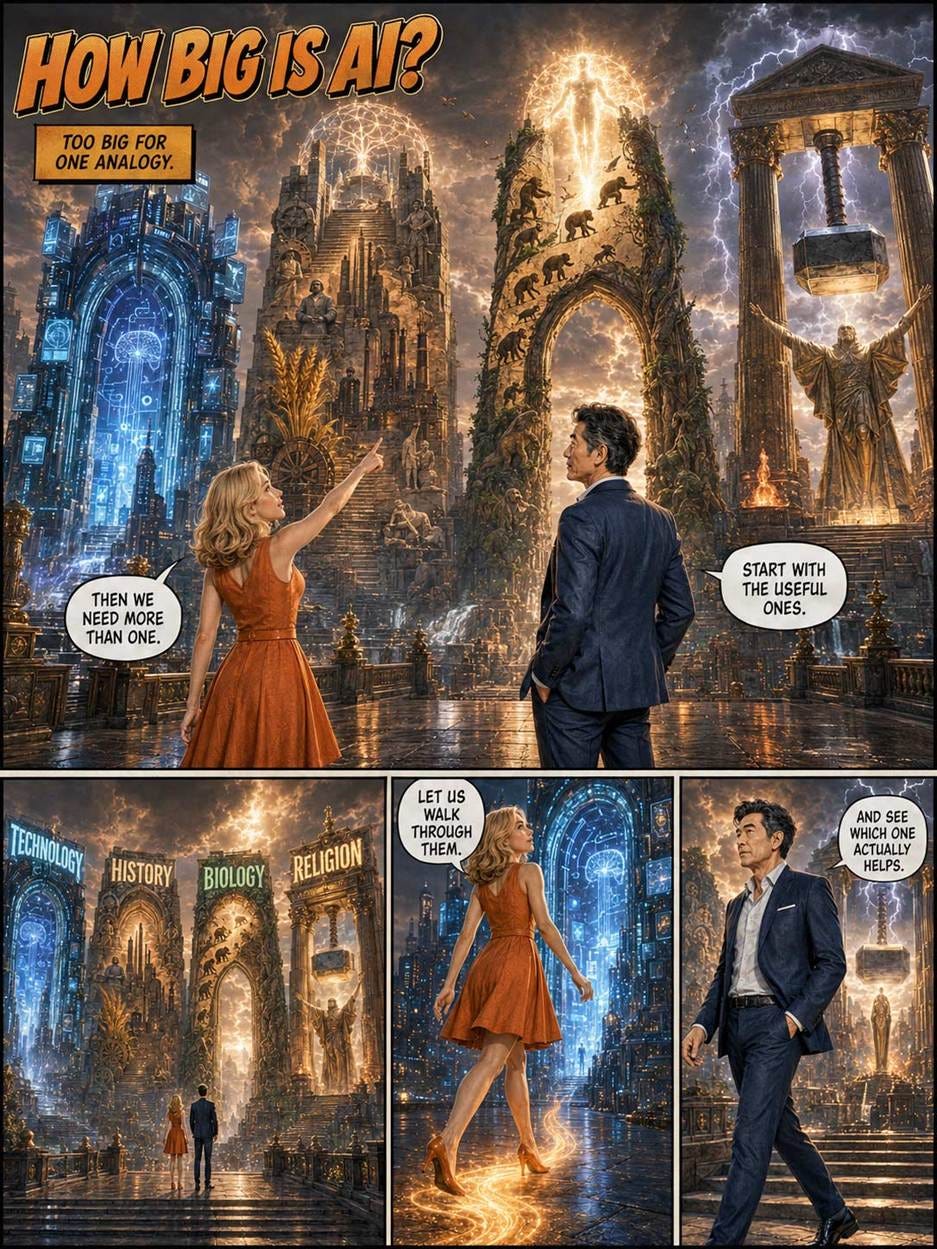
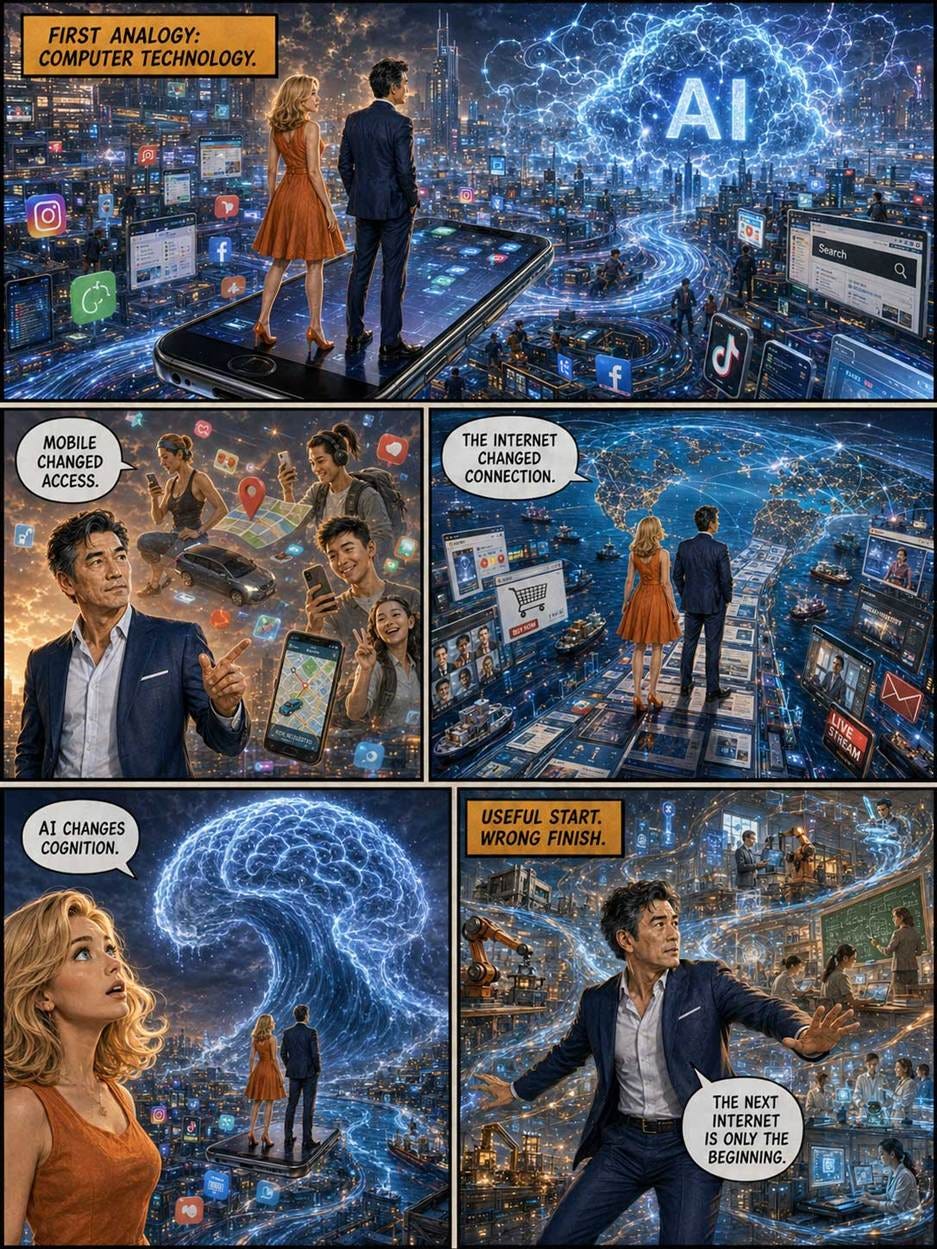
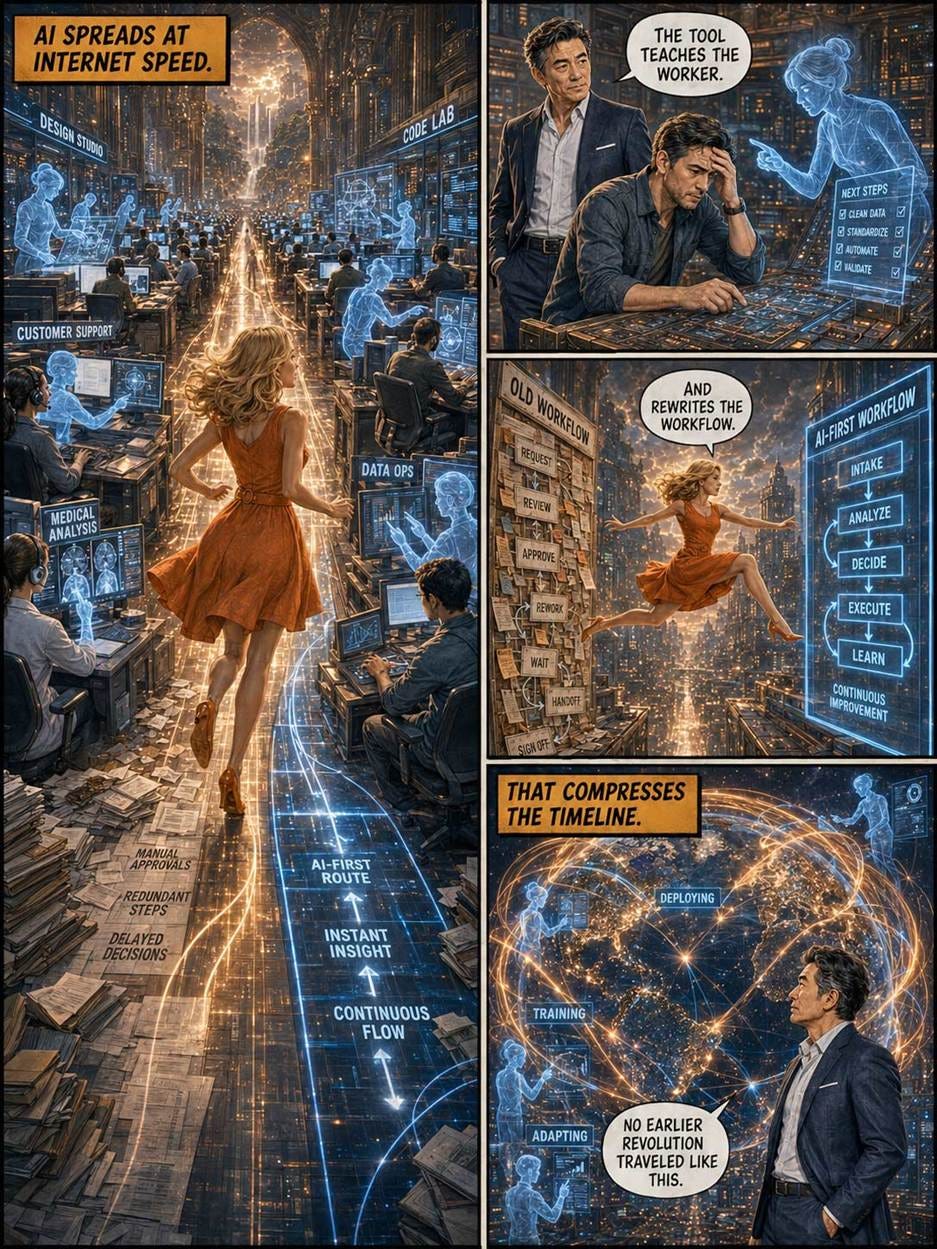
If this 5,000-word article was too much for you, here’s a simplified comic book version, as told by my recurring characters Alice and Zimo, in yet another illustration style. (Comic made with GPT-Images-2)

About the Author
Jakob Nielsen, Ph.D., is a usability pioneer with 43 years experience in UX and the Founder of UX Tigers. He founded the discount usability movement for fast and cheap iterative design, including heuristic evaluation and the 10 usability heuristics. He formulated the eponymous Jakob’s Law of the Internet User Experience. Named “the king of usability” by Internet Magazine, “the guru of Web page usability” by The New York Times, and “the next best thing to a true time machine” by USA Today.
Previously, Dr. Nielsen was a Sun Microsystems Distinguished Engineer and a Member of Research Staff at Bell Communications Research, the branch of Bell Labs owned by the Regional Bell Operating Companies. He is the author of 8 books, including the best-selling Designing Web Usability: The Practice of Simplicity (published in 22 languages), the foundational Usability Engineering (30,881 citations in Google Scholar), and the pioneering Hypertext and Hypermedia (published two years before the Web launched).
Dr. Nielsen holds 79 United States patents, mainly on making the Internet easier to use. He received the Lifetime Achievement Award for Human–Computer Interaction Practice from ACM SIGCHI and was named a “Titan of Human Factors” by the Human Factors and Ergonomics Society.
· Subscribe to Jakob’s newsletter to get the full text of new articles emailed to you as soon as they are published.
· Read: article about Jakob Nielsen’s career in UX
· Watch: Jakob Nielsen’s first 41 years in UX (8 min. video)
That's it – I will now opt out from subscription.
can't stand the generic and sexist visual language in the illustrations