
Usability Testing Process Explained in Comic Strips

Summary: Three storylines from different categories of product design: apps, websites, and consumer electronics, all told in comic-strip format. Different cartooning styles are used to convey varying levels of detail, including a humorous version told through animal characters.
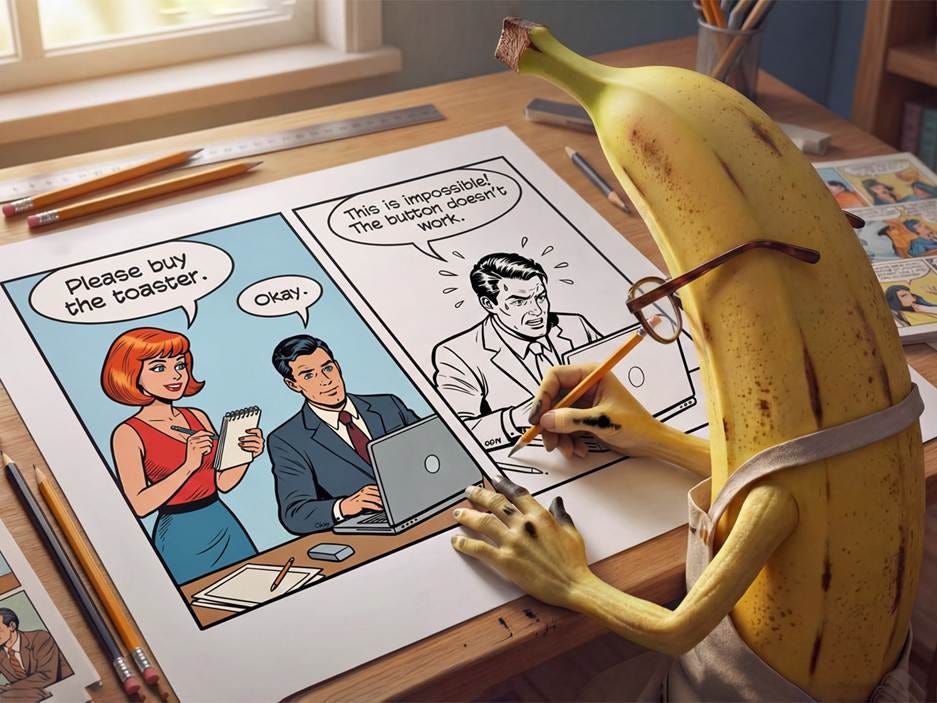
I made all the comics in this article with Nano Banana Pro.
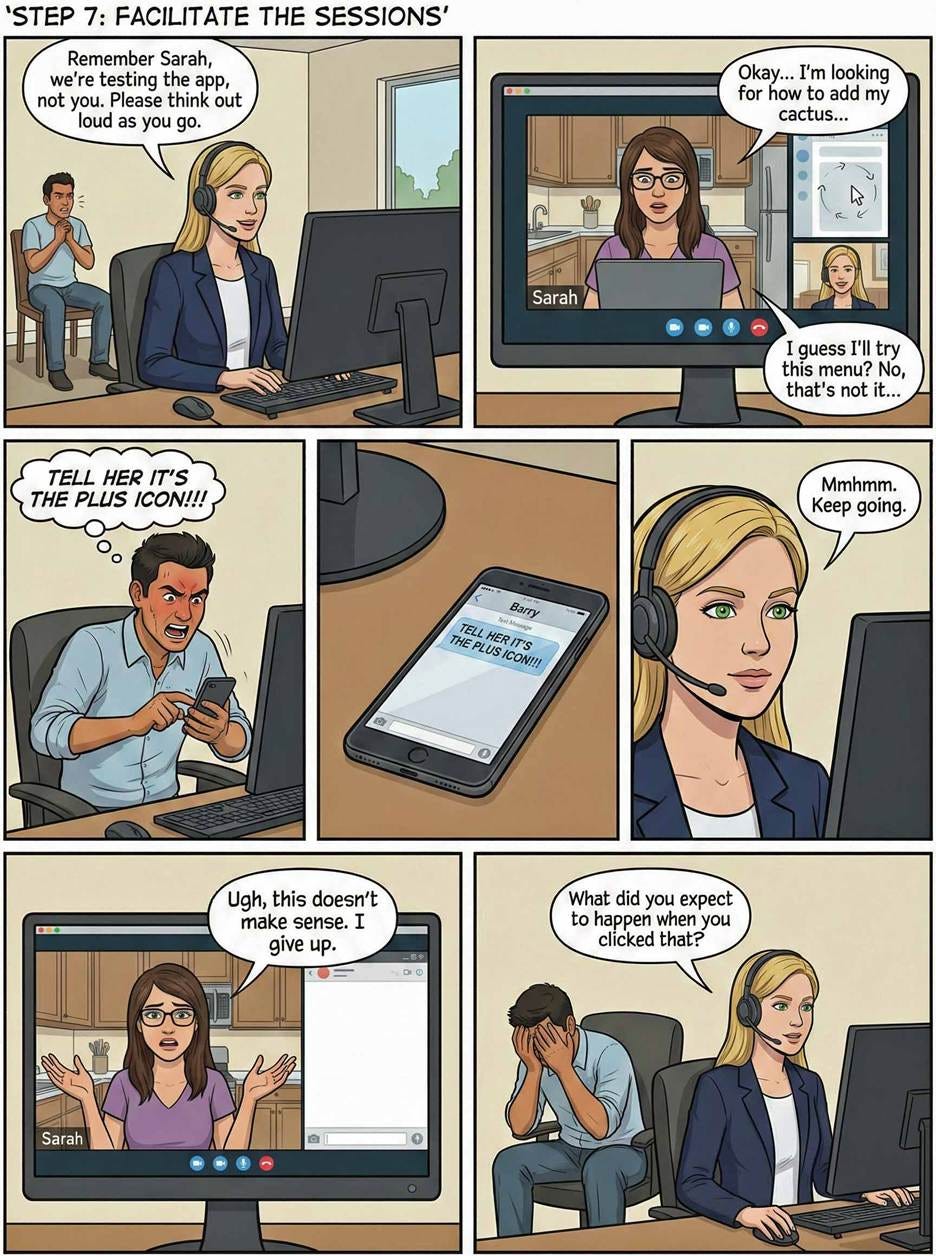
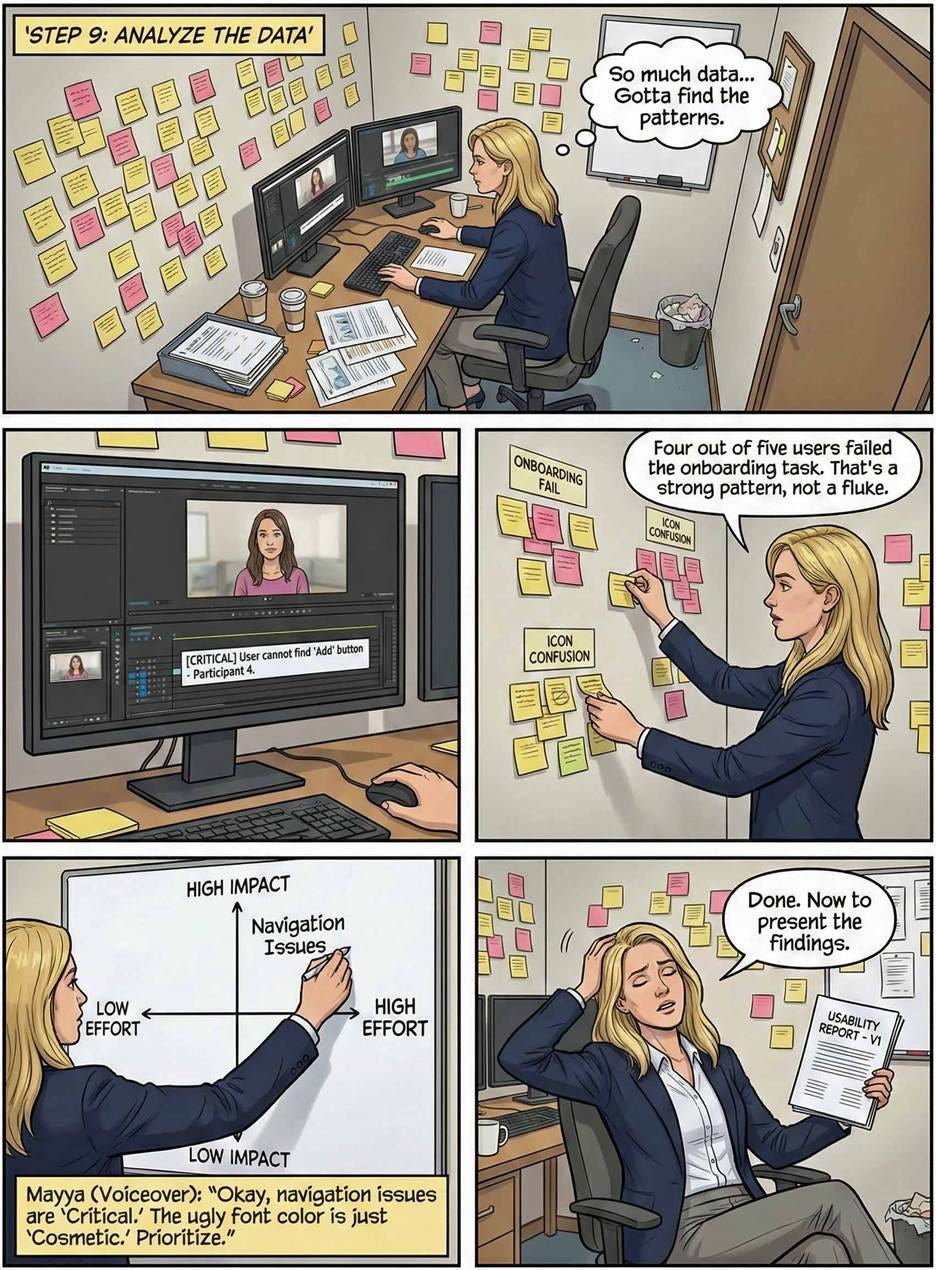
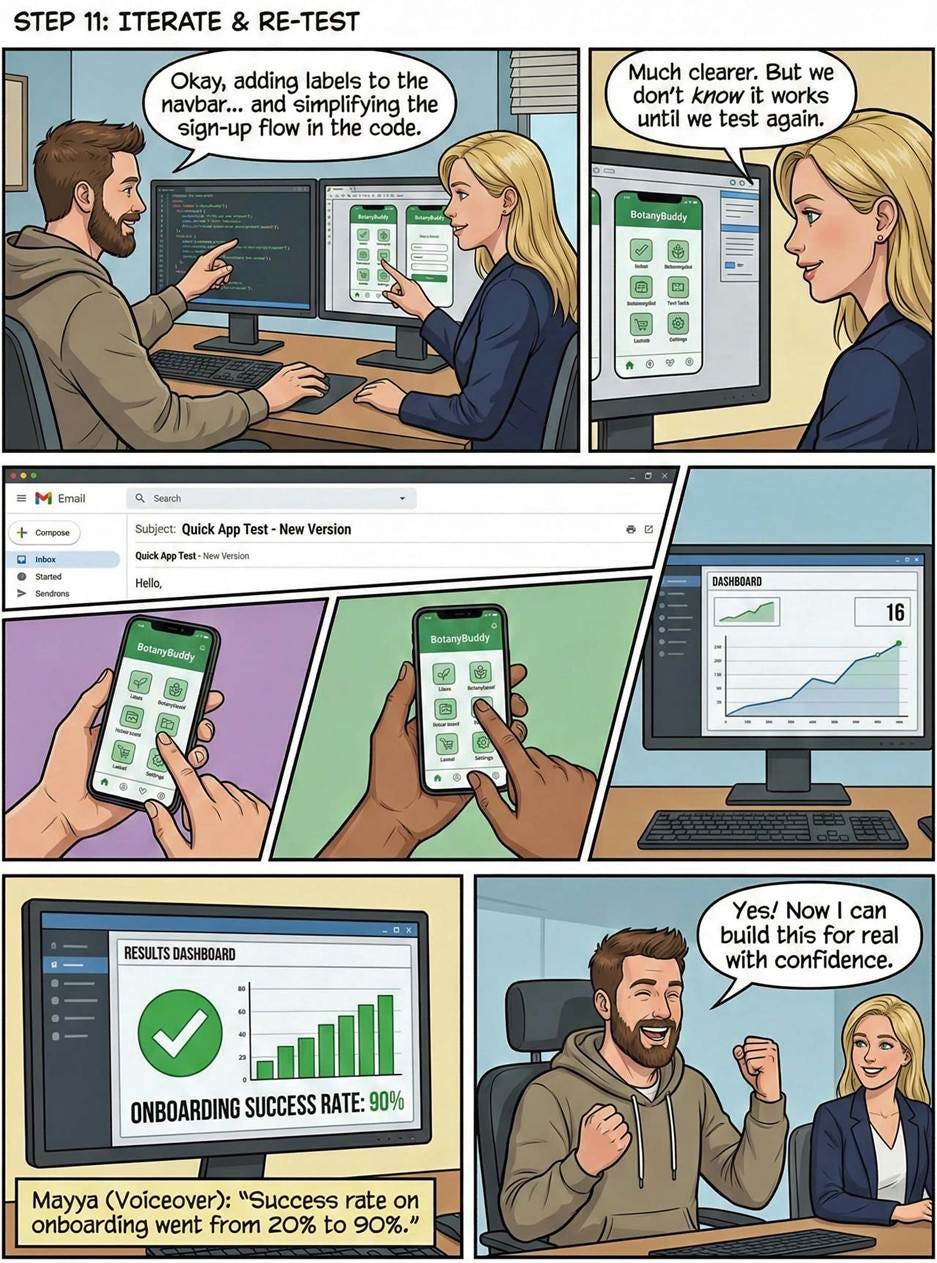
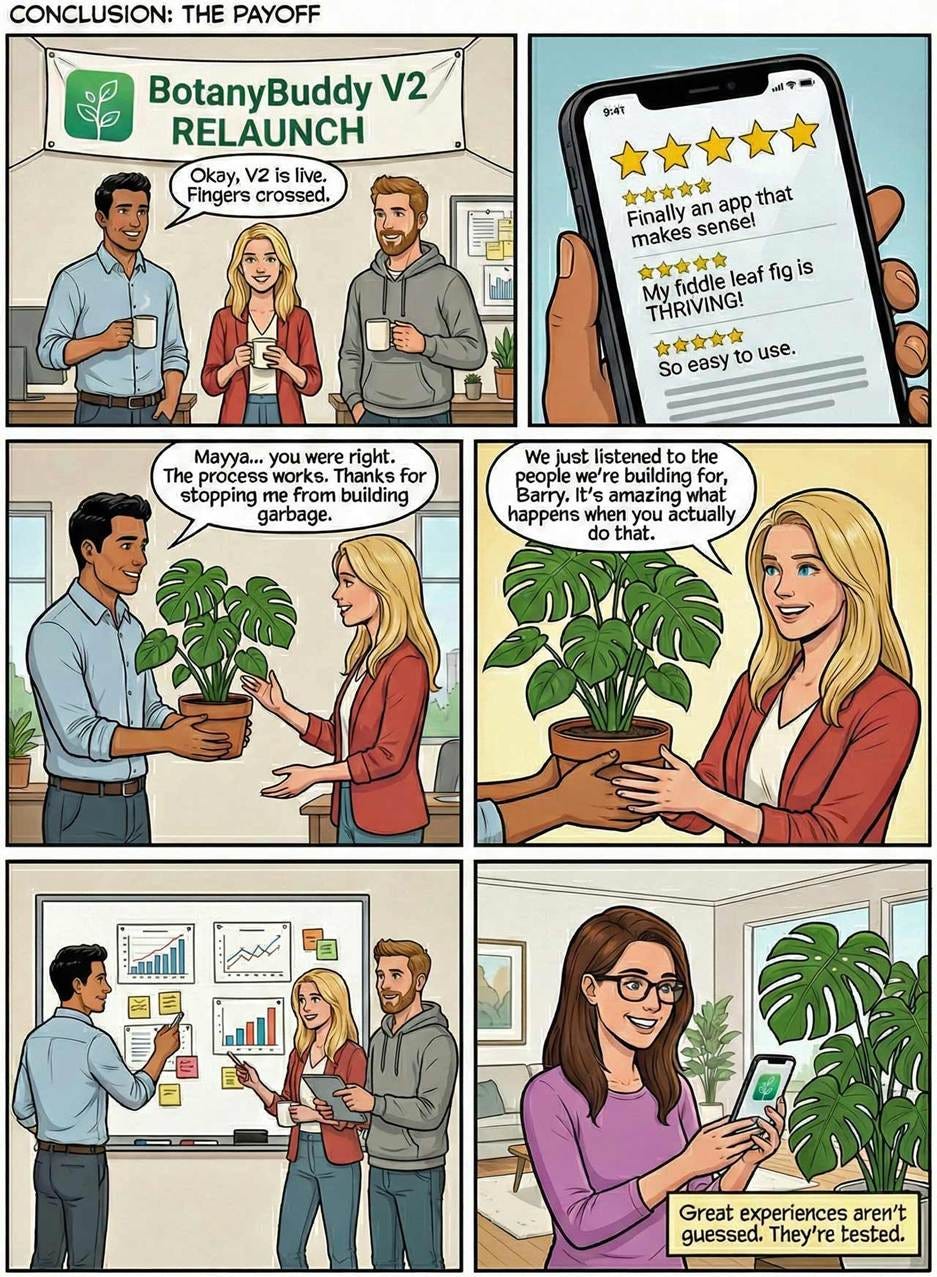
I have a systematic 12-step process for planning, running, and analyzing a usability study. Unfortunately, the write-up of the full process is rather long. So I decided to make three different versions of a comic strip to explain the process in an easy and approachable way.
(I also have a song about the 12 steps to user testing: I feel that the more media forms, the merrier.)
The 12-step process is the same in all 3 strips, even though the products the teams are designing are quite different:
An app to help plant owners grow their plants
A grocery e-commerce site
A toaster
Indeed, I do recommend the same process whether you’re developing software, websites, or physical appliances. In practice, you can sometimes shorten some steps depending on the specifics of your project, but for any team new to user research, it’s safest to follow the 12 steps to the letter.
Let’s see how the three teams in my comic strips did.
(If the text in some of the comics panels is too small for you, consider reading this article on the UX Tigers website, where you can click an image to make it larger. Nano Banana Pro tends to render too small font sizes.)
Strip 1: The Default Nano Banana Pro Comic Style
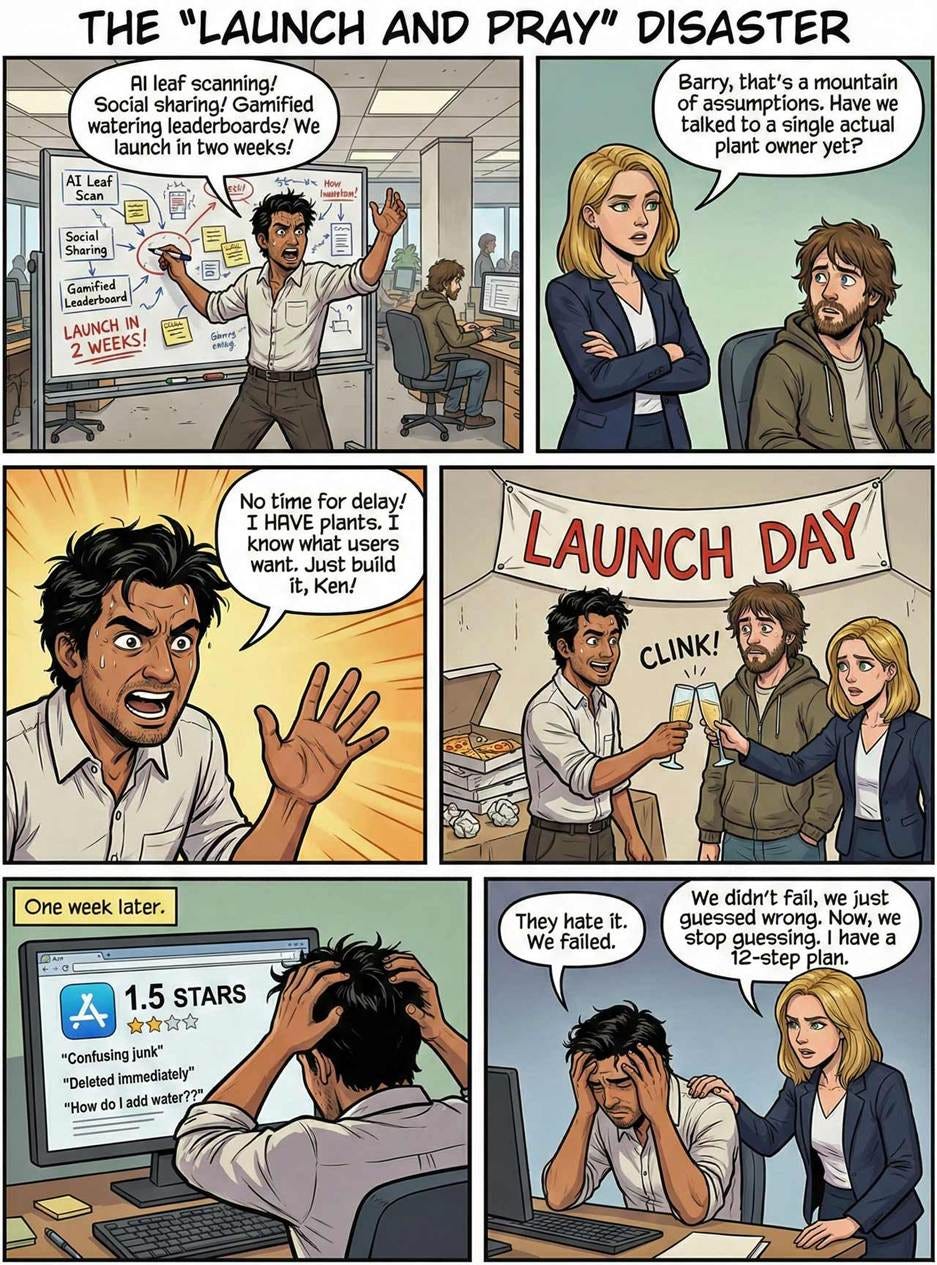

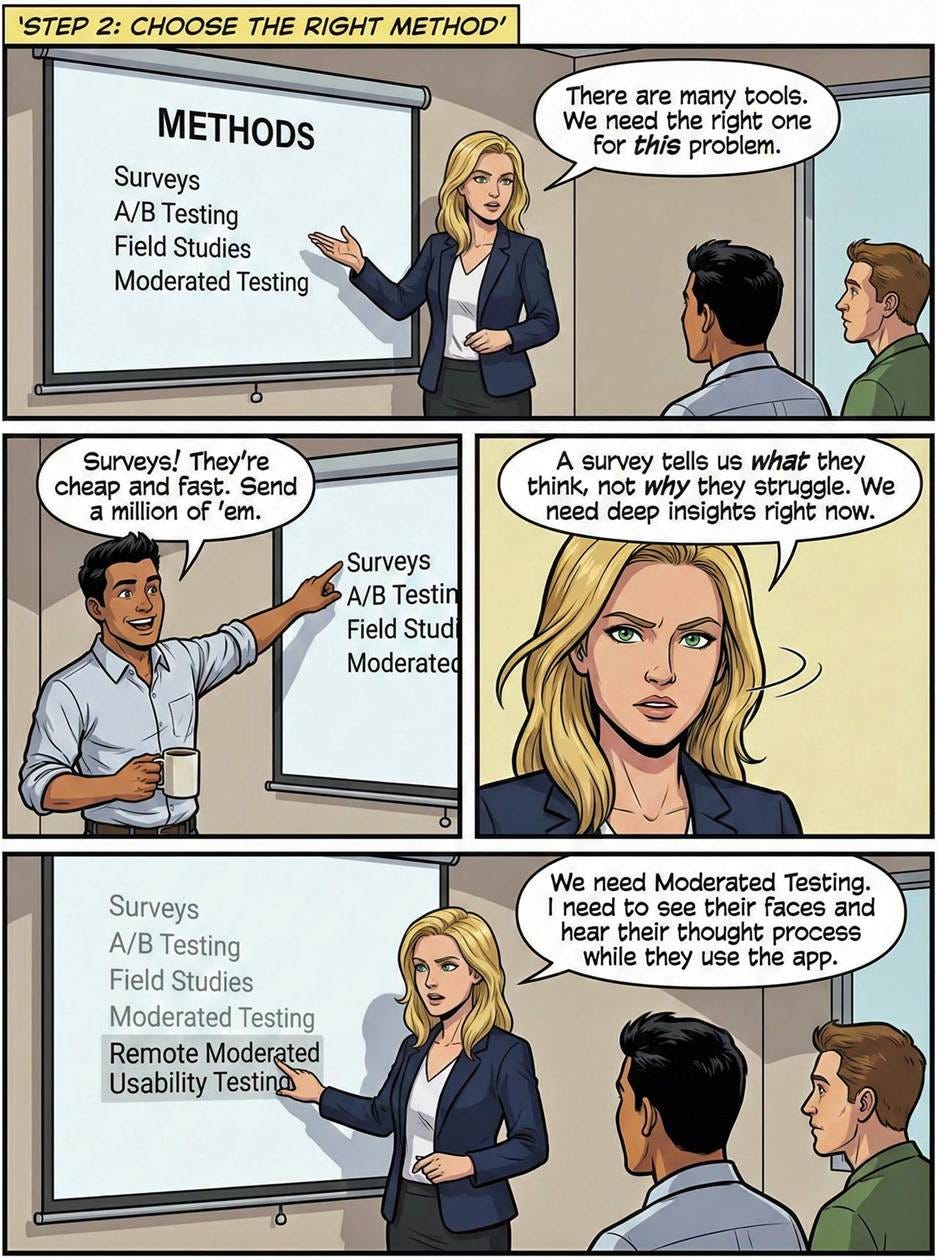


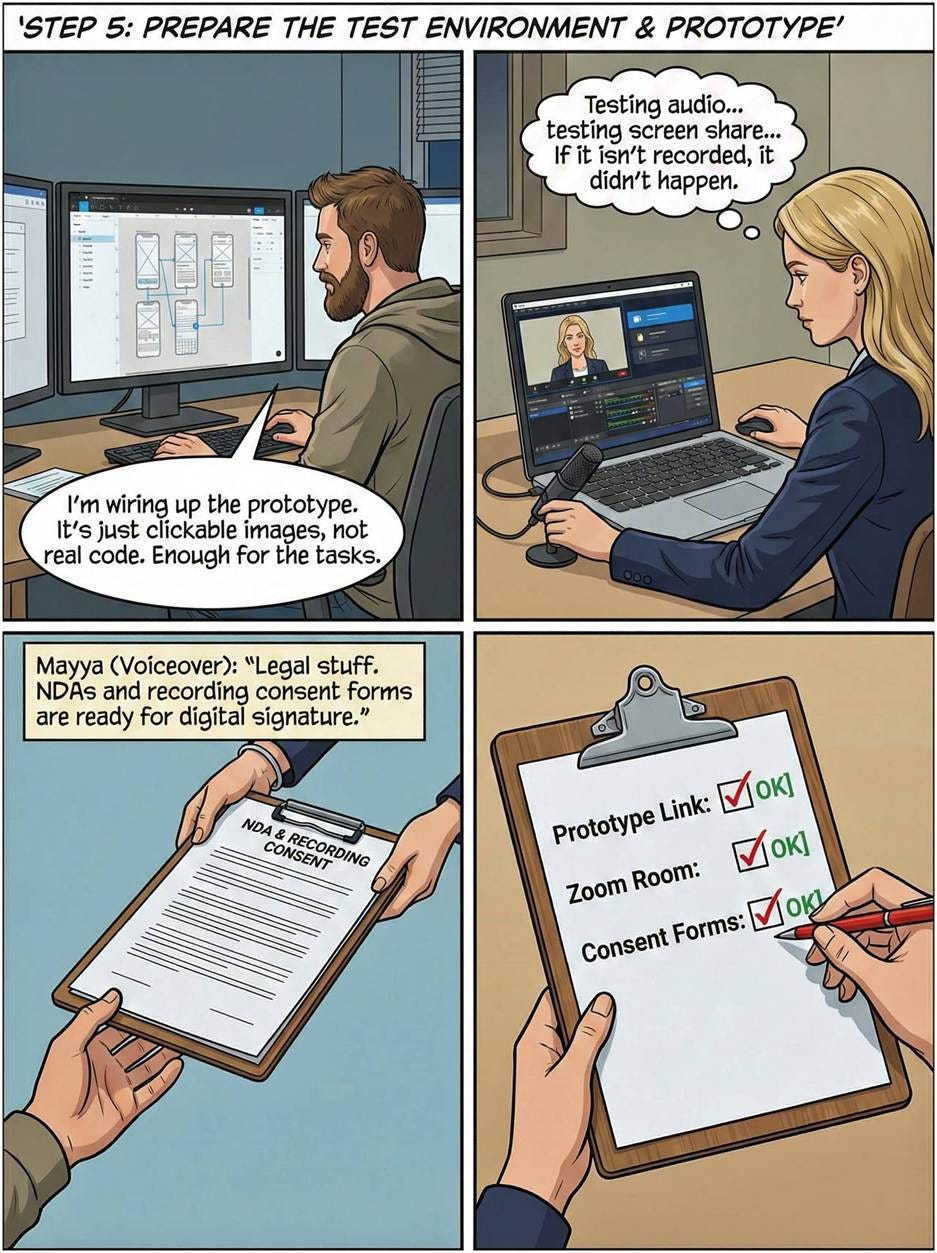




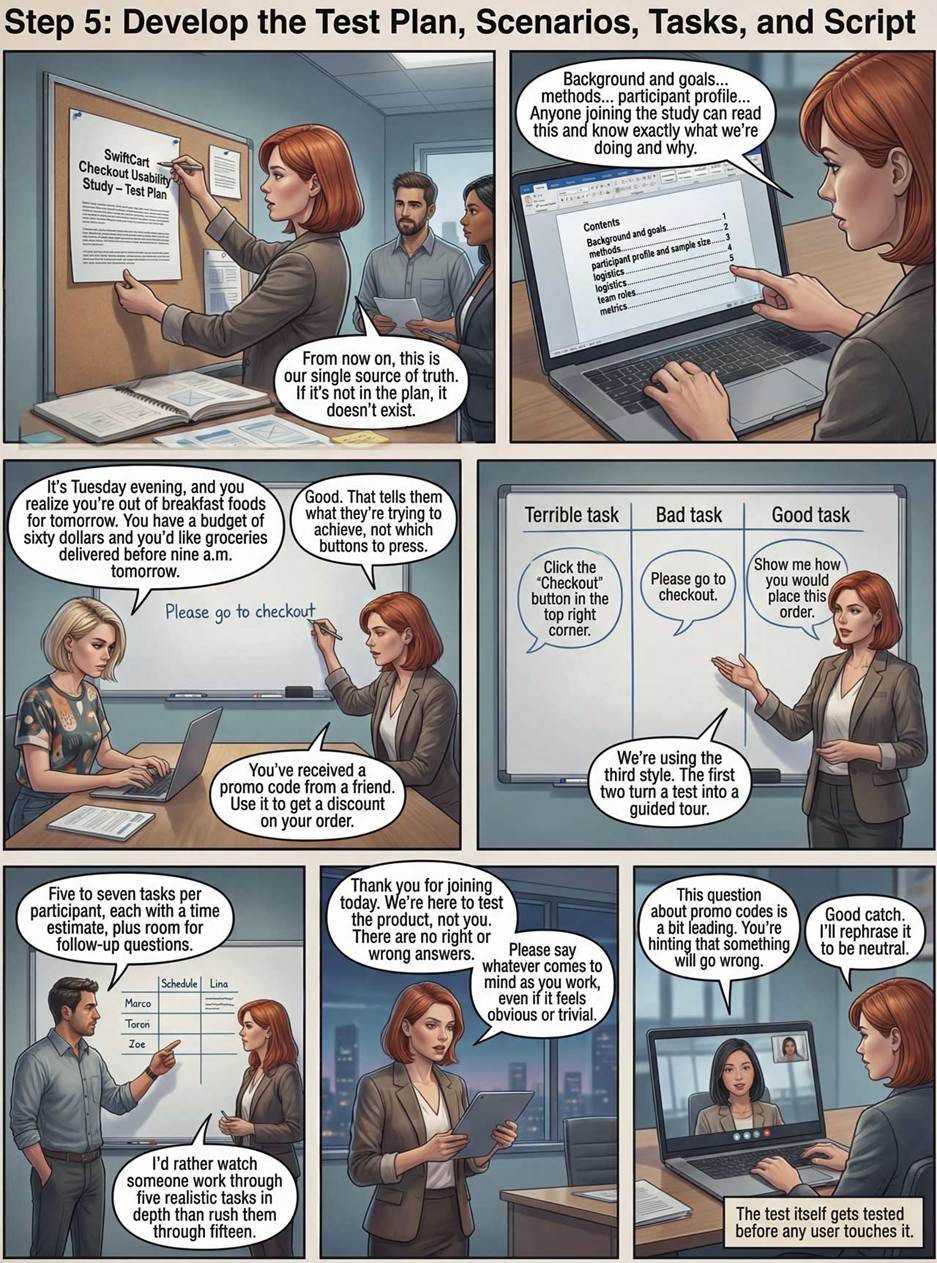
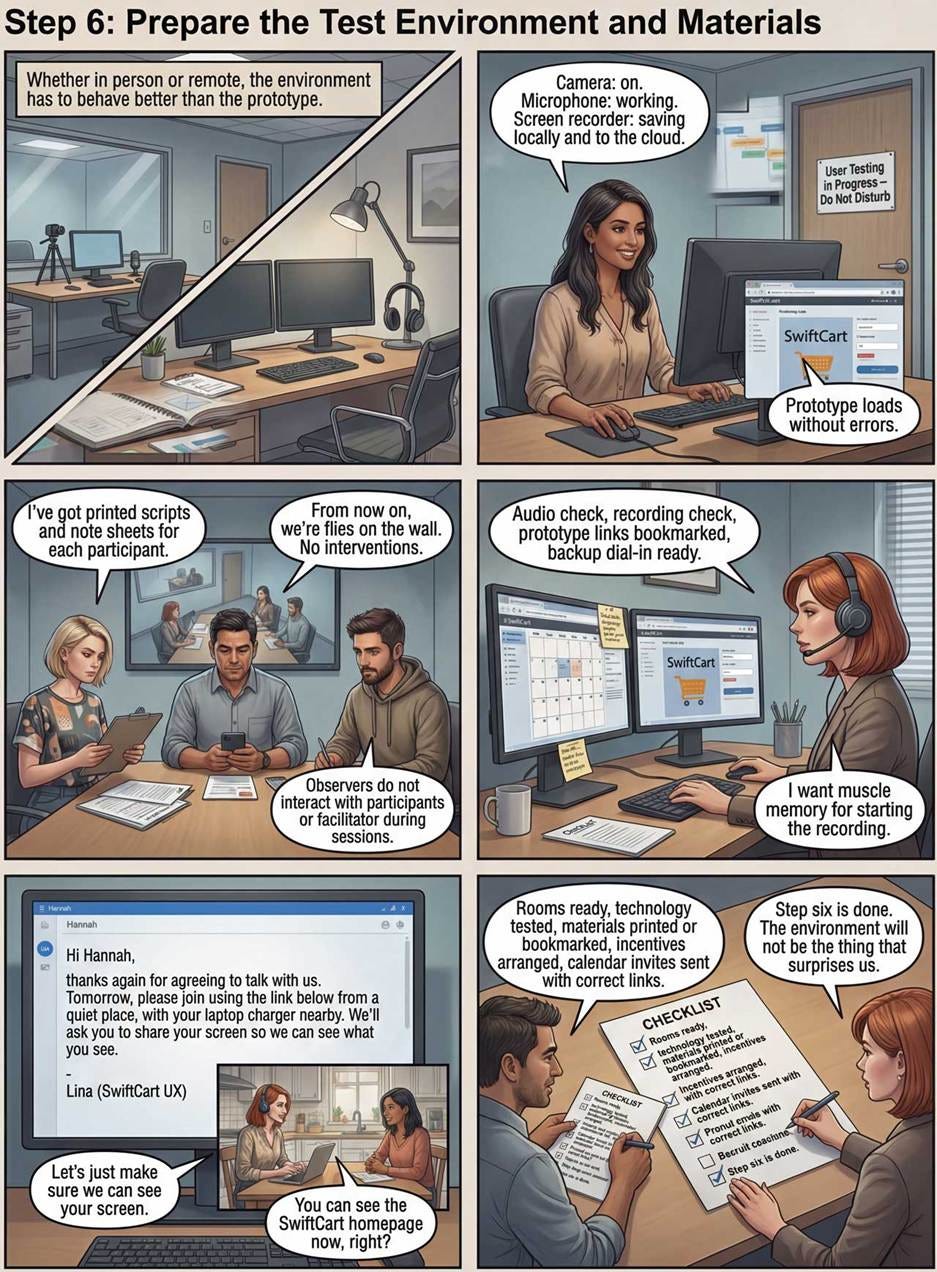
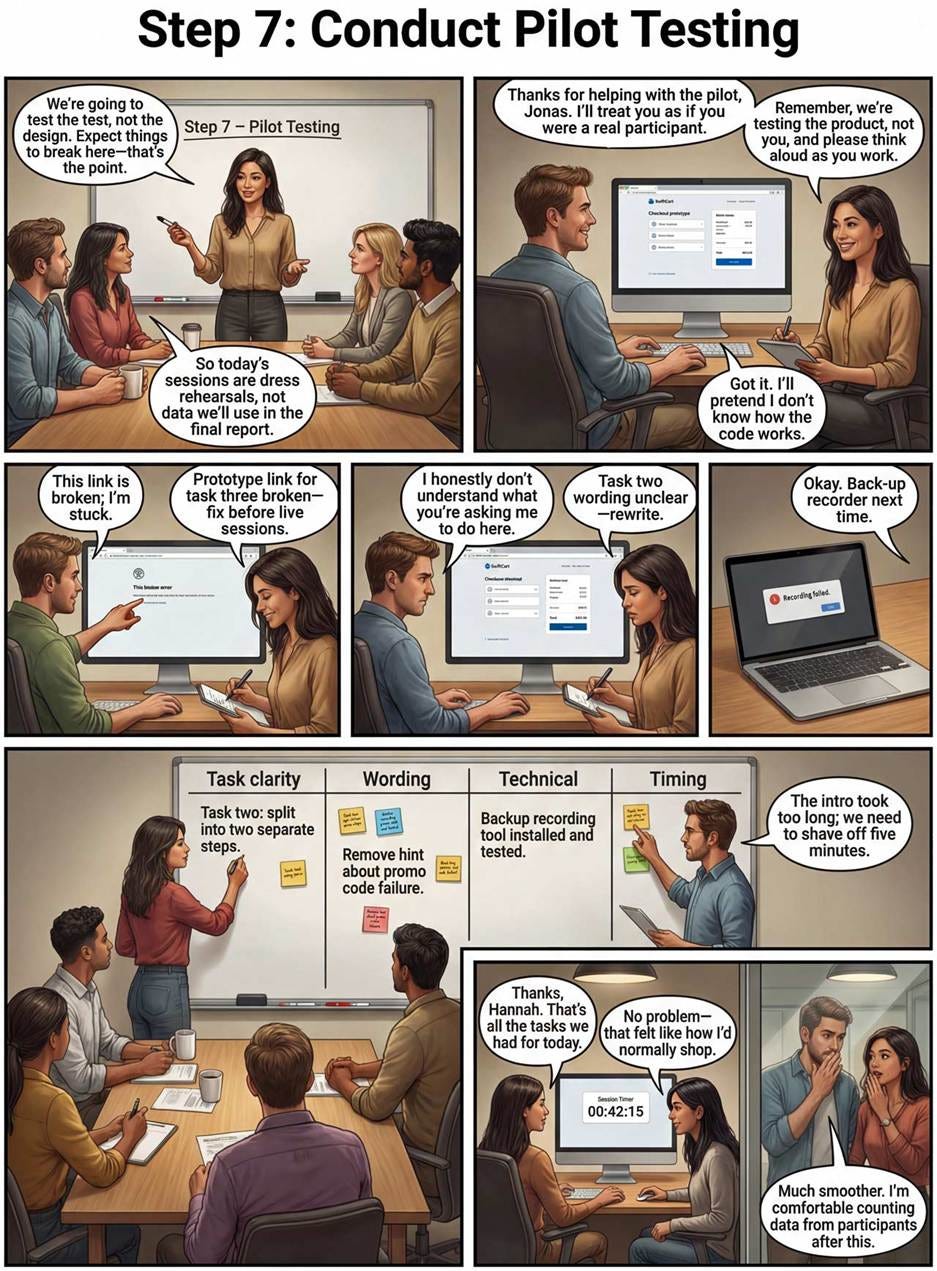
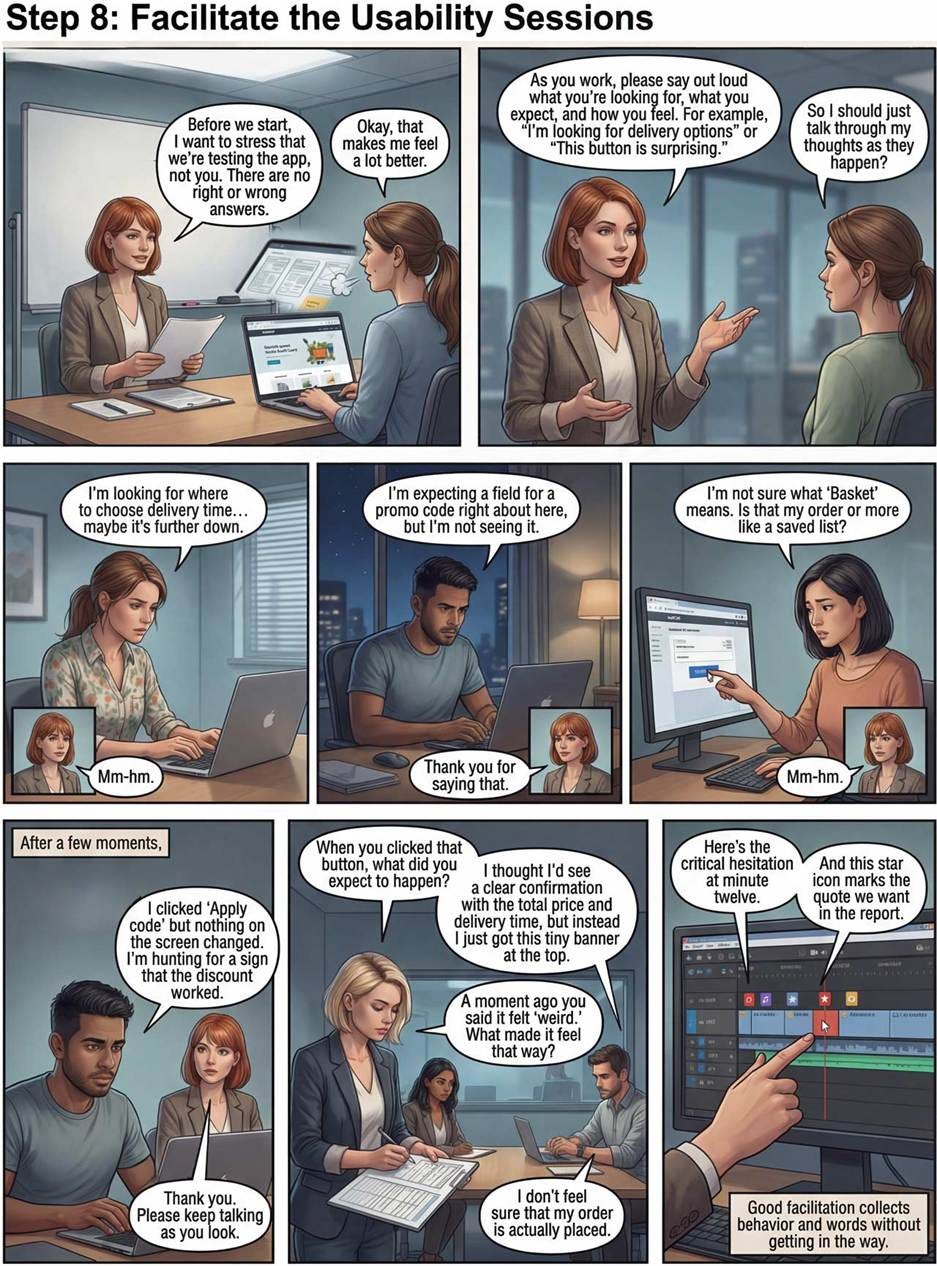
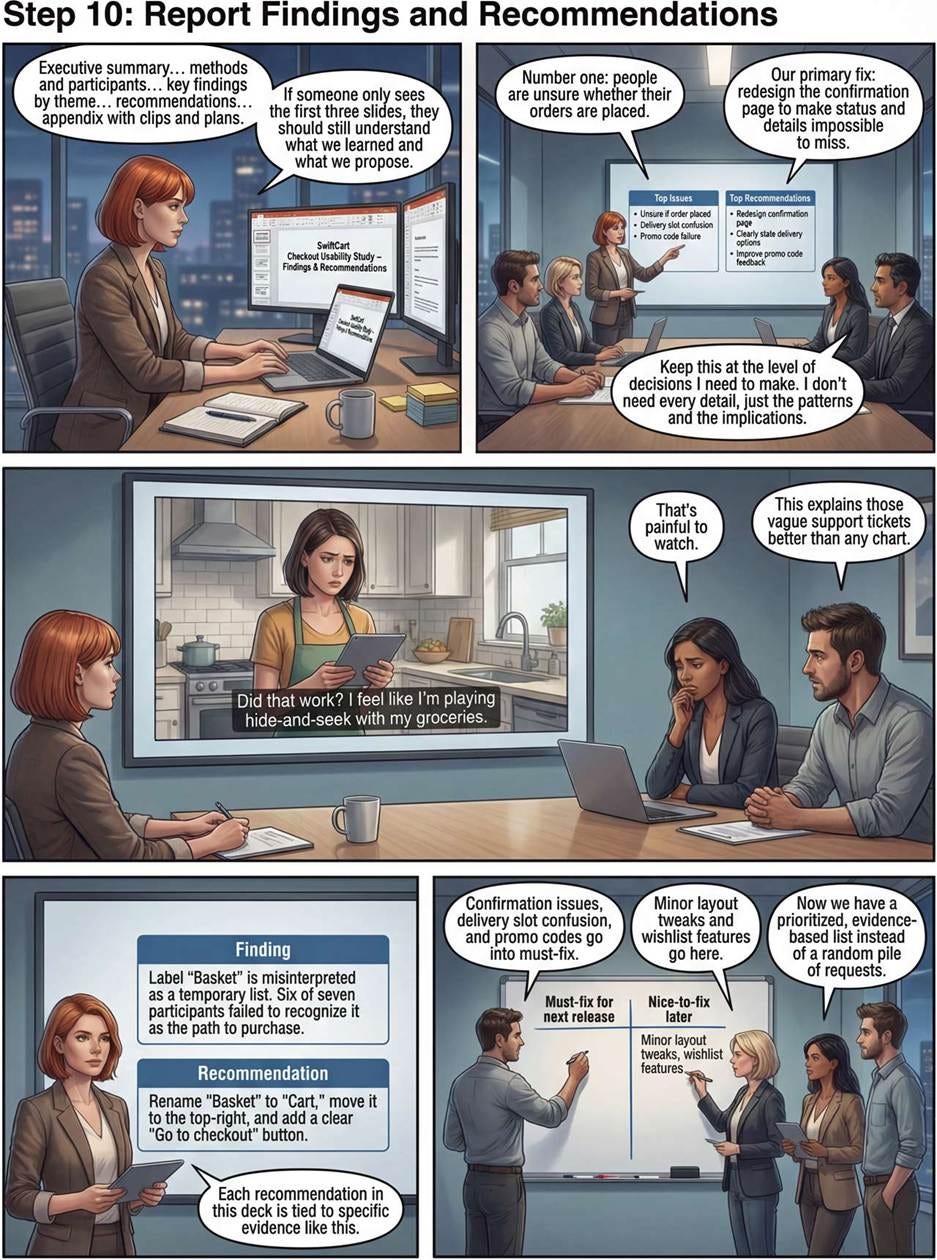
Strip 2: Elaborate Storyboard (Realistic Digital Airbrush Style)
My first comic book was nice and simple, but it skipped over many of the details in my article. Simplification is unavoidable in a comic book, but I wanted a bit more detail, so I asked GPT 5.1 Pro to write a storyboard with a specification of every page and panel, rather than leaving everything up to Nano Banana Pro.
I also generated a list of recurring characters and had Nano Banana Pro render a character sheet to nail down their appearance and outfits before I started drawing the individual pages. As you will see, the character sheet ensured pretty decent character consistency across the pages, but it was insufficient to make Nano Banana Pro center the story on these specific characters. For example, the VP (Karim) appears only as a minor character in a few scenes, and the stakeholder role is mainly filled by other characters who are not on the character sheet and are not consistently reused. It is certainly realistic enough for a big company that stakeholders come and go in meetings, and you never know who you’re dealing with next. But for the sake of storytelling, it would be better for the reader to identify with Karim as the person responsible for profitability and the company’s overall interest in the product.
Despite the character sheet, on the page for step 7, the UX researcher suddenly changed appearance completely: hair color, hairstyle, and outfit were none of them according to the character sheet.

This character sheet was used as the basis for all 14 individual comic book pages. (Nano Banana Pro)
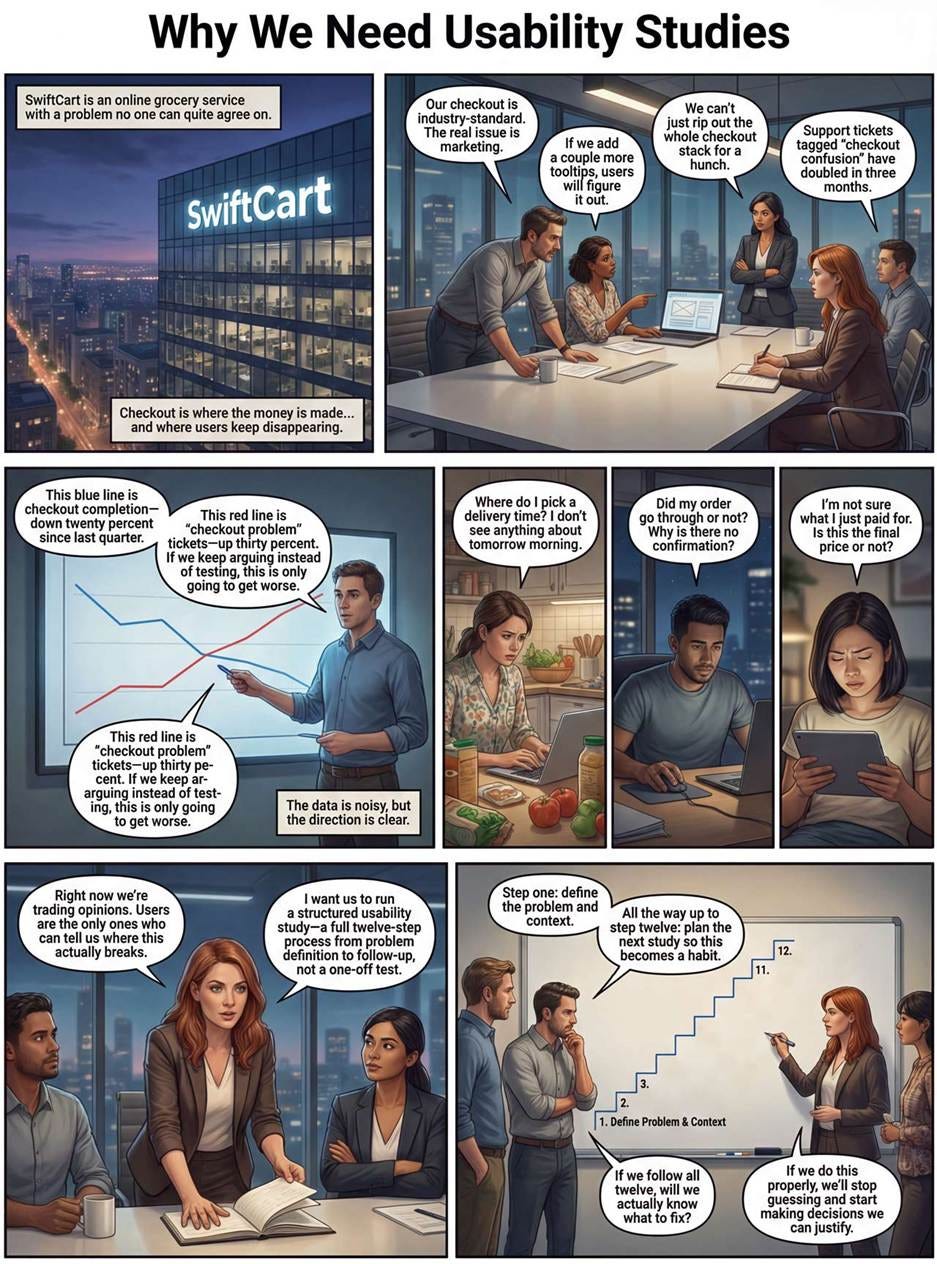
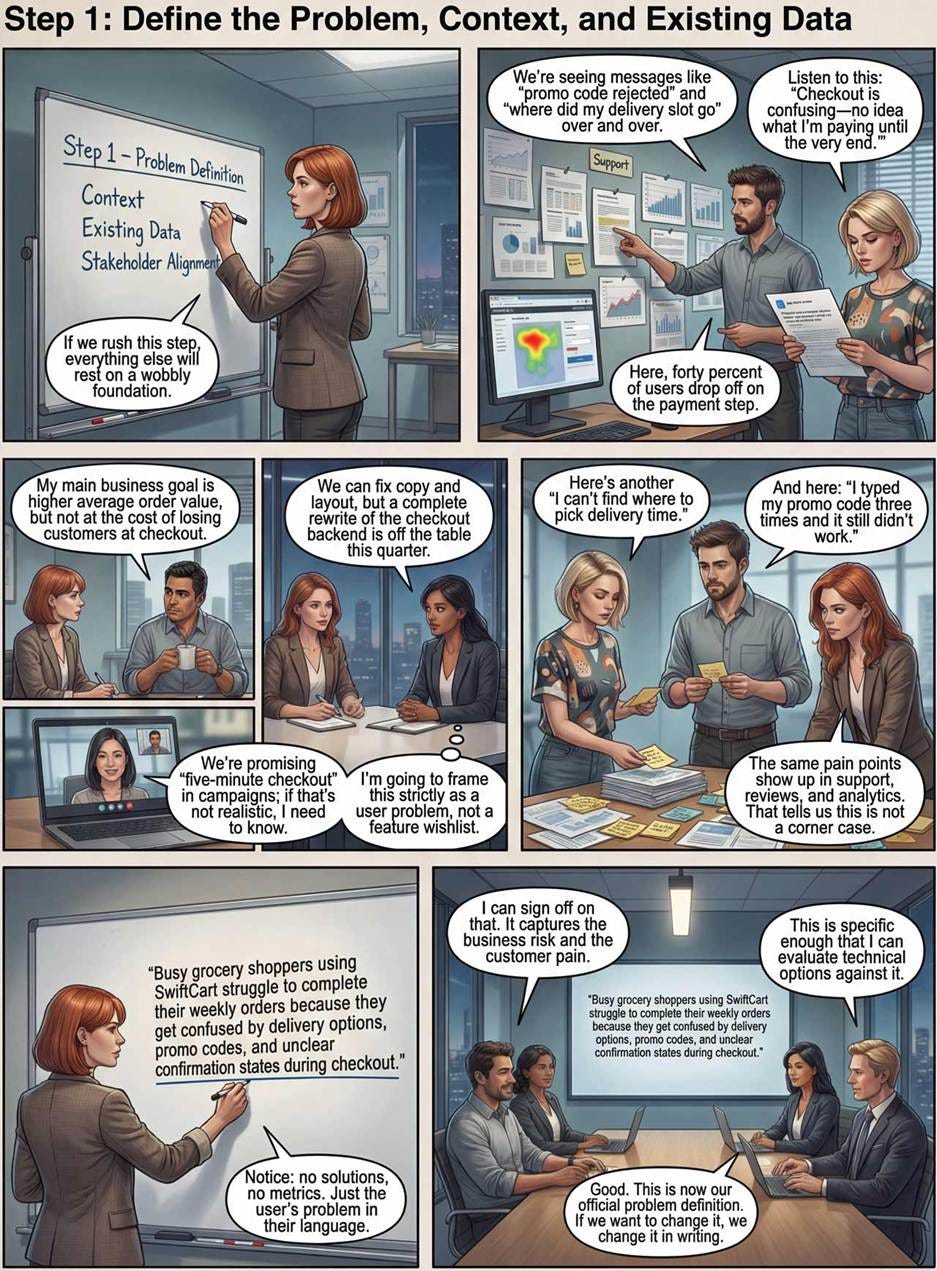
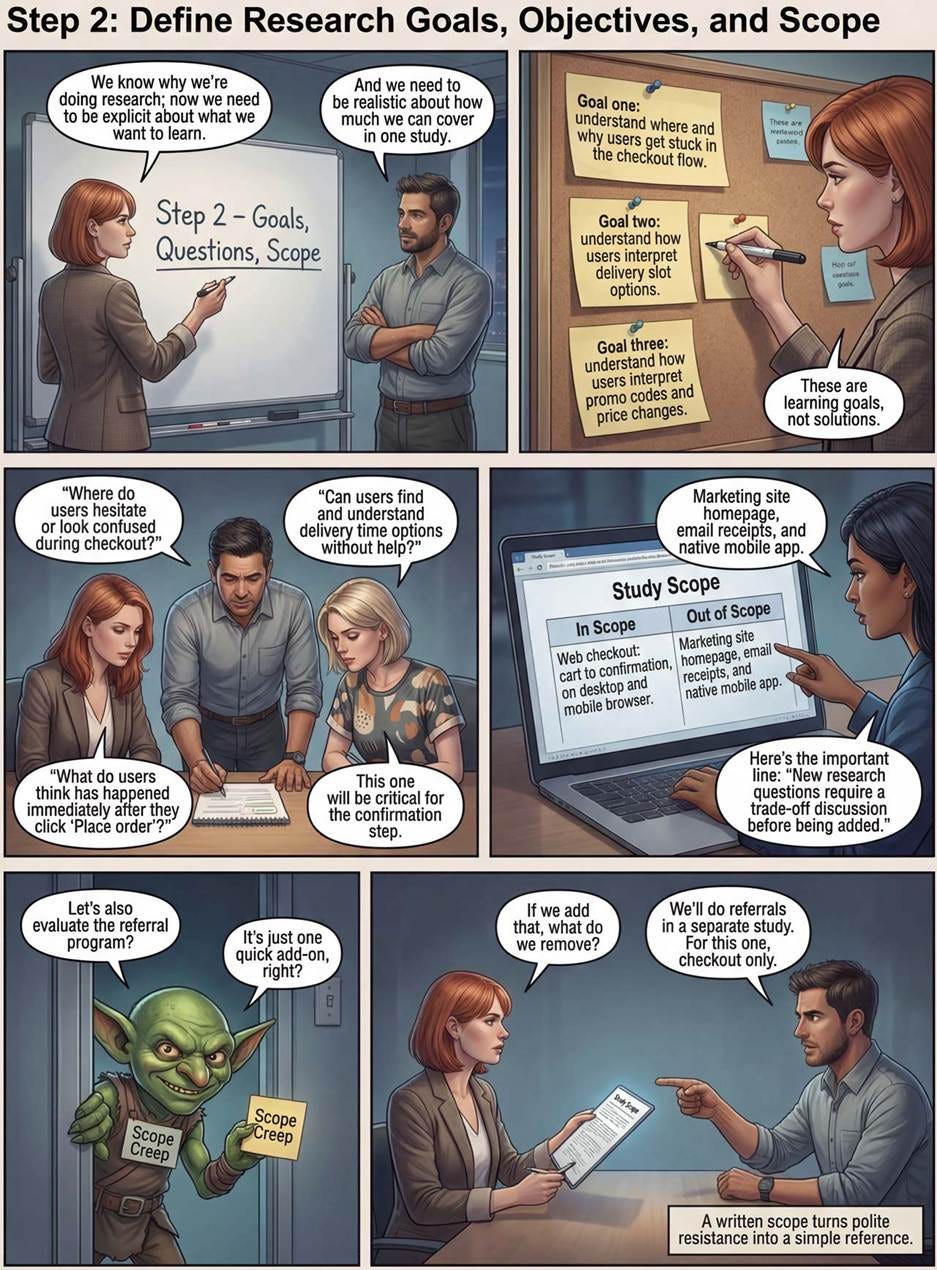

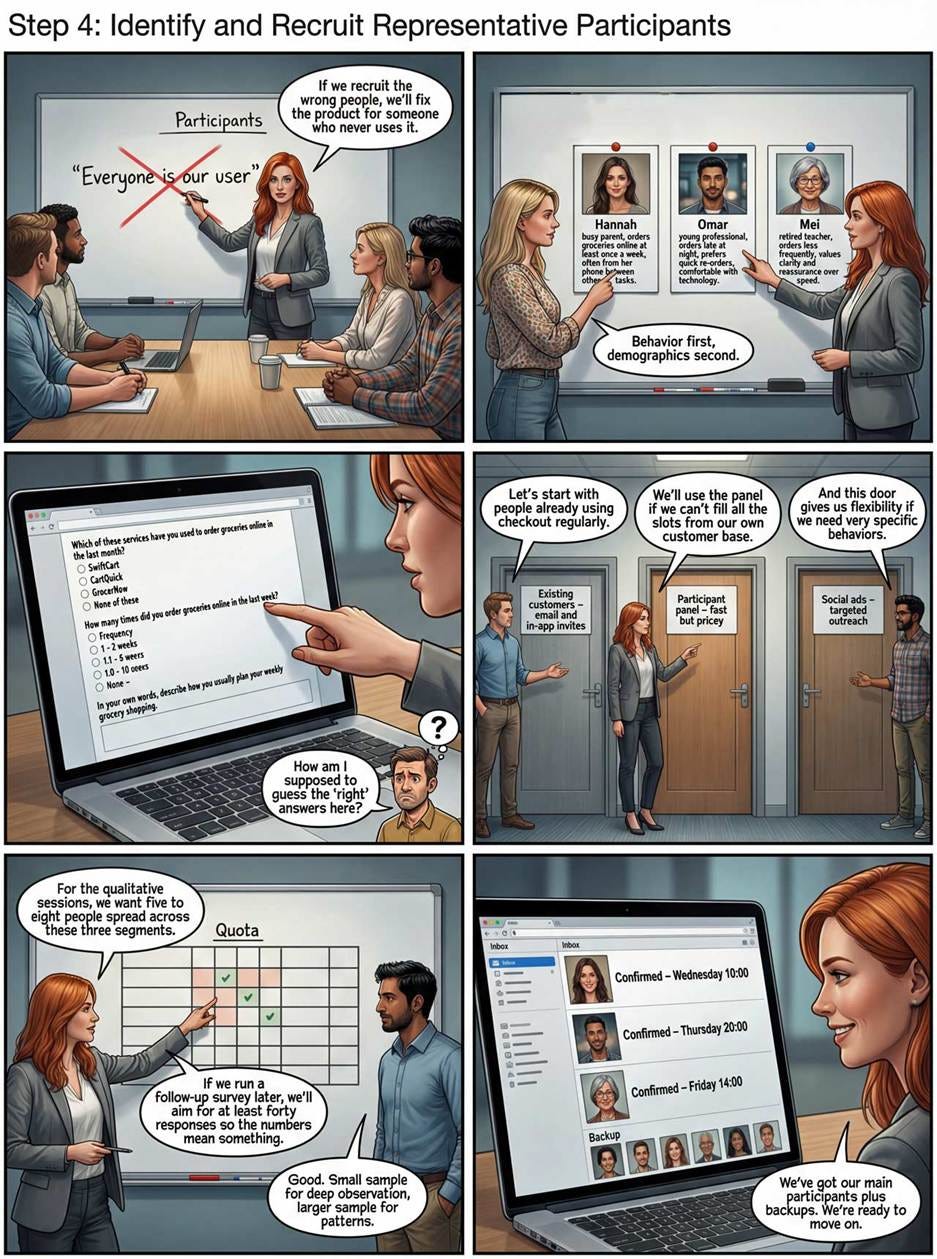



Strip 3: Children’s Comic Book
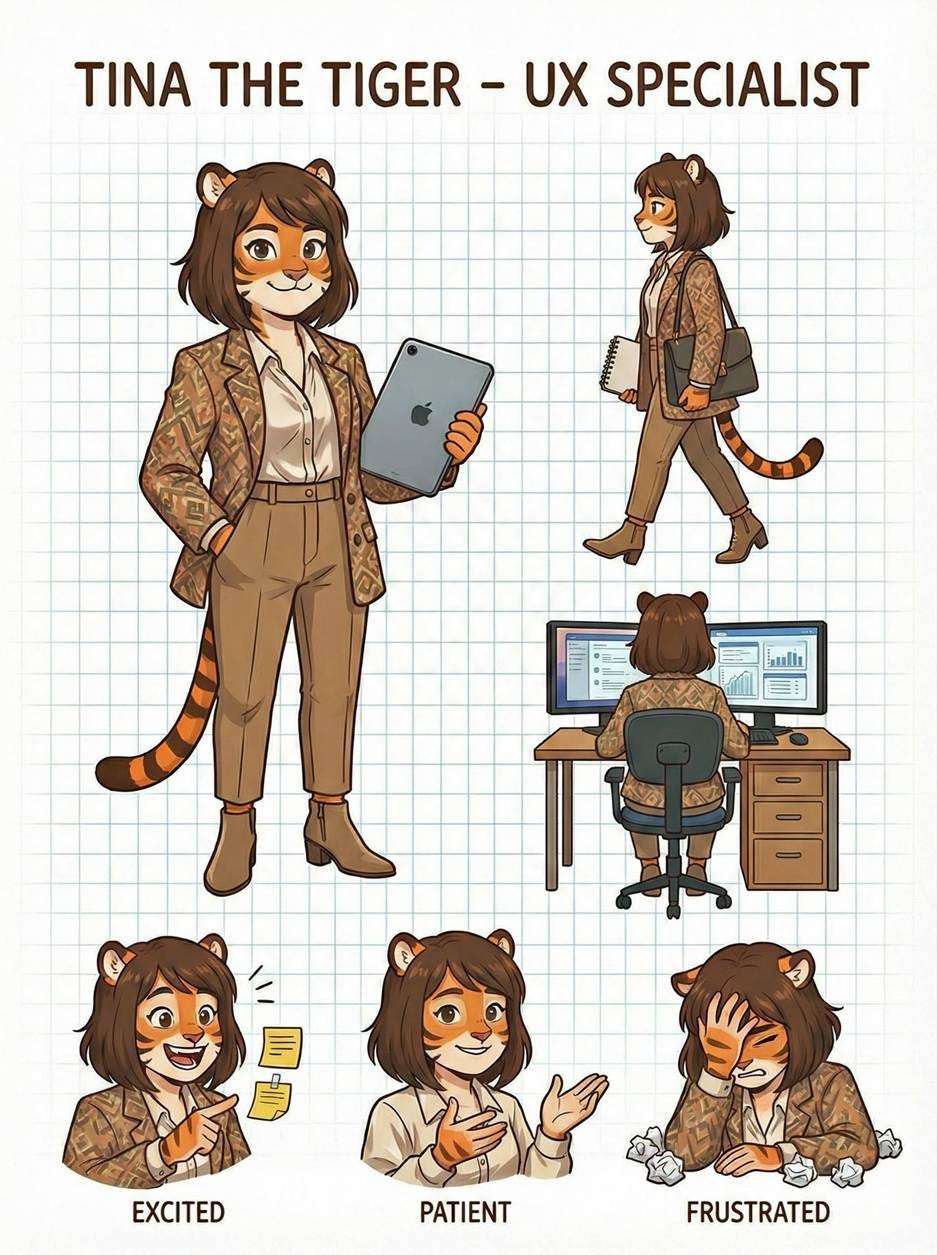
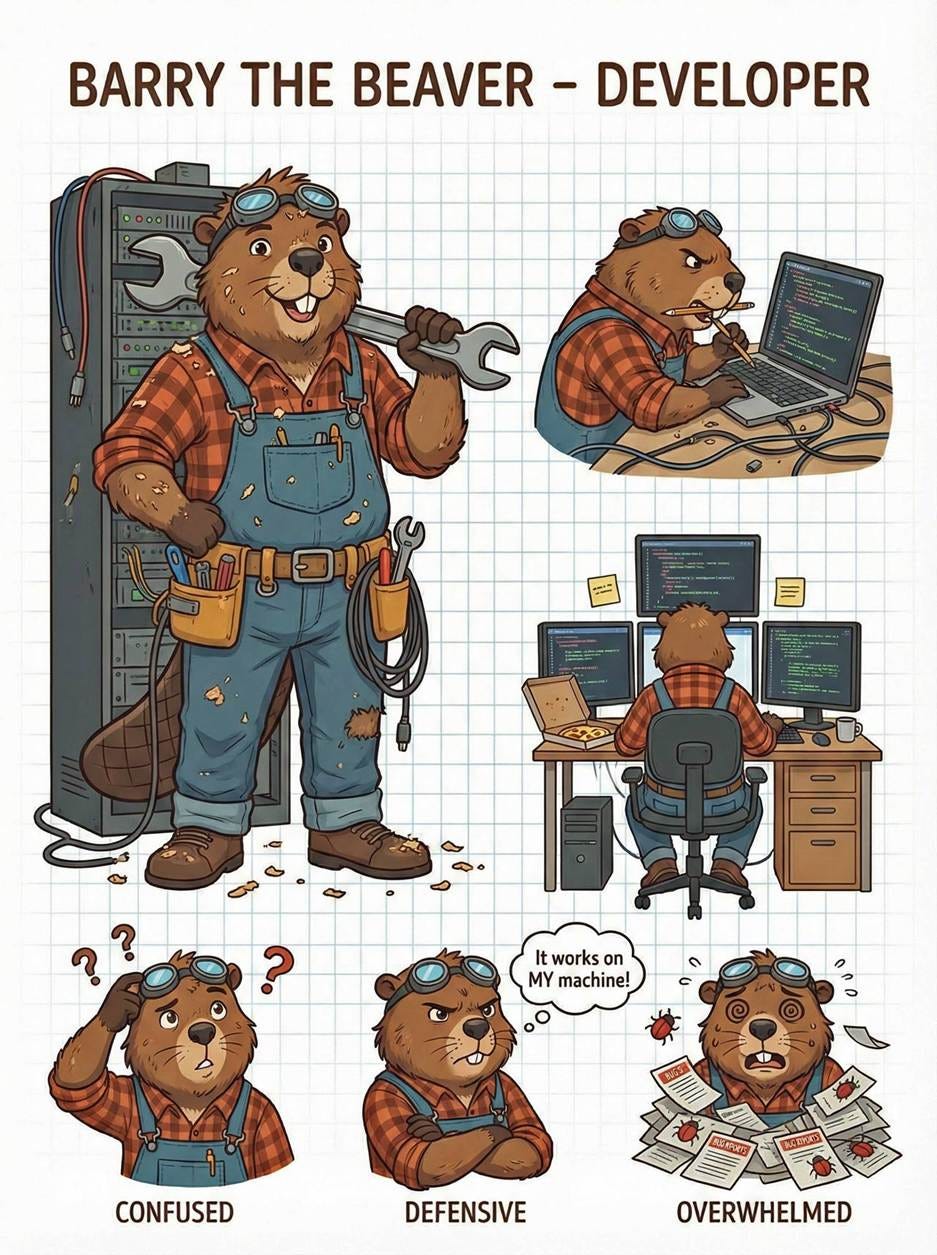
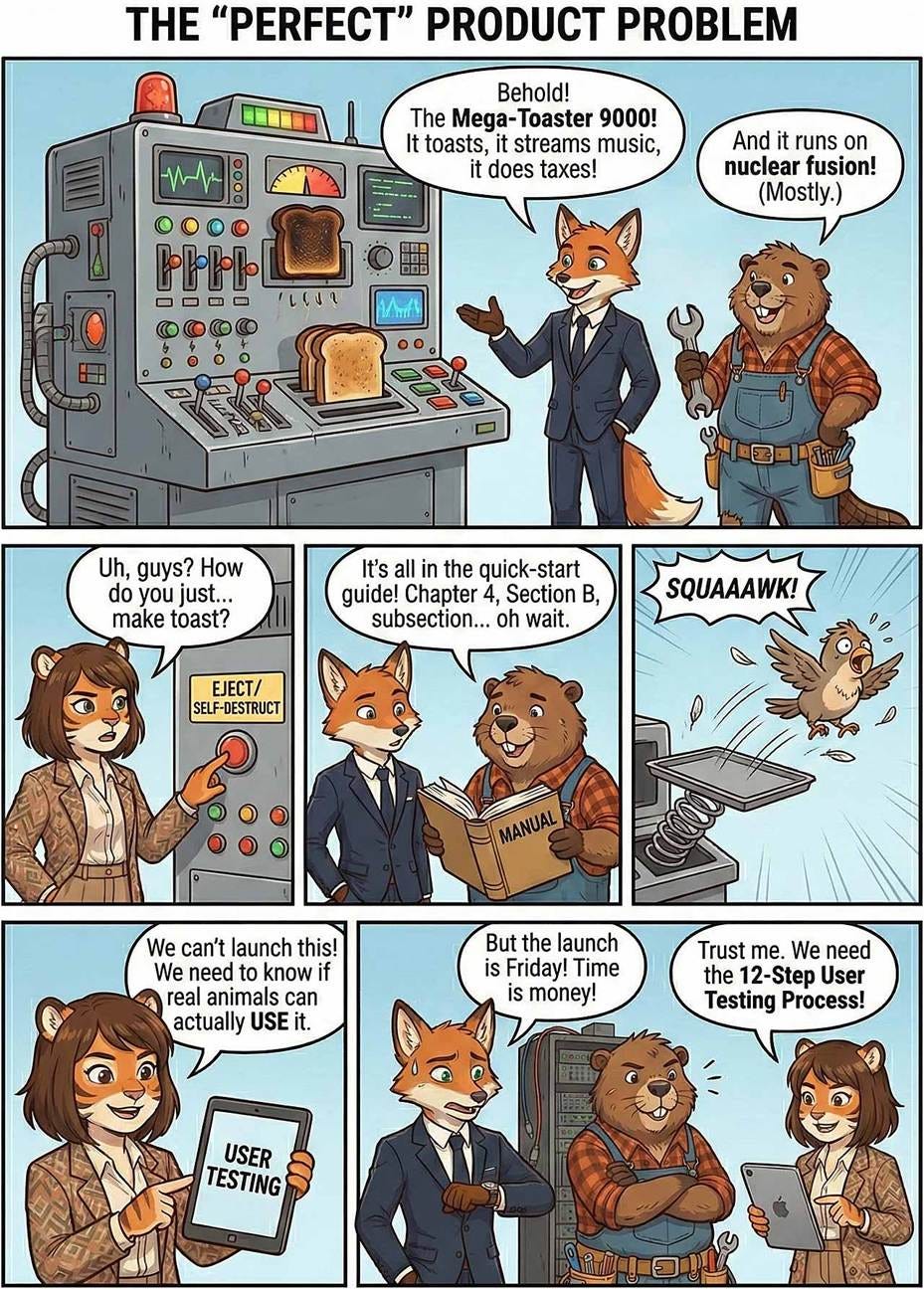
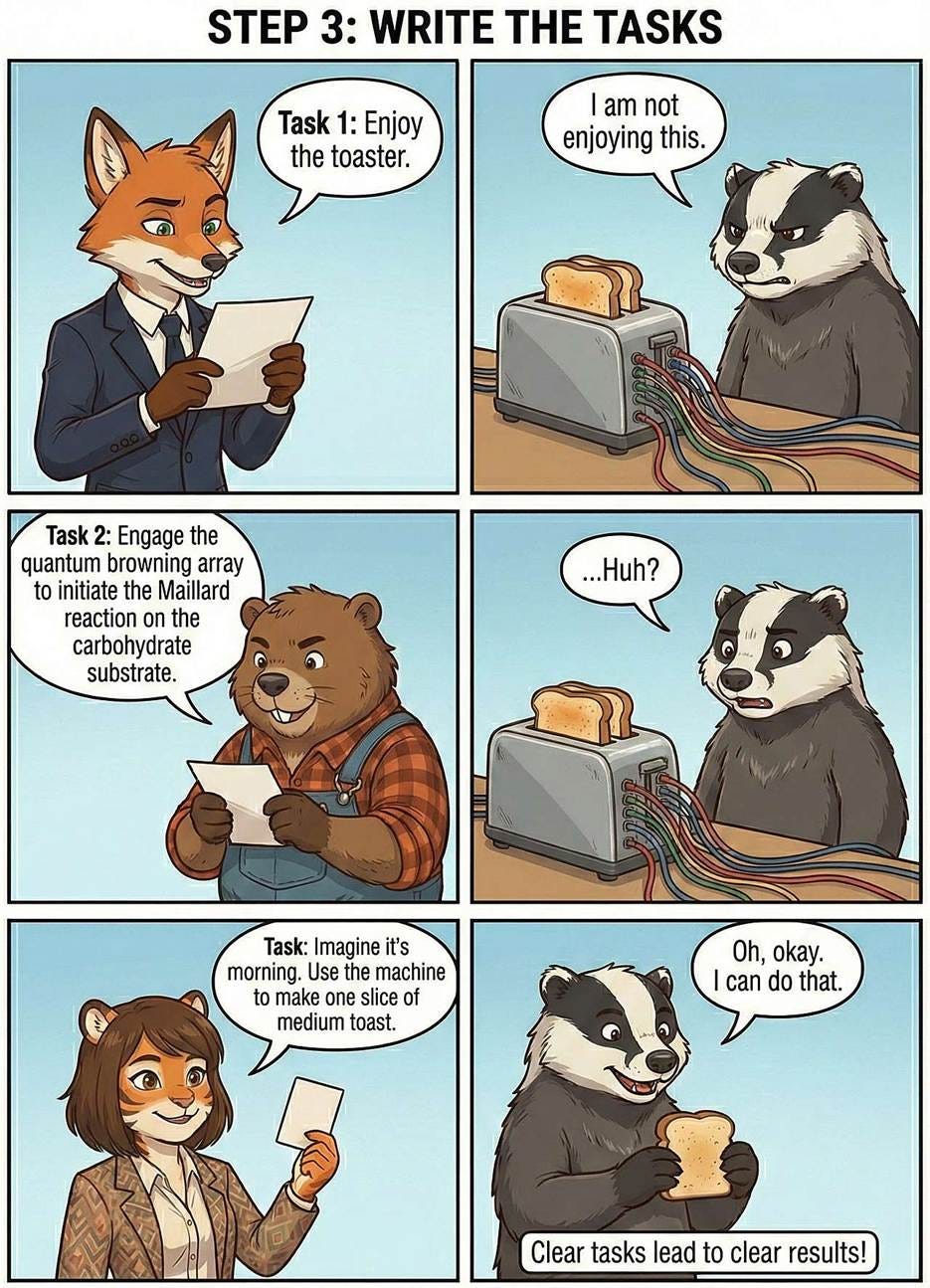
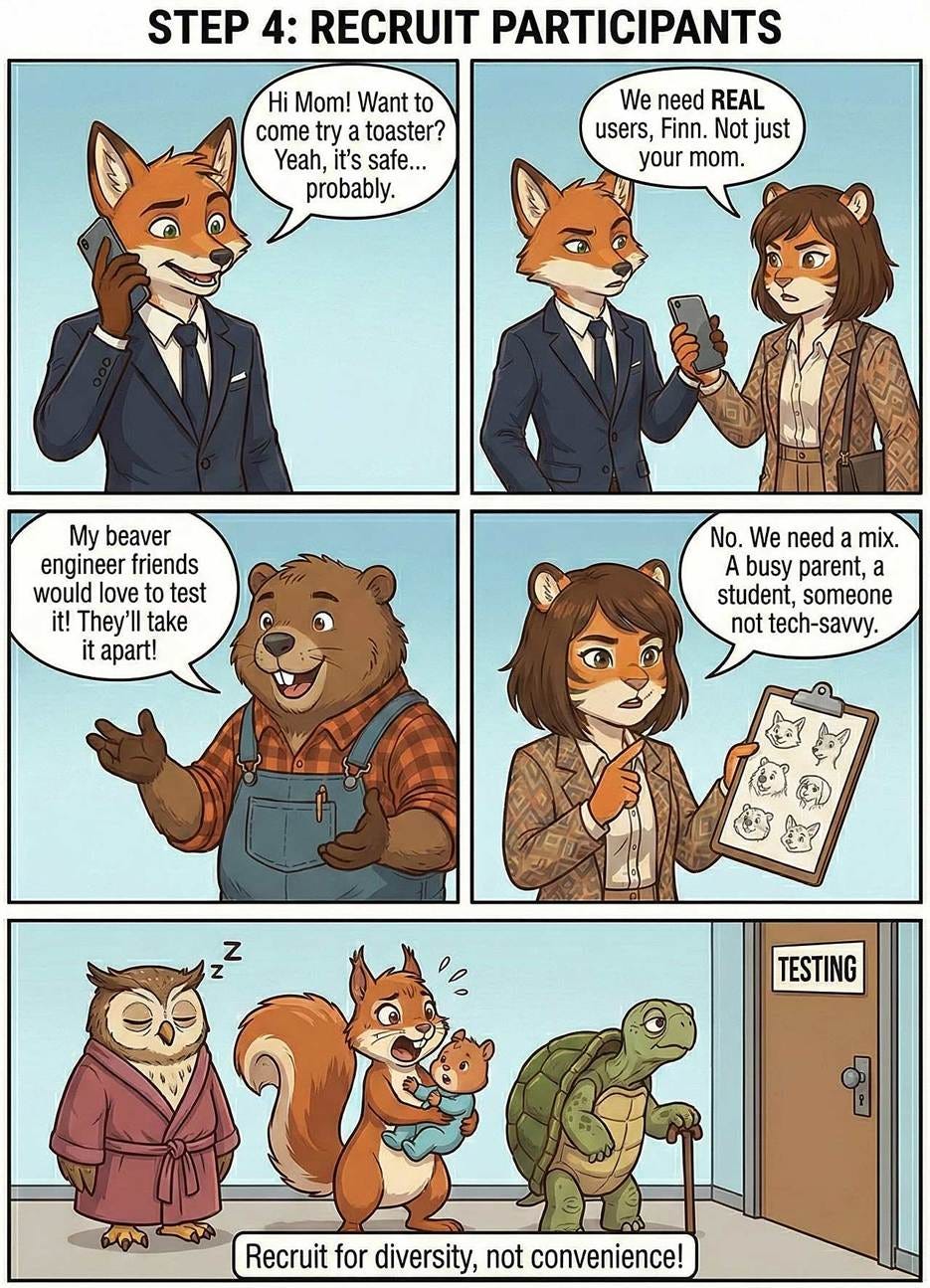
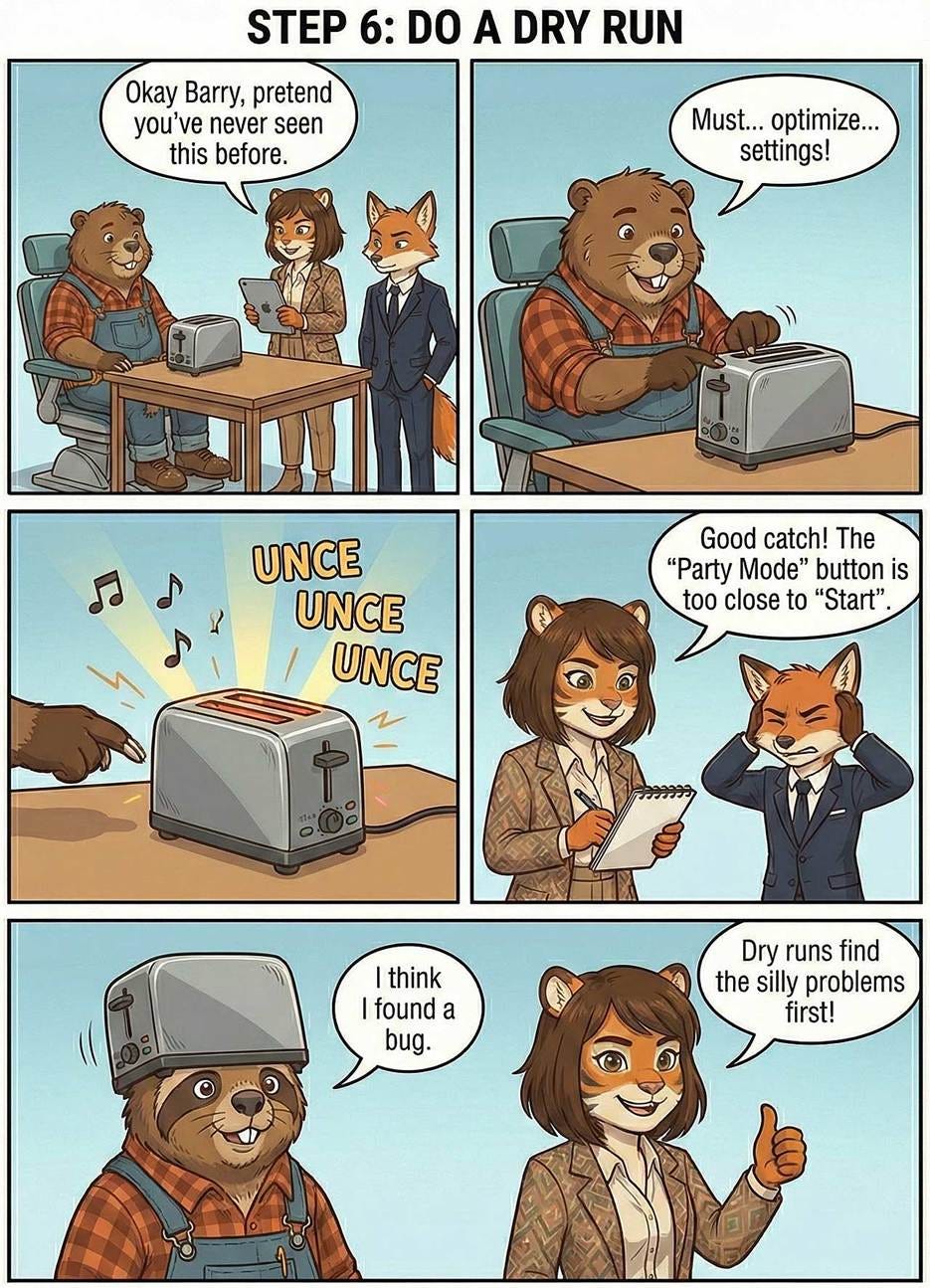
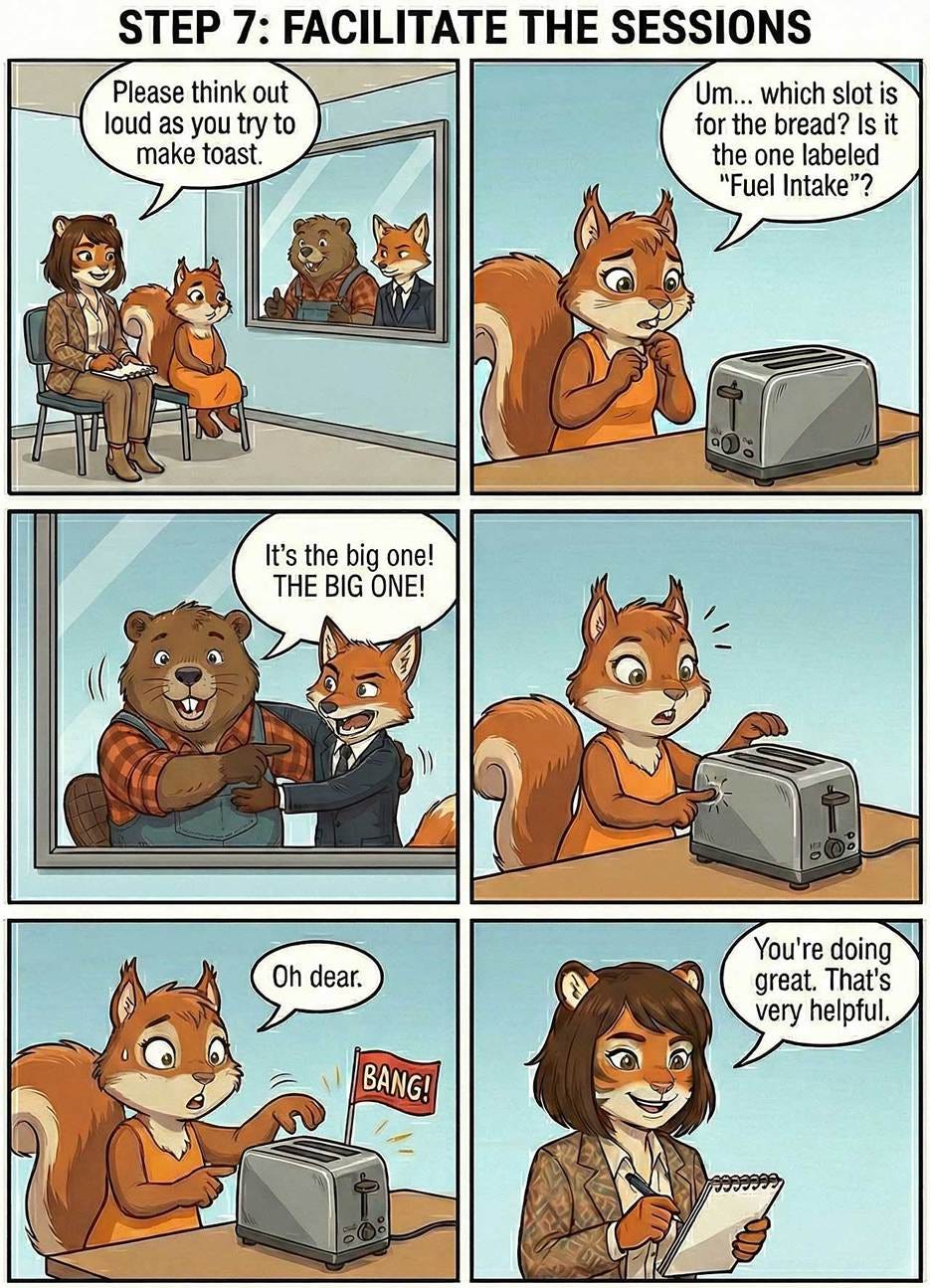
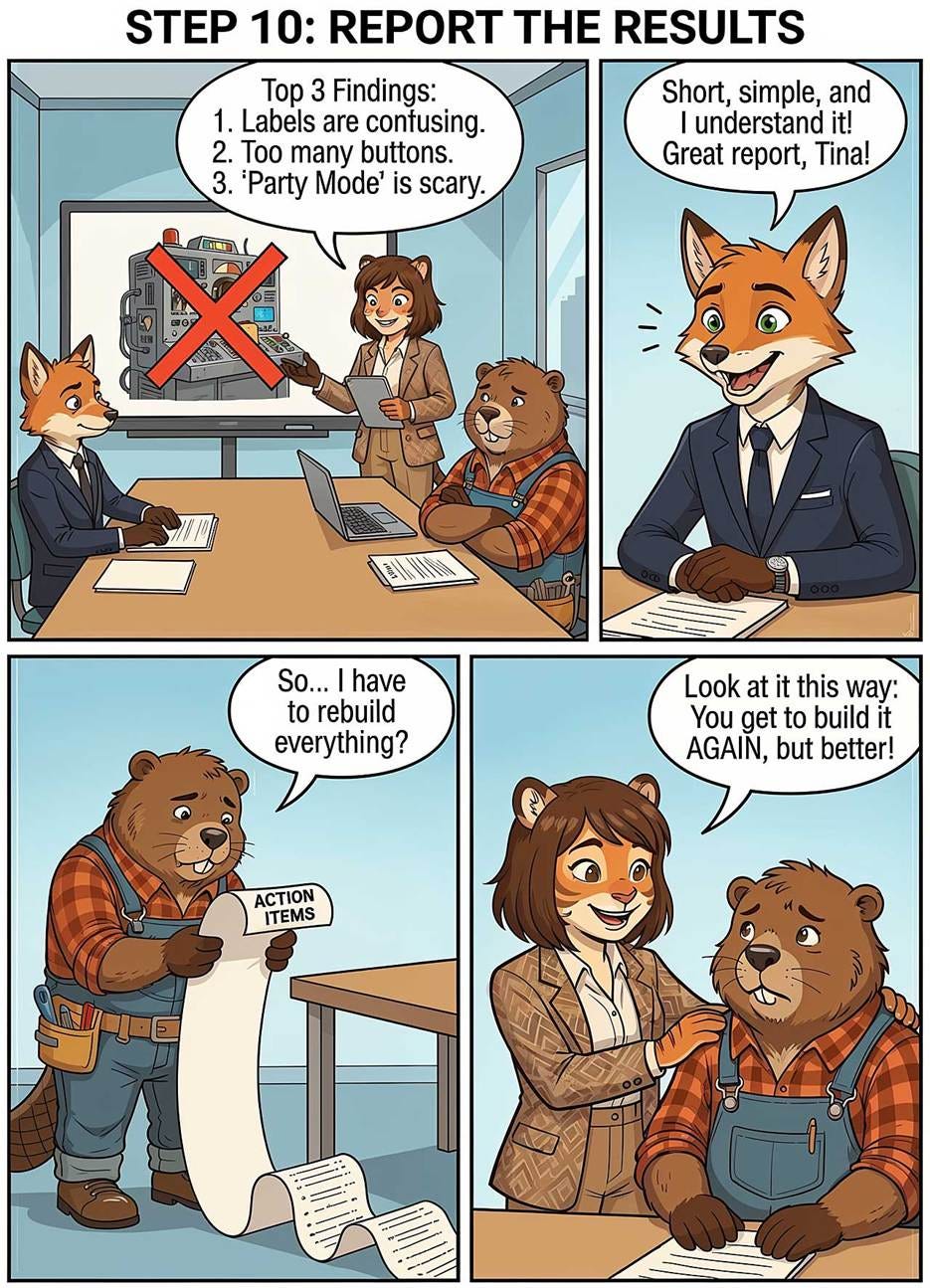
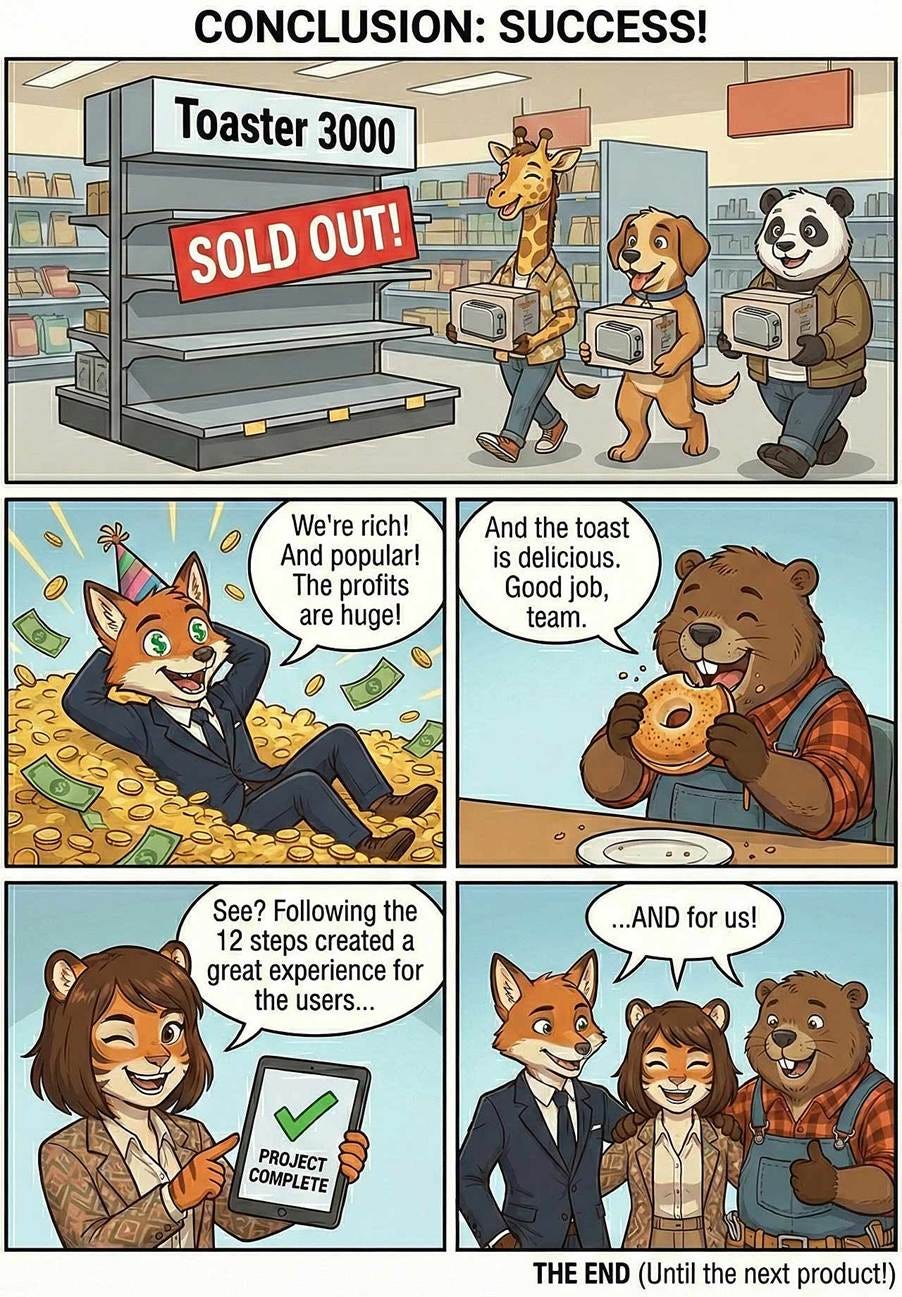
For my third comic about user testing, I reverted to a simpler idea: a limited character list with only three characters: a UX specialist (who doubled as both researcher and designer), a developer, and a manager. This project was a children’s comic with a humorous angle that used animal characters instead of humans.
Since Nano Banana Pro had not fully complied with the character sheet for the more elaborate project, I decided to create a complete character reference sheet for each lead character, showing each character from multiple angles. For each page, I prompted the model to ensure all main characters were drawn according to their approved character reference sheets.

Feel free to share this children’s story with any children who don’t quite understand what you do for a living.







About the Author
Jakob Nielsen, Ph.D., is a usability pioneer with 42 years experience in UX and the Founder of UX Tigers. He founded the discount usability movement for fast and cheap iterative design, including heuristic evaluation and the 10 usability heuristics. He formulated the eponymous Jakob’s Law of the Internet User Experience. Named “the king of usability” by Internet Magazine, “the guru of Web page usability” by The New York Times, and “the next best thing to a true time machine” by USA Today.
Previously, Dr. Nielsen was a Sun Microsystems Distinguished Engineer and a Member of Research Staff at Bell Communications Research, the branch of Bell Labs owned by the Regional Bell Operating Companies. He is the author of 8 books, including the best-selling Designing Web Usability: The Practice of Simplicity (published in 22 languages), the foundational Usability Engineering (29,480 citations in Google Scholar), and the pioneering Hypertext and Hypermedia (published two years before the Web launched).
Dr. Nielsen holds 79 United States patents, mainly on making the Internet easier to use. He received the Lifetime Achievement Award for Human–Computer Interaction Practice from ACM SIGCHI and was named a “Titan of Human Factors” by the Human Factors and Ergonomics Society.
· Subscribe to Jakob’s newsletter to get the full text of new articles emailed to you as soon as they are published.
· Read: article about Jakob Nielsen’s career in UX
· Watch: Jakob Nielsen’s first 41 years in UX (8 min. video)
Amazing!!